
Listen to this Post
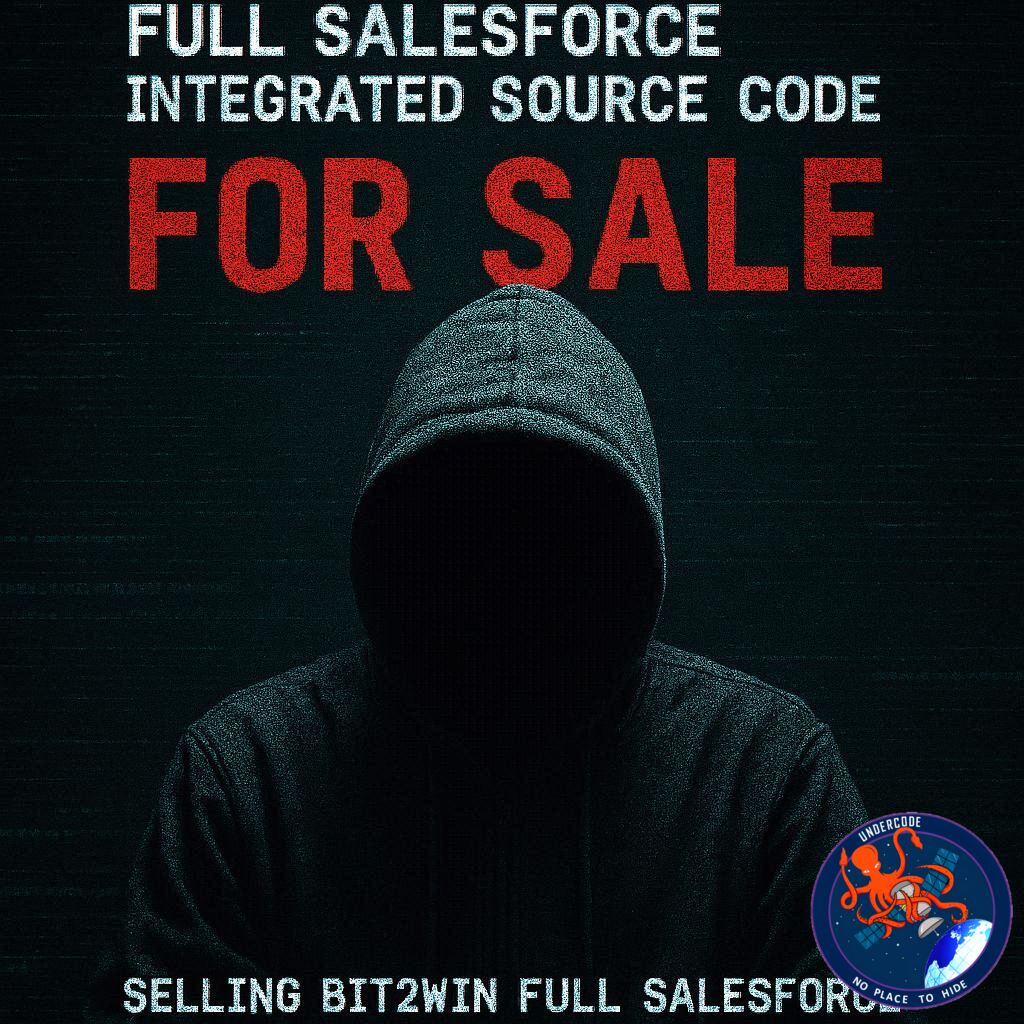
A new cyber threat claim emerging from underground forums is raising serious concerns across the enterprise SaaS industry. According to a post shared by the dark web monitoring account Dark Web Intelligence, a threat actor is allegedly attempting to sell the complete source code of Bit2Win, an enterprise CPQ and CRM platform deeply integrated into the Salesforce ecosystem.
The alleged breach is not being treated as a routine data leak. If the claims are accurate, the exposure could evolve into a major supply-chain security incident affecting multiple industries at once. The attacker claims to possess nearly 800 repositories, complete GitHub organization dumps, internal development branches, and configuration references tied to enterprise customers operating in sectors like telecom, aerospace, crypto, payments, retail, and energy.
Bit2Win is known for operating within high-value enterprise environments where Configure, Price, Quote systems interact directly with business-critical infrastructure. These platforms are often connected to customer databases, ERP systems, onboarding workflows, pricing engines, financial tools, and large-scale CRM deployments. That level of integration makes any alleged source code exposure significantly more dangerous than a conventional database leak.
According to the underground post, the attacker claims to possess 797 repositories totaling approximately 6.4 GB of source code. The data allegedly includes all branches, categorized projects, enterprise configuration references, and GitHub organizational dumps. Security researchers often view “all branches” claims as particularly alarming because development branches and abandoned repositories frequently contain highly sensitive material forgotten during cleanup operations.
Historically, internal development repositories have exposed API keys, staging credentials, debugging utilities, hardcoded authentication secrets, internal documentation, CI/CD configurations, deployment scripts, and deprecated certificates. Attackers actively search these overlooked environments because developers sometimes leave temporary access mechanisms or outdated secrets buried inside testing infrastructure.
Another major concern revolves around the Salesforce ecosystem itself. Since Bit2Win reportedly integrates deeply with Salesforce-connected environments, attackers could theoretically analyze the source code to identify weaknesses in OAuth flows, tenant isolation mechanisms, API authorization logic, or business workflow validation. Even if no customer databases were directly exposed, attackers may still gain operational intelligence capable of supporting targeted intrusions later.
The underground actor also reportedly referenced enterprise customer configurations inside the exposed material. Configuration leaks are often underestimated, but they can provide valuable intelligence to sophisticated adversaries. Infrastructure naming conventions, API endpoints, deployment architectures, partner integrations, tenant identifiers, and workflow mappings can all help threat actors build more precise attack chains.
One of the most dangerous aspects of modern SaaS attacks is the supply-chain effect. Instead of targeting hundreds of organizations individually, cybercriminals increasingly prefer attacking a single vendor connected to multiple enterprise customers simultaneously. By compromising a trusted SaaS provider, attackers can potentially gain visibility into interconnected authentication systems, customer integrations, and downstream infrastructure.
The industries allegedly referenced inside the leak increase the seriousness of the situation. Telecom companies maintain enormous quantities of customer metadata and infrastructure records. Payment providers handle financial transaction environments. Energy firms often operate critical infrastructure. Aerospace organizations may possess sensitive engineering data. Cryptocurrency firms remain attractive due to financial incentives and digital asset exposure.
Even if the leaked repositories only contain partial configurations, sophisticated adversaries could still use the information for reconnaissance operations. Modern cyberattacks frequently begin with passive intelligence gathering rather than immediate exploitation. Internal URLs, deployment scripts, and architecture references can help attackers identify weak points without triggering security alerts.
The mention of full GitHub organization dumps may also indicate exposure extending beyond customer-facing applications. Internal tooling, infrastructure-as-code repositories, automation workflows, and CI/CD pipelines often reside within the same GitHub organizations. If access controls were compromised, attackers may have obtained a comprehensive overview of the company’s operational environment.
Security professionals are particularly worried about CI/CD pipeline exposures because automated deployment systems frequently contain privileged secrets. Attackers targeting DevOps infrastructure can sometimes pivot from code repositories into cloud environments, production systems, or container orchestration platforms. In recent years, several high-profile software supply-chain attacks began with compromised developer environments rather than direct production intrusions.
Organizations relying on Salesforce-integrated enterprise platforms are now being advised to review OAuth applications, API secrets, connected apps, repository permissions, and infrastructure access logs. Security teams should also conduct immediate token rotations, dependency audits, repository integrity checks, and developer account reviews to minimize potential downstream exposure.
Another overlooked risk involves dependency poisoning and business logic abuse. Access to source code enables attackers to study internal validation mechanisms, pricing workflows, and authentication routines in detail. In CPQ environments, even subtle manipulation opportunities could potentially affect contracts, pricing calculations, or approval chains within enterprise systems.
This alleged incident also reflects a broader shift happening across the cybercrime ecosystem. Threat actors are increasingly prioritizing intellectual property theft instead of simple ransomware deployment. Source code repositories now represent some of the most valuable assets inside modern enterprises because they reveal how entire ecosystems function internally.
Cybercriminals no longer focus exclusively on stealing customer records. They want visibility into authentication systems, automation frameworks, deployment processes, and API ecosystems. In many cases, source code exposure creates longer-term strategic risks compared to traditional data leaks because vulnerabilities discovered today may remain exploitable for years.
At the time of writing, the claims remain unverified. No official confirmation has been publicly released regarding the authenticity of the alleged leak. However, cybersecurity teams generally recommend treating these situations seriously until proven otherwise, especially when the claims involve enterprise SaaS infrastructure connected to multiple industries.
What Undercode Says:
The Real Danger Is Supply-Chain Visibility
The most alarming part of this alleged Bit2Win breach is not necessarily the 6.4 GB size. The real issue is visibility. Modern SaaS ecosystems are deeply interconnected, and attackers understand that compromising one vendor can expose operational intelligence across dozens or even hundreds of organizations.
Salesforce Integrations Magnify the Risk
Salesforce-connected platforms sit at the center of business operations. CPQ systems handle quoting logic, contract approvals, pricing structures, and sales workflows. A vulnerability discovered inside such systems could potentially impact revenue operations directly, making these environments attractive targets for financially motivated attackers.
GitHub Dumps Often Reveal More Than Expected
When attackers claim “full GitHub organization dumps,” experienced security analysts immediately think about forgotten repositories. Developers commonly leave sensitive material inside archived branches, temporary projects, or abandoned environments. Many of the worst enterprise exposures in recent years originated from non-production repositories.
CI/CD Infrastructure Could Be the Hidden Target
One overlooked angle is DevOps exposure. CI/CD workflows often contain deployment tokens, cloud credentials, and automation secrets. If attackers obtained access to infrastructure-as-code repositories or deployment pipelines, the implications may extend far beyond source code theft.
Deep analysis :
Audit GitHub organization access
gh api orgs/ORG_NAME/members
Search repositories for hardcoded secrets
trufflehog github --org=ORG_NAME
Review exposed OAuth integrations
salesforce connectedapps:list
Detect leaked API keys in repositories
gitleaks detect –source .
Validate branch protection policies
gh api repos/ORG/REPO/branches/main/protection
Scan infrastructure-as-code for secrets
checkov -d ./terraform
Review CI/CD environment variables
printenv | grep TOKEN
Rotate compromised GitHub tokens
gh auth refresh
Audit repository collaborators
gh repo view ORG/REPO --json collaborators
Verify exposed secrets in Git history
git log -p | grep SECRET
Multi-Tenant Architectures Create Cascading Risk
If Bit2Win operates within multi-tenant enterprise environments, attackers may attempt to study tenant separation mechanisms inside the source code. Weak isolation logic could theoretically enable cross-customer targeting strategies.
Configuration Files Are Intelligence Goldmines
Infrastructure configuration files often expose naming conventions, endpoint structures, cloud architecture references, and partner integrations. Even without direct credentials, attackers can build highly effective reconnaissance profiles.
Telecom and Energy Sectors Increase Threat Severity
The mention of telecom, payments, and energy customers is particularly important because those sectors are frequent targets of state-aligned threat actors. Nation-state groups actively seek infrastructure intelligence for espionage and strategic access.
Developers Remain the Weakest Security Layer
Many enterprise breaches begin with compromised developer accounts, exposed tokens, or poorly secured GitHub integrations. Attackers know developers often possess broad access privileges across production and staging environments.
Source Code Theft Is Becoming the New Ransomware
Cybercriminal groups increasingly recognize that intellectual property theft can generate higher long-term value than encrypting systems. Stolen codebases can be sold repeatedly, analyzed for vulnerabilities, or weaponized for supply-chain attacks.
Enterprise SaaS Vendors Need Zero-Trust Development
This incident highlights why modern SaaS companies need zero-trust development pipelines, strict repository segmentation, hardware security keys, secret-scanning automation, and mandatory branch protection enforcement.
Fact Checker Results
🔍 The alleged Bit2Win leak has not been officially verified by the company or independent investigators at the time of writing. ✅
🔍 The cybersecurity risks described around GitHub dumps, CI/CD secrets, and SaaS supply-chain attacks are consistent with real-world breach patterns observed in previous enterprise incidents. ✅
🔍 No confirmed evidence currently proves that customer environments were directly compromised through this alleged exposure. ❌
Prediction
📊 Enterprise SaaS providers connected to Salesforce ecosystems will likely increase repository monitoring and secret-scanning investments after this incident gains visibility.
📊 Threat actors will continue targeting GitHub organizations and DevOps pipelines because modern enterprises centralize enormous operational access inside development infrastructure.
📊 Supply-chain attacks focused on CRM and CPQ platforms are expected to rise as cybercriminals realize the strategic value of interconnected business ecosystems.
▶️ Related Video (80% Match):
🕵️📝Let’s dive deep and fact‑check.
References:
Reported By: x.com
Extra Source Hub (Possible Sources for article):
https://www.quora.com/topic/Technology
Wikipedia
OpenAi & Undercode AI
Image Source:
Unsplash
Undercode AI DI v2
Bing
🔐JOIN OUR CYBER WORLD [ CVE News • HackMonitor • UndercodeNews ]
📢 Follow UndercodeNews & Stay Tuned:
𝕏 formerly Twitter 🐦 | @ Threads | 🔗 Linkedin | 🦋BlueSky | 🐘Mastodon | 📺Youtube


