
Listen to this Post
Introduction: A Predator Where No One Expected One
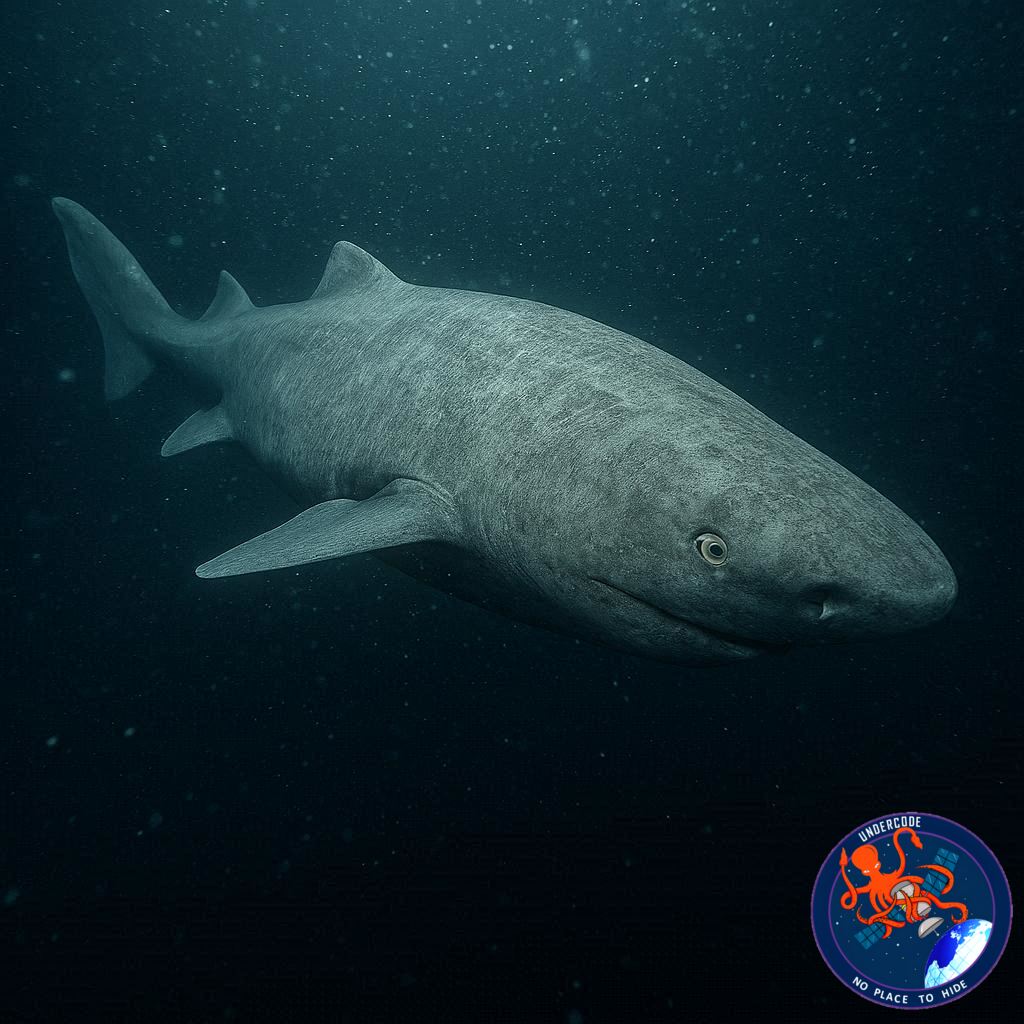
In one of the most chilling marine discoveries in recent history, researchers have captured the first-ever footage of a sleeper shark in Antarctic waters, rewriting what scientists thought they knew about life in the coldest ocean on Earth. Filmed nearly half a kilometer below the surface, in waters hovering just above freezing, the encounter suggests that large predatory sharks may have been silently roaming the deep Southern seas for centuries—unseen, undocumented, and underestimated.
This rare sighting doesn’t just add a new dot on the map of shark distribution. It challenges long-standing assumptions about how extreme cold, pressure, and isolation shape marine ecosystems around Antarctica.
the Original
The newly released video shows a sleeper shark estimated to reach up to four meters in length, calmly swimming at a depth of nearly 500 meters in the Antarctic Ocean. This marks the southernmost confirmed sighting of any shark species ever recorded.
According to researchers involved in the expedition, the shark’s presence was entirely unexpected. The Antarctic deep sea is one of the least explored environments on the planet, with extreme cold, thick ice cover, and logistical challenges limiting long-term observation. These factors may explain why such a large apex predator managed to evade detection for so long.
Sleeper sharks are known for their slow movement, energy-efficient lifestyles, and ability to survive in frigid, low-oxygen waters. Scientists believe these adaptations could allow them to thrive in Antarctic conditions, even though the region was previously thought to be unsuitable for sharks.
The footage suggests that the species may not be a recent arrival driven by climate shifts, but rather a long-established resident that has gone unnoticed due to the remoteness and depth of its habitat. Researchers stress that this single sighting opens the door to many unanswered questions about Antarctic biodiversity, predator-prey dynamics, and how much of the deep ocean remains unexplored.
What Undercode Say:
The significance of this discovery goes far beyond a single shark on camera. It exposes a critical blind spot in modern marine science: we still know remarkably little about deep-sea ecosystems, even in an age of satellites and autonomous submarines.
For decades, Antarctica has been viewed as a simplified food web dominated by krill, fish, seals, and whales. The appearance of a massive sleeper shark disrupts that narrative. Apex predators reshape ecosystems, influencing species distribution, behavior, and population balance. If sleeper sharks are established residents, they may play a far more important ecological role than previously imagined.
There’s also a technological lesson here. This shark wasn’t found because scientists were actively searching for it—it appeared because deep-sea imaging tools are finally reaching places humans rarely look. That raises an uncomfortable question: how many large, influential species remain undocumented simply because we haven’t pointed our cameras deep enough?
From a climate perspective, the find is equally intriguing. Sleeper sharks are often cited as indicators of cold, stable environments. Their presence could suggest that certain deep Antarctic ecosystems have remained relatively insulated from surface-level climate disruption—at least for now. However, as warming oceans alter current patterns and ice coverage, these hidden predators may face pressures long before we understand their population size or resilience.
This discovery also subtly challenges the idea that sharks are strictly bound by temperature limits. Instead, it supports a growing view that depth, metabolism, and evolutionary adaptation matter just as much as latitude. In other words, sharks may be far more versatile—and far more widespread—than our surface-based observations imply.
Ultimately, this single video frame is a reminder of scientific humility. Even in 2026, Earth’s most extreme environments still hold surprises capable of reshaping textbooks overnight.
🔍 Fact Checker Results
✅ The shark was filmed at nearly 500 meters depth in Antarctic waters.
✅ This is the southernmost confirmed shark sighting on record.
❌ No evidence yet confirms whether a stable population exists in the region.
📊 Prediction
As deep-sea exploration expands, more large predators will be documented in Antarctic waters, forcing scientists to rethink food chains and conservation priorities. Within the next decade, sleeper sharks may become a key species in understanding how extreme ecosystems adapt—and survive—in a rapidly changing ocean.
🕵️📝✔️Let’s dive deep and fact‑check.
References:
Reported By: www.euronews.com
Extra Source Hub (Possible Sources for article):
https://www.discord.com
Wikipedia
OpenAi & Undercode AI
Image Source:
Unsplash
Undercode AI DI v2
Bing
🔐JOIN OUR CYBER WORLD [ CVE News • HackMonitor • UndercodeNews ]
📢 Follow UndercodeNews & Stay Tuned:
𝕏 formerly Twitter 🐦 | @ Threads | 🔗 Linkedin | 🦋BlueSky | 🐘Mastodon


