
Listen to this Post
Introduction
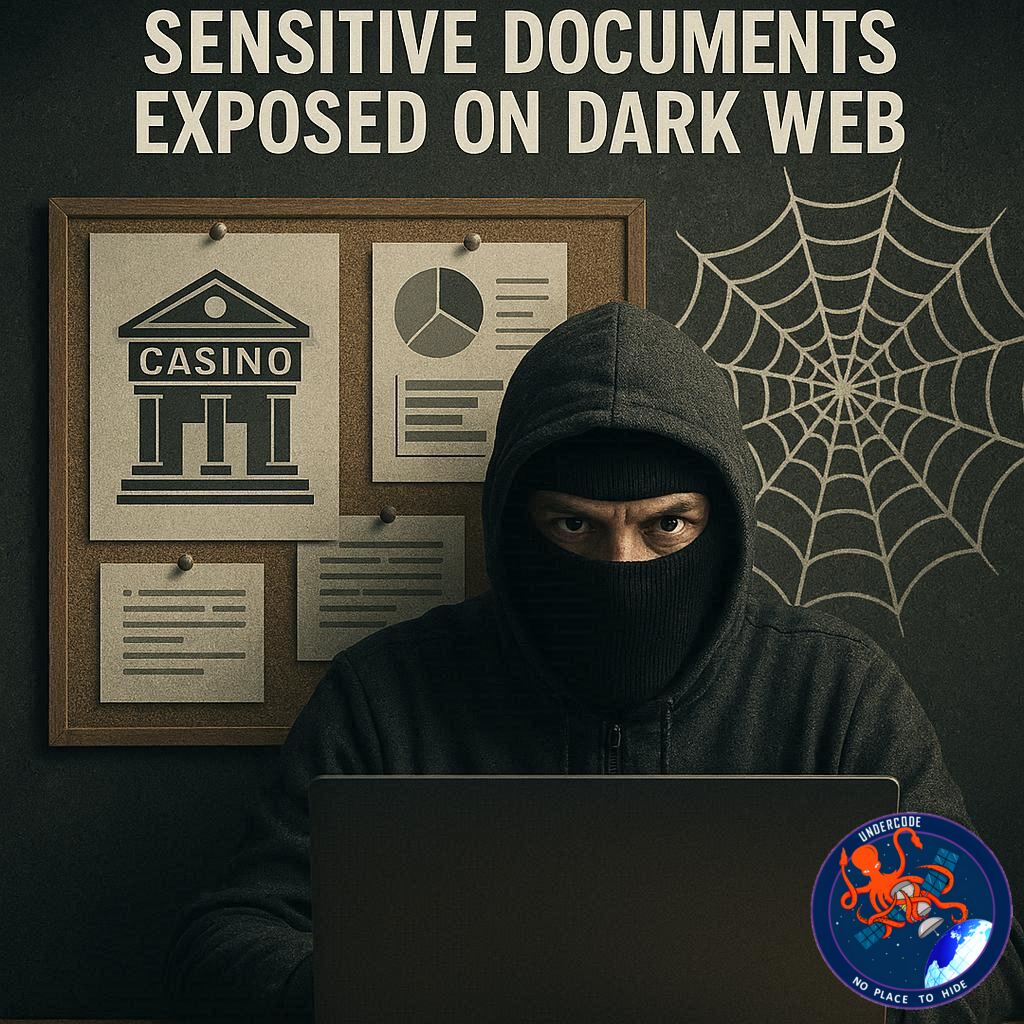
The underground cybercrime ecosystem continues to target industries that handle massive volumes of financial and personal data, and the casino sector is becoming an increasingly attractive target. A recent post shared by the account known as Dark Web Intelligence on the social platform X (formerly Twitter)
has sparked concern after alleging that confidential Customer Due Diligence (CDD) records linked to a casino operator were exposed online.
According to the post, the leaked material allegedly included highly sensitive identification documents such as passports and proof-of-address records. While the authenticity of the claims has not yet been independently verified, the incident highlights growing concerns surrounding identity protection, compliance failures, and cybercriminal marketplaces operating across hidden networks.
Alleged Leak Raises Alarm Over Casino Data Security
The brief post published by Dark Web Intelligence claimed that documents associated with a casino operator’s CDD process had surfaced online. In the gambling and financial compliance industry, CDD documentation is extremely sensitive because it is collected to verify customer identity and ensure anti-money laundering regulations are being followed.
Such records often include passports, utility bills, bank statements, residency confirmations, and other forms of personal identification. If these documents are genuinely leaked, they could expose affected individuals to identity theft, financial fraud, phishing attacks, or even synthetic identity creation.
The original message provided very little technical context regarding the source of the alleged breach, the threat actor involved, or whether the information originated from a direct network intrusion, insider compromise, third-party vendor breach, or credential theft operation. However, the mention of passports and proof-of-address files immediately drew attention within cyber intelligence circles due to the potential consequences tied to Know Your Customer (KYC) compliance data.
Why Casino Operators Are Prime Targets
Modern casino companies hold enormous volumes of customer information. Beyond gambling activity, many operators now function similarly to financial institutions. They process payments, verify identities, store banking records, and conduct enhanced due diligence procedures for high-value customers.
This makes them attractive targets for cybercriminal groups seeking profitable datasets. A single verified passport scan combined with proof-of-address documentation can fetch significant value on dark web marketplaces because it enables fraudsters to bypass verification systems across financial platforms.
Attackers increasingly target industries where identity verification is mandatory. Instead of stealing simple usernames and passwords, threat actors now pursue “full identity packages” that contain everything needed to impersonate a victim online.
The casino industry also faces a unique risk profile because it combines high financial turnover with a customer base that may include wealthy individuals, international travelers, and VIP members. A successful compromise can therefore expose both financial assets and reputational integrity simultaneously.
The Expanding Market for Identity Documents
Cybercriminal marketplaces have evolved dramatically in recent years. Early underground forums focused mainly on stolen credit card information, but modern dark web ecosystems prioritize complete identity portfolios.
A leaked passport alone may have limited use, but when paired with proof-of-address documentation, attackers can attempt to:
Open fraudulent financial accounts
Bypass cryptocurrency exchange verification
Conduct money laundering activities
Create synthetic identities
Execute social engineering campaigns
Target victims with spear-phishing operations
This trend has pushed organizations handling regulated customer onboarding processes into the center of the cybercrime economy.
The alleged casino-related leak reflects a broader reality: identity verification systems themselves are becoming major attack surfaces.
Regulatory Pressure and Compliance Risks
If verified, incidents involving leaked CDD documentation can create serious regulatory consequences. Casinos operating in regulated jurisdictions are typically subject to anti-money laundering laws and data protection regulations that require secure handling of customer information.
A failure to adequately protect customer onboarding records may trigger investigations from financial regulators, privacy authorities, and gaming commissions. Depending on the jurisdiction involved, organizations could face:
Compliance audits
Monetary penalties
Mandatory security remediation
Operational restrictions
Legal claims from affected users
In recent years, regulators worldwide have intensified scrutiny of organizations handling sensitive identity information due to rising cybercrime activity and large-scale data exposure incidents.
What Undercode Says:
The Real Value Behind Identity-Based Cybercrime
The alleged exposure of casino operator CDD files reflects a much larger transformation occurring inside cybercriminal economies. Traditional credential theft is no longer the dominant currency of underground markets. Today, verified identities represent one of the most valuable commodities online.
Threat actors increasingly prefer complete identity datasets because they allow long-term monetization opportunities. Passwords can be reset. Credit cards can be canceled. But government-issued identity records create persistent exploitation potential that may remain useful for years.
The gambling industry sits at a dangerous intersection between finance, entertainment, and regulatory compliance. Operators are required to gather extensive customer verification data, but every additional document collected increases the organization’s exposure footprint. In practice, compliance systems designed to reduce fraud can unintentionally create centralized repositories that become high-priority attack targets.
The Rise of “Compliance Data Harvesting”
One of the most overlooked cybercrime trends involves attacks specifically targeting compliance infrastructure. Criminal groups understand that KYC and CDD databases contain premium-value information.
Instead of attacking random consumer services, attackers increasingly pursue:
Online casinos
Cryptocurrency exchanges
Fintech platforms
Payment providers
Digital banks
Gambling affiliates
The reason is simple: these industries possess verified customer identities already packaged for exploitation.
This creates a paradox within modern cybersecurity. The stronger the identity verification requirements become, the more attractive organizations become to sophisticated attackers seeking consolidated personal data collections.
Why Proof-of-Address Documents Are Dangerous
Many people underestimate the importance of proof-of-address files in identity theft operations. Passports receive most of the attention, but proof-of-address records often enable the most damaging fraud scenarios.
Utility bills, residency confirmations, and banking correspondence can help criminals:
Pass onboarding checks
Defeat fraud-detection systems
Validate synthetic identities
Gain trust during social engineering attacks
When combined with leaked email addresses or phone numbers from unrelated breaches, attackers can construct highly convincing impersonation campaigns.
The Underground Economy Is Becoming More Professional
Dark web marketplaces have matured into highly organized ecosystems. Threat actors no longer simply dump stolen files publicly for attention. Many groups now operate structured monetization models involving:
Private brokers
Subscription-based leak forums
Identity packaging services
Verification bypass marketplaces
Fraud-as-a-service operations
This industrialization of cybercrime means leaked identity records can circulate rapidly between multiple criminal networks before victims are even aware of exposure.
The Human Cost Behind Data Breaches
Corporate discussions about cyber incidents often focus on technical impact and financial losses, but identity-related leaks create long-term consequences for real people.
Victims may spend years dealing with:
Fraudulent account activity
Loan application abuse
Cryptocurrency scams
Reputation damage
Cross-platform impersonation attempts
Unlike passwords, identity documents cannot simply be replaced instantly without bureaucratic and legal complications.
Deep Analysis
The alleged casino-related leak also demonstrates how cybercriminal intelligence monitoring has evolved publicly through social media amplification. Accounts tracking underground activity increasingly act as informal threat intelligence broadcasters, rapidly distributing breach claims before official investigations even begin.
From a technical perspective, organizations managing sensitive onboarding systems should prioritize:
Zero-trust segmentation
Encryption-at-rest policies
Tokenized identity storage
Secure document lifecycle management
Access logging with anomaly detection
Data minimization strategies
Security teams should also actively monitor underground leak forums for exposed organizational assets using dark web intelligence platforms.
Example monitoring commands used in security environments may include:
grep -Ri "passport" /var/log/security/
Bash
find /secure-storage/ -type f | grep -i "kyc"
PowerShell
Get-ChildItem -Path C:\SensitiveData -Recurse
Threat hunters frequently use SIEM queries to identify abnormal document access behavior associated with insider threats or exfiltration activity.
Organizations that fail to modernize identity-document security architectures may eventually face not only regulatory consequences but also severe reputational collapse in increasingly competitive digital industries.
🔍 Fact Checker Results
✅ Verified Information
The social media post referencing alleged casino operator CDD document exposure was publicly shared by Dark Web Intelligence on May 23, 2026.
❌ Unverified Claims
There is currently no publicly available forensic evidence confirming the authenticity of the alleged leaked documents or identifying the affected casino operator.
✅ Industry Context
Cybercriminal demand for KYC and identity verification documents has significantly increased in recent years due to their value in fraud, account takeovers, and money laundering operations.
📊 Prediction
The cybercrime landscape is likely to see a major increase in attacks targeting identity-verification infrastructure over the next several years. Casinos, cryptocurrency exchanges, fintech companies, and digital banking services will increasingly become preferred targets because they store high-quality verified identity data.
Regulators may also begin enforcing stricter controls around document retention and identity storage practices. Organizations could be pushed toward shorter retention periods, encrypted decentralized storage models, and AI-driven anomaly detection systems to reduce the impact of future breaches.
At the same time, underground markets specializing in “full identity packages” are expected to continue expanding, making personal document leaks far more dangerous than traditional password breaches.
▶️ Related Video (80% Match):
🕵️📝Let’s dive deep and fact‑check.
References:
Reported By: x.com
Extra Source Hub (Possible Sources for article):
https://stackoverflow.com
Wikipedia
OpenAi & Undercode AI
Image Source:
Unsplash
Undercode AI DI v2
Bing
🔐JOIN OUR CYBER WORLD [ CVE News • HackMonitor • UndercodeNews ]
📢 Follow UndercodeNews & Stay Tuned:
𝕏 formerly Twitter 🐦 | @ Threads | 🔗 Linkedin | 🦋BlueSky | 🐘Mastodon | 📺Youtube


