
Listen to this Post
 A Sudden Burst of Life in a Forgotten Corner of the Pacific
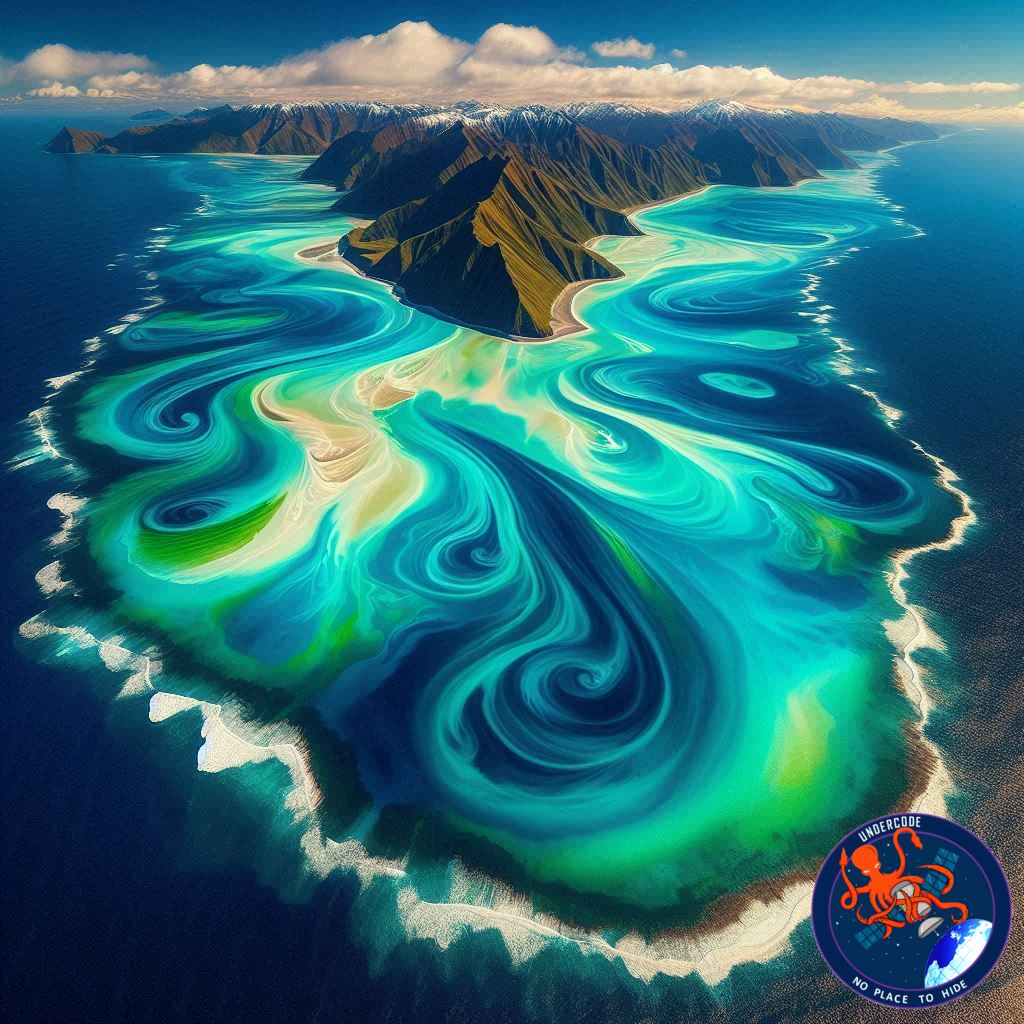
Far from major shipping routes and global attention, the Chatham Islands rarely make headlines. Yet in January 2026, these isolated islands east of New Zealand became the center of a striking natural event. Satellite imagery revealed a massive phytoplankton bloom forming luminous green and blue rings around the islands, transforming the surrounding ocean into a living canvas. What looked like abstract art from space was, in reality, a powerful reminder of how dynamic and interconnected Earth’s marine systems can be.
Summary of the Original
A Remote Location Draws Global Scientific Attention
Roughly 800 kilometers east of New Zealand’s South Island, the Chatham Islands sit alone in the South Pacific. Their rugged terrain and sparse population usually keep them out of the spotlight. In January 2026, however, satellite sensors detected an unusual oceanic phenomenon surrounding the islands.
A Bloom Visible from Space
A massive phytoplankton bloom encircled the islands during the austral summer. Phytoplankton are microscopic organisms that perform photosynthesis, forming the foundation of marine food chains. When conditions are right and their numbers surge, their pigments become visible from space.
Satellite Technology Captures the Event
The VIIRS instrument aboard NOAA’s NOAA-20 satellite recorded the bloom on January 10, 2026. The image revealed intricate green and blue patterns shaped by surface currents, eddies, and ocean circulation around the islands.
The Role of the Chatham Rise
The islands rest atop the Chatham Rise, a broad underwater plateau stretching eastward from New Zealand. This rise separates deeper waters to the north and south and plays a crucial role in shaping ocean conditions in the region.
A Convergence of Cold and Warm Currents
Along the Chatham Rise, cold, nutrient-rich Antarctic waters collide with warmer, nutrient-poor subtropical currents. This convergence creates well-mixed waters rich in nutrients, ideal for phytoplankton growth.
Seasonal Light Fuels Growth
Long daylight hours during the southern summer further accelerate phytoplankton reproduction. Combined with nutrient availability, these conditions frequently trigger blooms along the Chatham Rise.
A Foundation for Productive Fisheries
Phytoplankton sit at the base of the marine food web. Around the Chatham Islands, they support thriving fisheries, including economically valuable species such as pāua, rock lobster, and blue cod.
A Haven for Marine Mammals
The surrounding waters host a remarkable diversity of marine life. At least five seal species and around 25 species of whales and dolphins depend on the productivity of this ecosystem.
A Paradox of Abundance and Risk
Despite this richness, the Chatham Islands are also known as a hotspot for whale and dolphin strandings. At times, hundreds of animals have stranded on the islands’ shores, highlighting the complex and sometimes fragile balance of the local marine environment.
What Undercode Say:
A Natural Signal of Ocean Health
Large phytoplankton blooms are not just visually impressive; they act as biological indicators. Their presence suggests strong nutrient upwelling and active ocean mixing, both signs of a productive marine system.
The Chatham Rise as a Biological Engine
The underwater geography of the Chatham Rise functions like a conveyor belt for nutrients. Where currents collide and rise, life follows. This makes the region one of the most biologically active zones in the South Pacific.
Satellites as Environmental Witnesses
Modern Earth-observing satellites have transformed how scientists monitor oceans. Without VIIRS and similar instruments, blooms of this scale could pass unnoticed, especially in remote regions like the Chatham Islands.
Climate Change Adds Uncertainty
While phytoplankton blooms are natural here, climate-driven shifts in ocean temperature and circulation could alter their frequency or intensity. Warmer oceans may disrupt the delicate balance between nutrient supply and biological demand.
Productivity Does Not Equal Stability
High biological productivity can coexist with ecological stress. The same currents and seafloor features that concentrate food may also confuse marine mammals’ navigation systems, potentially contributing to mass strandings.
Fisheries Depend on Invisible Foundations
Commercial species rely indirectly on phytoplankton abundance. Any long-term disruption at this microscopic level could ripple upward, affecting fish stocks, local economies, and food security.
A Reminder of Ocean Complexity
The bloom underscores how life in the ocean is shaped by forces far beneath the surface. Seafloor topography, distant polar currents, and seasonal sunlight all combine to create moments of explosive biological growth.
Why Events Like This Matter
Beyond their beauty, such blooms help scientists validate ocean models, track ecosystem changes, and understand how marine systems respond to environmental stressors in a warming world.
Fact Checker Results
Satellite Detection Accuracy
✅ The VIIRS instrument is widely used for detecting ocean color and phytoplankton concentration from space.
Oceanographic Explanation
✅ The convergence of Antarctic and subtropical currents along the Chatham Rise is a well-documented phenomenon.
Ecological Impact Claims
❌ While blooms support fisheries, a direct causal link to marine mammal strandings remains scientifically unresolved.
Prediction
Future Blooms May Become More Visible 🌊
As satellite monitoring improves, more large-scale blooms in remote oceans will be detected and analyzed.
Climate Variability Will Shape Patterns 🌍
Changes in ocean temperature and currents may alter the timing, size, or intensity of phytoplankton blooms around the Chatham Rise.
Increased Scientific Focus on the Region 🔬
The Chatham Islands are likely to attract growing research interest as scientists seek to understand the links between ocean productivity, climate change, and marine biodiversity.
🕵️📝✔️Let’s dive deep and fact‑check.
References:
Reported By: science.nasa.gov
Extra Source Hub (Possible Sources for article):
https://www.facebook.com
Wikipedia
OpenAi & Undercode AI
Image Source:
Unsplash
Undercode AI DI v2
Bing
🔐JOIN OUR CYBER WORLD [ CVE News • HackMonitor • UndercodeNews ]
📢 Follow UndercodeNews & Stay Tuned:
𝕏 formerly Twitter 🐦 | @ Threads | 🔗 Linkedin | 🦋BlueSky | 🐘Mastodon


