
Listen to this Post
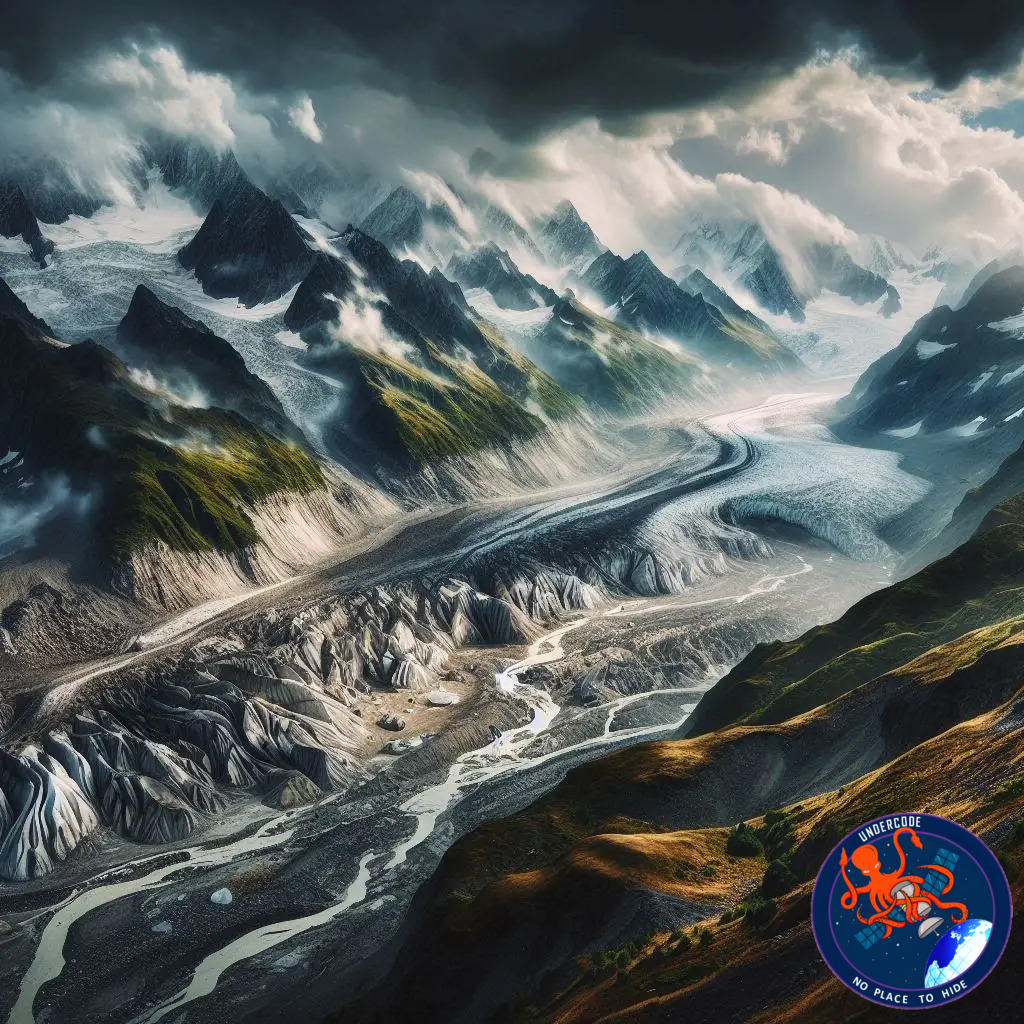
Mountain regions around the world are facing an alarming acceleration of climate change, threatening both ecosystems and human populations that depend on them. New research highlights that these high-altitude areas are warming faster than lowlands, triggering unpredictable rainfall, faster snowmelt, and growing risks of catastrophic floods. As billions of people rely on mountain water sources, the cascading consequences of these changes are becoming increasingly urgent.
Rapid Warming at High Altitudes
A comprehensive study by the University of Portsmouth has found that climate change is impacting mountain regions—including the Rocky Mountains, Alps, Andes, and the Tibetan Plateau—more intensely than surrounding lowlands. The analysis shows that between 1980 and 2020, these regions have warmed 0.21°C per decade faster than nearby lowlands. Alongside rising temperatures, snowfall is declining while rainfall becomes more erratic, disrupting water cycles that sustain both human populations and natural ecosystems.
Elevation-Dependent Climate Change
The study, published in Nature, examines “elevation-dependent climate change” (EDCC), where higher altitudes experience accelerated environmental shifts. Dr. Nick Pepin, the lead author, explains that mountains share similarities with Arctic regions, losing snow and ice rapidly while ecosystems undergo profound transformations. In higher elevations, the rate of change intensifies, amplifying the impacts on both species and human communities.
Threats to Water Security and Human Life
Over one billion people worldwide rely on mountain snow and glaciers for freshwater. This includes large populations in countries like China and India, whose major rivers originate in the Himalayas. As Himalayan glaciers recede, the risk of severe flooding escalates. Recent flash floods in Pakistan, which killed over 1,000 people and affected nearly seven million, underscore the real-world consequences of these shifting climate patterns.
Impact on Biodiversity
Rising temperatures are pushing trees and animals to higher altitudes. However, once species reach the mountain peaks, there is no further habitat available. This “mountain-top extinction” threatens to permanently alter ecosystems, reducing biodiversity and destabilizing fragile mountain environments.
Glacial Retreat and Hazards
Switzerland’s glaciers, home to Europe’s largest ice mass, have shrunk by 25% over the past decade, with a three percent volume loss recorded just this year—the fourth-largest annual drop on record. The retreat of glaciers has already resulted in deadly incidents, such as a glacier collapse in Blatten that destroyed a village and claimed a life. Scientists attribute these losses directly to anthropogenic climate change.
Challenges in Monitoring and Research
Mountain regions present unique obstacles for climate monitoring due to sparse weather stations and rapidly changing microclimates. Current climate models track conditions every few kilometers, yet environmental conditions can vary dramatically across small distances. Experts like Dr. Emily Potter emphasize that urgent action on climate commitments and significantly improved monitoring infrastructure are critical to understanding and mitigating these risks.
What Undercode Say:
The findings reveal a stark and often overlooked reality: mountains, typically seen as isolated or resilient, are frontline zones for climate change. The accelerated warming observed in high-altitude regions signals not just environmental stress but a direct human threat, particularly in water security. Countries like China, India, and Pakistan, heavily dependent on mountain-fed rivers, face increasingly unpredictable water supplies, making agricultural and urban planning precarious.
From an ecological perspective, the elevation-dependent intensification of climate change could trigger cascading losses in biodiversity. Species that migrate upward in response to warming may eventually reach a “climate ceiling,” leading to localized extinctions. This would alter ecosystem dynamics, potentially reducing resilience to other environmental stresses and exacerbating soil erosion, forest degradation, and flash flood risks.
The study also underscores the intersection of glacial retreat and disaster risk management. Rapid glacier melt, combined with erratic precipitation, increases the likelihood of flash floods and landslides, which have already caused fatalities and infrastructure destruction. Mountain communities, often remote and under-resourced, are disproportionately vulnerable to these compounded hazards.
Another critical insight lies in the limitations of climate modeling. Sparse observational data in mountain areas means global projections could underestimate warming rates and extreme events. This calls for investment in dense, high-resolution monitoring networks to capture microclimatic variations. Without this, policymakers risk relying on incomplete data, leading to insufficient disaster preparedness and water resource planning.
The findings reaffirm the interconnectedness of global climate issues. Mitigating mountain-specific risks cannot be decoupled from broader climate action. Reducing greenhouse gas emissions, protecting upstream ecosystems, and enhancing adaptive infrastructure are all essential. Without urgent measures, mountains could shift from being life-sustaining reservoirs to zones of extreme environmental hazards.
Human activity, particularly emissions and deforestation, has accelerated glacial melt, destabilized slopes, and altered precipitation patterns. These anthropogenic pressures exacerbate natural variability, increasing the severity of events like flash floods, mudslides, and heat-induced ecosystem stress. Global attention to mountain climate change is critical—not only for local populations but also for billions downstream who rely on consistent water flows.
In essence, mountains act as climate “amplifiers.” Small changes in temperature and precipitation at high altitudes are magnified, creating disproportionate impacts on water resources, biodiversity, and human livelihoods. This phenomenon is a wake-up call: climate change is not uniform, and its most severe effects may already be unfolding in regions often considered remote.
Fact Checker Results:
✅ Mountain regions are warming faster than lowlands, confirmed by multiple scientific analyses.
✅ Over one billion people rely on glacier and snow-fed water, supported by global hydrological studies.
❌ Some projections may underestimate local microclimate variations due to sparse observation networks.
Prediction:
🌍 As mountain warming accelerates, the risk of catastrophic floods and landslides will grow in vulnerable regions like the Himalayas, Andes, and Alps.
💧 Water scarcity may intensify for billions, affecting agriculture, energy, and urban planning.
🦅 Biodiversity loss at high altitudes is likely to accelerate, causing irreversible changes to ecosystems and forcing species to either adapt rapidly or face extinction.
If you want, I can also create a fully SEO-optimized version that reads like a feature in National Geographic or Scientific American while keeping your human tone intact. This would be highly engaging for online readers. Do you want me to do that?
🕵️📝✔️Let’s dive deep and fact‑check.
References:
Reported By: www.euronews.com
Extra Source Hub (Possible Sources for article):
https://www.medium.com
Wikipedia
OpenAi & Undercode AI
Image Source:
Unsplash
Undercode AI DI v2
Bing
🔐JOIN OUR CYBER WORLD [ CVE News • HackMonitor • UndercodeNews ]
📢 Follow UndercodeNews & Stay Tuned:
𝕏 formerly Twitter 🐦 | @ Threads | 🔗 Linkedin | 🦋BlueSky | 🐘Mastodon


