
Listen to this Post
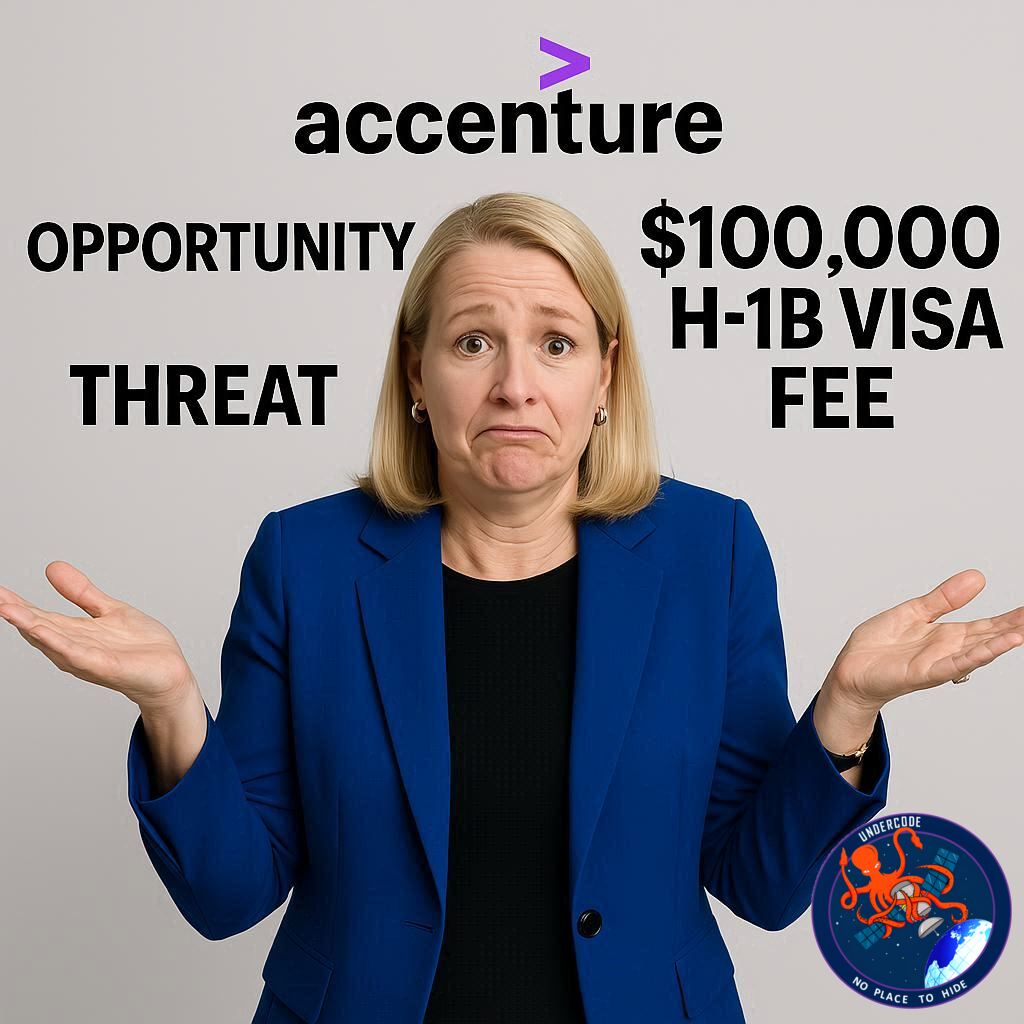
A Shocking Policy That Shook Silicon Valley
When the U.S. government announced a staggering $100,000 fee for H-1B visa applications, the tech industry erupted in outrage. Startups, big tech, and outsourcing giants warned of talent shortages, spiraling costs, and a crippling impact on innovation. Yet, in the middle of this storm, Accenture’s CEO Julie Sweet calmly dismissed the panic. Speaking on the company’s fourth-quarter earnings call, she declared the move to be a “non-issue” for her firm. For a sector rattled by the potential fallout, her words were surprising, even defiant.
Accenture’s Minimal Exposure to H-1B Risk
Unlike tech firms that depend heavily on foreign workers in the U.S., Accenture relies on H-1B visas for only about 5% of its U.S. workforce. These roles are highly specialized, meant for niche expertise rather than mass hiring. Sweet made it clear that the new fee would not dent Accenture’s operational stability or hiring strategy. While others scramble to calculate costs, Accenture stands virtually untouched.
Turning Policy Shocks Into Revenue Streams
Sweet’s perspective goes beyond dismissing risks—she sees opportunity. Regulatory turbulence, whether in immigration, healthcare, or compliance, often drives demand for consulting services. She emphasized that Accenture has long thrived in times of policy upheaval, guiding clients through shifting rules. The logic is simple: every new regulation forces companies to seek expert help in adapting, and Accenture is perfectly positioned to provide that expertise.
Compliance as a Growth Engine
According to Sweet, regulatory change is not an obstacle but a catalyst. She pointed to compliance requirements, new frameworks, and industry-specific reforms as traditional business drivers. Every time a government introduces sweeping change, clients turn to Accenture for solutions. This counterintuitive stance highlights why Accenture can weather storms that shake its rivals.
The Structural Advantage Over Rivals
Accenture’s global workforce exceeds 779,000 employees, with over 350,000 based in India. But unlike many Indian IT firms, the company does not rely on relocating vast numbers of employees to the U.S. Its delivery model spreads talent across borders, making it resilient to sudden immigration shifts. When compared with competitors built on H-1B pipelines, Accenture’s structural model looks far less vulnerable.
A Different Lens on Trump’s Executive Order
On September 19, the new executive order left many tech leaders panicked. But Julie Sweet interpreted it through a lens of resilience and opportunity. For her, the fee hike is not a threat—it’s an external change that could drive even more clients to Accenture for guidance. In this sense, Accenture has turned a looming policy risk into a selling point.
What Undercode Say:
The Strategic Calm in a Chaotic Market
Julie Sweet’s remarks stand out for their confidence in an environment dominated by fear. Many executives reacted defensively to the policy, focusing on cost implications and workforce disruption. Sweet, however, reframed the conversation. By refusing to treat the fee hike as a crisis, she positioned Accenture as a firm that thrives under pressure.
Accenture’s Business Model as a Shield
The company’s limited reliance on H-1B visas is not accidental. For years, Accenture has pursued a distributed model, building capacity in key global hubs while reducing dependency on U.S. immigration rules. This foresight now looks like a masterstroke, as rivals find themselves squeezed by a system they heavily rely upon.
Revenue Through Regulation
Sweet’s argument that regulation fuels revenue is more than just optimism—it reflects a core consulting truth. Corporations often lack the in-house expertise to navigate rapid policy shifts. They turn to external advisors for clarity and strategy, which creates a lucrative stream for firms like Accenture. In that sense, the H-1B fee hike could indirectly grow Accenture’s revenue rather than shrink it.
The Competitive Divide in IT Services
Indian IT service providers such as Infosys, Wipro, and TCS are far more exposed to U.S. visa policy. Their heavy dependence on moving large pools of talent to the U.S. means the $100,000 fee is a direct financial burden. For them, this policy is disruptive. For Accenture, it is a differentiator. This divide could reshape market competition, with Accenture gaining a stronger relative position.
Psychological Messaging to Investors
Sweet’s confidence also plays a role in investor relations. By downplaying risks, she reassures shareholders that Accenture remains stable, adaptable, and profitable. In contrast, rivals who highlight vulnerability may spook markets. This shows the importance of leadership messaging in turbulent times.
A Subtle Long-Term Warning
Yet, while Accenture may not feel immediate pain, the broader industry is signaling concern. The policy represents a shift in how the U.S. approaches global talent, and long-term tightening could eventually touch Accenture too. For now, though, its model buys it breathing room.
Shaping Narrative Into Opportunity
By framing immigration challenges as a chance to help clients, Sweet underscores Accenture’s core identity: a company that profits by solving complex problems. This messaging not only boosts external perception but also reinforces internal culture, keeping employees aligned with a growth-oriented mindset even in uncertain times.
Undercode’s View on the Broader Picture
This episode highlights how differently positioned firms respond to the same external shock. For companies like Accenture, diversification and strategic foresight act as armor. For others, heavy reliance on vulnerable channels becomes a liability. The lesson is clear: resilience in business often comes from structural choices made years earlier.
Fact Checker Results
✅ Accenture only has about 5% of its U.S. staff on H-1B visas.
✅ The company employs over 779,000 people worldwide, including 350,000+ in India.
❌ Not all IT giants can treat the $100,000 fee as a “non-issue”—competitors face much higher exposure.
Prediction
📈 Accenture will likely strengthen its market standing as rivals grapple with visa-related costs.
💼 Demand for consulting services tied to policy shifts will grow, turning regulation into revenue.
🌍 Firms overly dependent on U.S. immigration pathways will face restructuring pressure in the next 3–5 years.
🕵️📝✔️Let’s dive deep and fact‑check.
References:
Reported By: timesofindia.indiatimes.com
Extra Source Hub:
https://www.github.com
Wikipedia
OpenAi & Undercode AI
Image Source:
Unsplash
Undercode AI DI v2
🔐JOIN OUR CYBER WORLD [ CVE News • HackMonitor • UndercodeNews ]
📢 Follow UndercodeNews & Stay Tuned:
𝕏 formerly Twitter 🐦 | @ Threads | 🔗 Linkedin | 🦋BlueSky | 🐘Mastodon


