
Listen to this Post
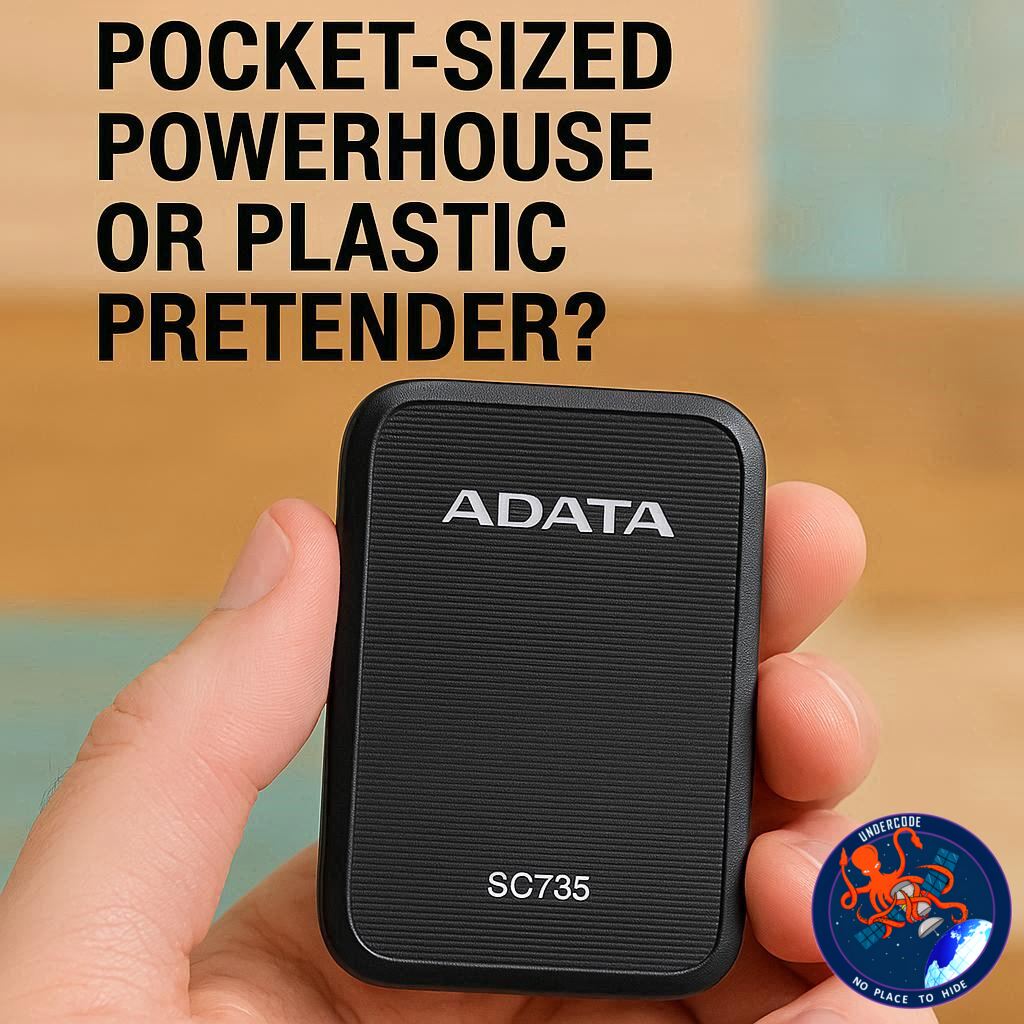
A Modern Introduction to a Compact Contender
In the age of on-the-go content creation, photographers, videographers, and tech enthusiasts are constantly hunting for portable storage that’s fast, durable, and affordable. The Adata SC735 promises to tick all those boxes — combining SSD-level performance, rugged durability, and sleek portability in a design small enough to fit on a keychain. It sounds like the perfect solution for creators who don’t want to lug around bulky drives or deal with tangled cables. But beneath its compact shell, does it truly deliver on its promises, or is it another case of “style over substance”? Let’s unpack what this little drive brings to the table.
Compact Design Meets Questionable Build
At first glance, the Adata SC735 looks like an oversized USB stick, complete with a retractable Type-C connector. It’s impressively lightweight at just 13.6 grams and measures a tiny 55 x 28 x 12 mm — making it one of the smallest high-capacity SSDs available today. It’s designed to be thrown into a pocket, attached to a keychain, or slipped into a camera bag for easy use on the go.
However, while it carries MIL-STD-810G 516.6 certification for impact resistance, the build quality feels more “plastic toy” than “rugged tool.” There’s noticeable flex when you press the casing, and without a lanyard loop, it’s surprisingly easy to lose. Adata could’ve added a simple tether option — a missed opportunity for such a portable drive.
Performance That Punches Above Its Price
When it comes to raw performance, though, the SC735 redeems itself. It’s powered by a USB 3.2 Gen 2 Type-C interface, delivering read speeds up to 1050 MB/s and write speeds near 1000 MB/s. Real-world testing using tools like CrystalDiskMark and AS SSD confirms these numbers.
This means you can transfer gigabytes of video or large photo libraries in seconds. Even editing HD or light 4K footage directly from the drive is possible — though extended sessions can cause thermal throttling due to the plastic shell’s poor heat dissipation.
For casual users, photographers, or editors on the move, the speed is more than sufficient. But for long-term heavy workflows, the SC735 might struggle under heat pressure.
Plug-and-Play Simplicity — But Lacks Extras
Adata takes a minimalist approach here — no bundled software, no encryption, no fancy backup tools. It arrives formatted in exFAT, ensuring cross-platform compatibility right out of the box, whether you’re using Windows, macOS, Android, Linux, or iOS.
That simplicity is refreshing for those who just want to plug in and start transferring files. But professionals who require data encryption or drive management tools will need to rely on third-party solutions.
Adata SC735 Pricing and Availability
The SC735 is available in 512GB, 1TB, and 2TB variants, priced competitively at around $50, $75, and $120 respectively. That’s great value considering its performance levels. Available directly from Adata and most major retailers, it stands out as a budget-friendly SSD for those who prioritize portability over premium aesthetics.
The Verdict: A Small Drive with Big Ambitions
When judged purely on speed and affordability, the Adata SC735 delivers excellent value. However, the plasticky build, lack of encryption, and absence of bundled tools hold it back from being a top-tier choice. It’s perfect for light everyday tasks, photo backups, or as a travel companion, but not ideal for professional or rugged field use.
In essence, it’s a fast drive trapped in a cheap shell — capable, but not luxurious.
What Undercode Say:
The Adata SC735 represents a fascinating paradox in the portable SSD market: a drive that’s both impressive and underwhelming at the same time. From a technical standpoint, Adata nailed the essentials — blazing fast transfer speeds, cross-platform compatibility, and pocket-sized convenience. But from a design and material perspective, it falls short of its own ambition.
The retractable USB-C connector is clever and practical, eliminating the need for cables. However, it’s a double-edged sword — moving parts mean potential wear over time, especially in a casing that already feels fragile. For a product marketed as “rugged,” the plastic shell doesn’t inspire much confidence.
Another point of contention is thermal management. Plastic doesn’t conduct heat effectively, so while benchmarks show near-maximum throughput during short bursts, the drive’s performance drops during sustained heavy transfers or editing sessions. This isn’t catastrophic for everyday users, but it does highlight that “rugged” doesn’t always mean “workhorse.”
On the bright side, Adata’s focus on simplicity pays off for casual users. No drivers, no setup, no bloatware — just instant plug-and-play functionality. In an era where many brands overload drives with intrusive software, Adata’s raw, no-frills approach is refreshing.
Where Adata missed the mark is in user experience refinement. Adding a lanyard hole, metal casing, or even a detachable cable option would elevate this from a “good budget drive” to a “must-have portable SSD.” A small ergonomic improvement could dramatically improve long-term usability.
From an SEO and market perspective, the SC735 occupies a sweet spot between affordable consumer drives and entry-level professional models. Competing products from SanDisk, Samsung, and Crucial offer more polish and better material quality, but often at higher prices. For budget-conscious buyers who value performance over aesthetics, the SC735’s appeal is undeniable.
Still, there’s an underlying contradiction in its marketing. The drive flaunts military-grade testing, yet its design feels more at home on a student’s desk than in a field kit. It’s a drive that looks tough but feels tender.
In a world where portable SSDs are shrinking in size and growing in capability, the SC735 is a sign of Adata’s intent to blend convenience and power. But it also reflects a broader industry trend — brands increasingly prioritize performance metrics over tactile quality.
If Adata refines the SC735 with an aluminum shell, built-in encryption, and better heat management, it could easily rival the Samsung T7 Shield or SanDisk Extreme Pro. Until then, it remains a solid mid-tier performer with a few forgivable flaws.
Ultimately, the SC735 is for those who want speed without paying premium prices. It’s not perfect, but it’s practical — and that’s often what matters most.
Fact Checker Results:
✅ Performance: Verified benchmark speeds closely match Adata’s claims.
❌ Ruggedness: Build quality does not fully align with “rugged” branding.
✅ Value: Excellent pricing compared to other portable SSDs in its category.
Prediction:
Given the current trajectory of Adata’s SSD line, future iterations of the SC735 series will likely feature enhanced durability, improved thermals, and integrated encryption — areas where the current model falls short. Expect Adata to move toward metal-bodied, waterproof variants to directly compete with Samsung and Crucial by late 2026. If they manage to balance sturdiness with affordability, the SC735’s successor could become one of the most popular portable SSDs in its price bracket.
🕵️📝✔️Let’s dive deep and fact‑check.
References:
Reported By: www.techradar.com
Extra Source Hub:
https://www.discord.com
Wikipedia
OpenAi & Undercode AI
Image Source:
Unsplash
Undercode AI DI v2
🔐JOIN OUR CYBER WORLD [ CVE News • HackMonitor • UndercodeNews ]
📢 Follow UndercodeNews & Stay Tuned:
𝕏 formerly Twitter 🐦 | @ Threads | 🔗 Linkedin | 🦋BlueSky | 🐘Mastodon


