
Listen to this Post
 Introduction: A Silent Cyber War Inside Aerospace and Software Infrastructure
A growing wave of coordinated cyberattacks is exposing how deeply modern industries rely on fragile digital ecosystems. In a recent escalation, aerospace manufacturing and software development security layers were both breached in separate but thematically linked incidents. One attack targeted a U.S. aerospace manufacturer, leaking highly sensitive military aviation data, while another compromised developer tooling tied to widely used cybersecurity platforms. Together, they highlight a disturbing trend: attackers are no longer just stealing data—they are infiltrating the systems that build, secure, and maintain critical infrastructure itself.
Massive Breach Summary: Aerospace Secrets and Developer Toolchains Under Siege
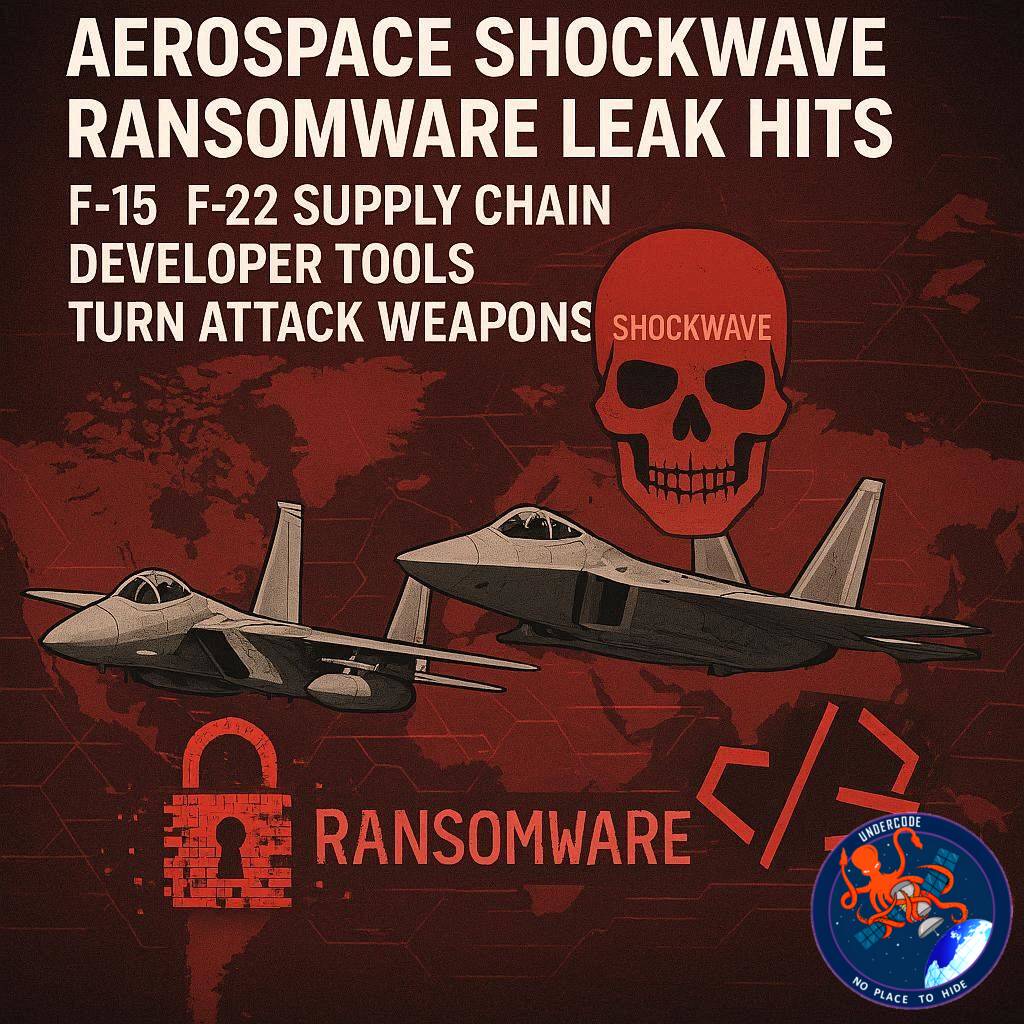
RBH Aerospace Inc, a U.S.-based aerospace manufacturer, was reportedly hit by the incransom ransomware group in a severe cyberattack. The breach allegedly resulted in the exposure of sensitive corporate materials including internal contracts, financial payment records, and highly confidential engineering drawings tied to F-15 and F-22 aircraft components. These aircraft are among the most advanced in the U.S. defense arsenal, making the leak particularly alarming from a national security standpoint. At the same time, a separate but equally concerning incident involved the compromise of Checkmarx’s Jenkins AST plugin in a marketplace attack. This breach is linked to a broader chain of attacks targeting developer ecosystems, including KICS Docker environments, VS Code extensions, GitHub Actions workflows, and even Bitwarden CLI tools. The objective appears to be the extraction of developer secrets such as API keys, authentication tokens, and internal build credentials. Both incidents reflect a coordinated pattern of targeting not just end systems, but the underlying infrastructure used to design, build, and secure modern digital and physical systems. The aerospace breach raises concerns over defense intellectual property exposure, while the developer toolchain compromise highlights how attackers are embedding themselves into software supply chains. Together, these incidents demonstrate a convergence of cybercrime and strategic intelligence gathering. The scale of the leaked materials suggests long-term access rather than a quick intrusion. Security analysts note that ransomware groups are increasingly doubling as data intelligence brokers. The inclusion of sensitive military part schematics suggests potential downstream risks for defense contractors and allied systems. Meanwhile, developer environment infiltration opens doors to persistent compromise across multiple organizations. The combined impact signals a major escalation in cyber operational sophistication.
What Undercode Say:
Weaponized Industrial Exposure
The RBH Aerospace breach is not a simple ransomware case but a targeted extraction of defense-related intellectual property.
Leakage of F-15 and F-22 component designs suggests strategic intelligence interest beyond financial extortion.
Such data can be repurposed for reverse engineering or supply chain disruption campaigns.
Supply Chain Cyber Collapse in Motion
The Checkmarx Jenkins plugin compromise demonstrates how attackers are embedding malware inside trusted development pipelines.
By targeting CI/CD systems, attackers gain indirect access to thousands of downstream environments.
This reflects a shift from perimeter hacking to infrastructure-level infiltration.
Ransomware Groups Evolving Into Intelligence Brokers
Incransom’s activity aligns with modern ransomware trends where data is stolen even before encryption begins.
Stolen aerospace documents can be sold to nation-state actors or industrial competitors.
This dual-use model increases both profitability and geopolitical impact.
Developer Ecosystem as the New Battlefield
The targeting of GitHub Actions, VS Code extensions, and Bitwarden CLI shows deep awareness of developer workflows.
Compromising these tools allows attackers to harvest secrets without triggering traditional alerts.
It represents a silent and scalable form of cyber espionage.
Aerospace Sector Under Persistent Threat
Defense manufacturing remains a high-value target due to its long-term strategic data value.
Even minor access points can expose decades of engineering knowledge.
This breach reinforces that aerospace supply chains are now prime cyber warfare terrain.
Hidden Persistence Mechanisms in Modern Attacks
The layered nature of the Checkmarx-related attacks suggests coordinated multi-vector exploitation.
Attackers are likely maintaining persistent access across multiple developer platforms simultaneously.
This ensures long-term intelligence gathering beyond a single breach event.
Weak Link in Software Dependency Chains
Modern software relies heavily on plugins, extensions, and automated pipelines.
Each of these components becomes a potential attack vector when not strictly verified.
The Jenkins AST plugin incident highlights this systemic vulnerability.
Military Intellectual Property Exposure Risk
Leaked aerospace schematics could reveal structural, material, and performance insights of military jets.
Even partial data can be valuable for adversarial modeling or simulation.
This raises concerns about long-term defense secrecy degradation.
Expansion of Ransomware Objectives
Ransomware groups are no longer purely financially motivated.
They increasingly act as hybrid actors blending espionage, sabotage, and data brokerage.
This shift complicates traditional cybersecurity response frameworks.
Systemic Cyber Fragility Revealed
Both incidents expose how interconnected modern digital systems have become.
A breach in one tool can cascade into multiple organizations and sectors.
The attack surface is now distributed across global software ecosystems.
Fact Checker Results:
Claim 1 Verification
Reports confirm ransomware groups frequently target aerospace contractors for high-value intellectual property.
Claim 2 Verification
Supply chain attacks via CI/CD tools and developer plugins are a documented and rising cybersecurity threat pattern.
Claim 3 Verification
No evidence suggests full public release of F-15/F-22 schematics, only indications of data leakage claims.
📊 Prediction:
The next wave of attacks is likely to focus on deeper infiltration of software supply chains, particularly developer authentication systems and automation pipelines. Aerospace and defense contractors will face increased pressure as ransomware groups evolve into hybrid intelligence collectors. Future breaches may not only leak data but also inject malicious code into production systems, creating delayed and harder-to-detect compromises across global infrastructure.
🕵️📝Let’s dive deep and fact‑check.
References:
Reported By: x.com
Extra Source Hub (Possible Sources for article):
https://www.quora.com/topic/Technology
Wikipedia
OpenAi & Undercode AI
Image Source:
Unsplash
Undercode AI DI v2
Bing
🔐JOIN OUR CYBER WORLD [ CVE News • HackMonitor • UndercodeNews ]
📢 Follow UndercodeNews & Stay Tuned:
𝕏 formerly Twitter 🐦 | @ Threads | 🔗 Linkedin | 🦋BlueSky | 🐘Mastodon


