
Listen to this Post
Introduction: Africa’s Solar Energy at a Turning Point
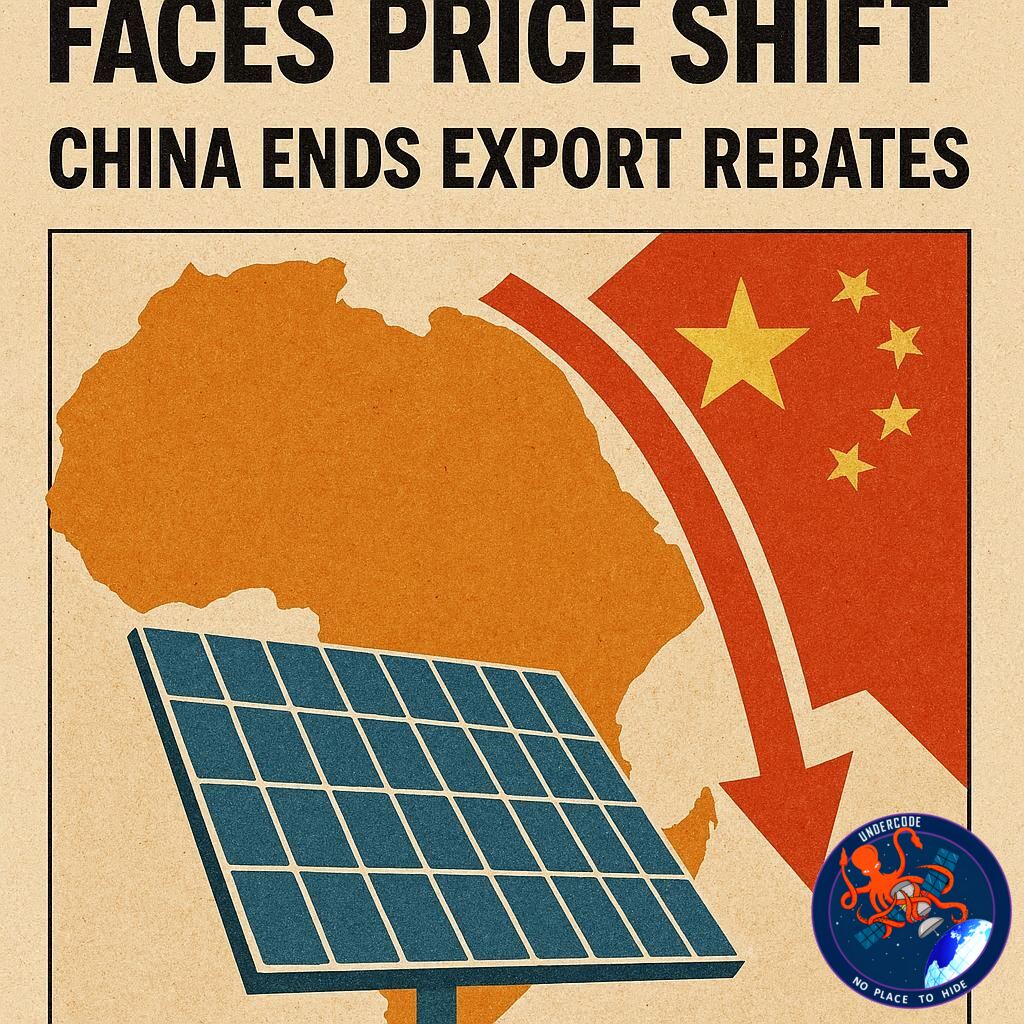
Africa has long relied on solar power as its most affordable and rapidly deployable energy source. Yet, changes in Chinese policy are set to alter the continent’s clean energy landscape. China’s decision to end value-added tax (VAT) rebates on solar panel exports—and later phase out incentives for battery storage production—may drive up costs for African solar projects. While experts emphasize that the impact will be manageable, this shift signals the end of an era of ultra-cheap Chinese solar technology and underscores the need for Africa to strengthen local manufacturing and storage solutions.
Rising Solar Costs in Africa
Starting April 1, Chinese solar panel exports will no longer benefit from VAT rebates, increasing import costs for African nations. Solar installations, already more expensive in Africa due to high shipping, logistics, and tariffs, are expected to see a modest price rise. Analysts predict that while the effect will be gradual rather than sudden, it may slightly delay project timelines and increase overall costs, particularly for countries heavily dependent on Chinese imports.
Why China Is Ending Solar Tax Rebates
China’s policy shift reflects the realities of a highly competitive global solar market. Solar module prices dropped sharply from €0.22 per watt in 2022 to as low as €0.06 per watt in 2025, driven by aggressive pricing and VAT rebate subsidies. These subsidies transferred costs to overseas buyers, often at a loss to Chinese manufacturers. Beijing is now scaling back support to address overcapacity and focus on advanced technologies, effectively creating a firmer global price floor.
Expert Views on Price Changes
John van Zuylen, CEO of the Africa Solar Industry Association, notes that African countries will likely experience a gradual upward pricing trend rather than a sudden spike. Wangari Muchiri, an energy analyst, adds that while costs will increase, solar remains Africa’s cheapest energy source and will continue to outperform diesel and other alternatives. Sonia Dunlop of the Global Solar Council warns that slight project delays could occur due to supply chain congestion and stockpiling as countries adjust to new import realities.
Battery Storage: Africa’s Critical Challenge
While panel costs are expected to rise modestly, battery storage incentives are being phased out through 2027, potentially affecting smaller-scale users the most. Batteries are vital for off-grid and backup power, making solar truly reliable. Historically, many African solar projects have been installed without batteries due to high costs, though integration is slowly increasing.
Demand and Local Manufacturing Pressure
Despite policy changes, solar adoption in Africa continues to grow, currently supplying about 3% of the continent’s electricity. Analysts emphasize that countries investing in local manufacturing will reduce vulnerability to Chinese policy shifts. Those that do not may face future supply disruptions and higher costs if Beijing adjusts export policies again.
What Undercode Says: Strategic Implications of Rising Costs
Impact on Africa’s Renewable Energy Expansion
The end of Chinese VAT rebates represents a structural shift, not a market collapse. African governments and investors must anticipate gradual cost increases when planning solar expansion. Projects may need revised budgets, adjusted timelines, or alternative supply chains to maintain momentum.
Solar Panel Prices vs. Alternatives
Even with a moderate rise in costs, solar energy remains significantly cheaper than diesel and other fossil fuels, particularly in off-grid and rural areas. This reinforces Africa’s long-term commitment to solar as a primary energy source.
Importance of Battery Storage
Battery storage will increasingly determine the success of Africa’s solar projects. Countries without local storage solutions may struggle with reliability, limiting solar’s effectiveness in providing consistent electricity after sunset.
Opportunities for Local Manufacturing
China’s policy change offers Africa a strategic opportunity to develop domestic solar panel and battery production. Investment in local manufacturing could reduce exposure to global market shifts, create jobs, and enhance energy security.
Supply Chain Adaptation
African importers may face temporary congestion, stockpiling, or shipping delays as they adjust to new costs. Smart logistics management and diversification of suppliers will mitigate the impact.
Long-Term Energy Security
A gradual price increase may encourage innovation and investment in local renewable technologies. Countries proactive in adopting local manufacturing and storage solutions are likely to emerge more resilient against future policy changes in China.
Market Resilience and Investment Confidence
Investors are expected to view the policy shift as manageable. African solar markets are mature enough to absorb small cost increases without deterring long-term growth, particularly as demand for electricity continues to rise across the continent.
Environmental and Economic Benefits
Despite modest cost increases, solar energy’s environmental advantages—reduced emissions, lower fossil fuel dependence, and rural electrification—remain compelling. Cost rises may be offset by efficiency improvements and economies of scale in local production.
Regional Differences
Countries heavily reliant on Chinese imports, like Nigeria, Kenya, and South Africa, may feel more immediate effects. Others with diversified supply chains may face minimal disruption. Strategic planning at the national level is critical to minimizing project delays.
Policy Coordination and Public-Private Partnerships
Governments can collaborate with private sector players to subsidize storage solutions, incentivize local production, and maintain growth momentum. Effective policy coordination will be essential to ensure a smooth transition away from dependency on Chinese incentives.
Investment in Advanced Technologies
China’s shift toward advanced technologies presents an opportunity for African markets to adopt next-generation solar and battery solutions, potentially achieving higher efficiency and lower lifecycle costs.
Energy Equity and Off-Grid Access
Rural populations, who depend on affordable off-grid solar, could be disproportionately affected if storage costs rise. Policymakers should prioritize equitable access to ensure no communities are left behind.
Strategic Planning for Future Export Shocks
This policy change highlights the risks of overreliance on a single exporter. Africa’s energy planners must build flexible strategies to buffer against sudden international policy adjustments.
Financing and Risk Management
Gradual price increases could influence project financing. Lenders may need to adjust risk assessments, and governments may consider incentives to maintain investment attractiveness.
Long-Term Market Forecasts
Analysts predict a moderate, manageable upward trend in solar costs, rather than sharp spikes, creating an opportunity for steady market growth without disruption to Africa’s clean energy transition.
Public Awareness and Industry Education
Educating stakeholders—governments, investors, and consumers—about the structural nature of these changes can prevent panic and encourage proactive strategies.
Integration with Other Renewable Sources
Africa’s solar strategy should remain part of a broader renewable mix, including wind, hydro, and geothermal, to ensure stable energy supply despite fluctuating solar costs.
Regional Collaboration
Regional energy partnerships can optimize procurement, logistics, and storage infrastructure to mitigate the cost impact of Chinese policy changes.
Innovation in Financing Models
Emerging financing solutions, such as microgrids, community solar projects, and pay-as-you-go models, could help absorb incremental cost increases while expanding access.
Workforce Development
Expansion of local solar manufacturing will require training programs, creating opportunities for a skilled workforce and strengthening the continent’s renewable energy sector.
What This Means for Global Solar Markets
China’s adjustment signals a more mature, sustainable global solar market. African nations can benefit from predictable pricing while leveraging opportunities for domestic innovation and manufacturing.
🔍 Fact Checker Results
✅ China will end VAT rebates on solar panels starting 1 April 2026.
✅ Solar energy remains the cheapest electricity source in most African countries, even with moderate price increases.
✅ Battery storage costs remain a critical factor for off-grid reliability in Africa.
📊 Prediction
African solar prices will gradually rise due to China’s VAT policy change, but solar will continue to be more affordable than fossil fuels. Countries investing in local manufacturing and storage solutions will strengthen energy security and accelerate the clean energy transition, while nations reliant solely on imports may face delays and higher costs. Solar adoption will remain on a steady upward trajectory, with battery integration emerging as the decisive factor for reliable electricity access.
🕵️📝✔️Let’s dive deep and fact‑check.
References:
Reported By: www.euronews.com
Extra Source Hub (Possible Sources for article):
https://stackoverflow.com
Wikipedia
OpenAi & Undercode AI
Image Source:
Unsplash
Undercode AI DI v2
Bing
🔐JOIN OUR CYBER WORLD [ CVE News • HackMonitor • UndercodeNews ]
📢 Follow UndercodeNews & Stay Tuned:
𝕏 formerly Twitter 🐦 | @ Threads | 🔗 Linkedin | 🦋BlueSky | 🐘Mastodon


