
Listen to this Post
Introduction
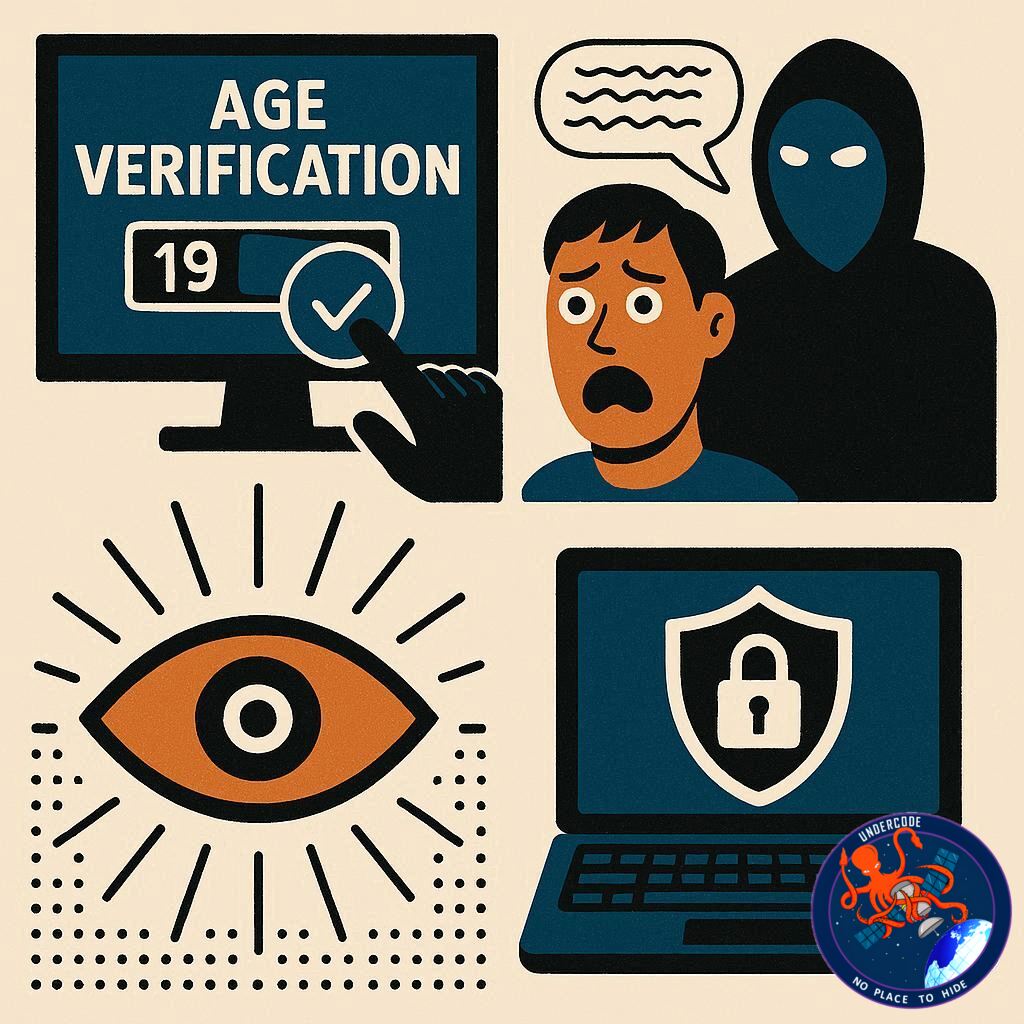
Age verification on the internet has become a hot topic, sparking intense debate and widespread misinformation. From fear-driven campaigns to legitimate technological solutions, the conversation around online identity and protecting minors is both complex and highly politicized. Recent social media activity shows that while some parties exploit public fears for profit, others are quietly advancing privacy-preserving technologies that balance security with user protection.
Disinformation and Fear Around Age Verification
Cybersecurity expert Troy Hunt recently highlighted a surge of disinformation surrounding online age verification. He observed coordinated campaigns amplifying fear and spreading hyperbole, often portraying verification measures as invasive or risky. Accounts like vx-underground have repeatedly resurfaced breaking news in a way that seems designed to stoke public anxiety. This pattern indicates a conscious strategy to exploit users’ fears about digital IDs for profit, according to Hunt’s commentary.
Exploitation of Public Fear for Profit
The recurring posts from accounts like vx-underground, combined with exaggerated narratives, make it clear that fear is being monetized. Scare tactics around identity verification—suggesting massive invasions of privacy or mandatory digital IDs—gain traction quickly, often before accurate information can reach users. This cycle of disinformation has amplified confusion, with repeated images and reports resurfacing across weeks, making casual users doubt legitimate age verification initiatives.
Legitimate Advances in Privacy-Preserving Verification
Despite the noise, real progress is occurring. Tech companies are exploring ways to implement age verification while safeguarding privacy. Tom Warren highlighted Apple’s approach in iOS 26.4, where account age can be verified for compliance with the UK’s Online Safety Act without exposing personal data. This type of privacy-preserving verification demonstrates that security and convenience can coexist, countering the narrative that digital ID measures are inherently invasive.
Misunderstanding and Oversimplification
Some users still misunderstand age verification, reducing it to a “recaptcha on a form,” as noted by social media user Ritik. This oversimplification underlines a knowledge gap: while basic methods exist, modern implementations are far more sophisticated, combining cryptographic proofs and privacy-focused architectures. Oversimplified public perception creates fertile ground for disinformation campaigns.
Coordinated Legislative Pushes
The global push for online ID legislation under the guise of child protection has raised skepticism among privacy advocates. Dodo on Security pointed out that internet ID legislation is appearing worldwide almost simultaneously, suggesting a coordinated effort that may not always prioritize genuine child safety. While the intentions may be positive, the rollout and public messaging often leave users feeling surveilled rather than protected.
Balancing Security and Privacy
The challenge remains: how can online platforms verify age responsibly without eroding trust or privacy? Experts argue for systems that use minimal data, provide transparency, and allow users to retain control over their personal information. Apple’s iOS approach is just one example of how these principles can be implemented at scale.
Public Perception and Media Role
The media plays a critical role in shaping public perception of age verification technologies. Sensationalized reports and fear-driven narratives can overshadow technical advancements. Platforms and journalists must work to educate users on the difference between exploitative scare campaigns and genuine, privacy-focused innovations.
The Role of Cybersecurity Experts
Thought leaders like Hunt serve as valuable voices in this space, separating fact from fiction. By identifying patterns of coordinated disinformation and highlighting legitimate tech solutions, cybersecurity experts help guide public discourse toward informed decision-making.
What Undercode Says:
Emerging Risks of Fear-Based Campaigns
The most immediate concern is the exploitation of fear. Coordinated campaigns that repeatedly circulate alarming news can distort public perception, causing users to resist even well-intentioned verification measures. This risk is amplified by social media algorithms that favor engagement over accuracy.
Privacy-Preserving Technologies as a Solution
Technological innovations now allow for verification without mass data collection. Zero-knowledge proofs, cryptographic methods, and limited data sharing models can verify age while keeping personal information private. Companies adopting these approaches demonstrate that safety and privacy are not mutually exclusive.
Policy Implementation Challenges
Even with strong technical solutions, the political and legislative landscape complicates adoption. Coordinated laws across countries may prioritize compliance over innovation, creating patchwork regulations that confuse developers and users alike.
User Education and Transparency
A critical component is user education. Misunderstandings, like equating age verification with a simple captcha, reveal a gap between public perception and technological reality. Clear communication can reduce fear, counter misinformation, and encourage adoption of privacy-preserving tools.
Social Media Dynamics
Social platforms themselves shape the debate. Fear-based campaigns gain visibility because they provoke reactions, whereas careful reporting on privacy-safe methods struggles to achieve the same reach. This dynamic underscores the need for proactive engagement by security experts and journalists.
Market Implications
Companies that adopt transparent, privacy-focused age verification may gain user trust, while those perceived as invasive could face backlash. Trust becomes a competitive advantage in an era where data privacy is increasingly valued by consumers.
The Role of Open-Source Communities
Open-source projects, security researchers, and independent analysts provide additional checks. Their work can validate claims, expose disinformation, and propose solutions that large corporations may overlook due to bureaucratic or commercial constraints.
Long-Term Societal Effects
Persistent misinformation campaigns risk fostering distrust in online regulation more broadly. If users perceive age verification as a surveillance tool rather than a safety measure, adoption may decline, reducing the overall effectiveness of child protection initiatives.
Interdisciplinary Approach Needed
Successful implementation requires collaboration between technologists, legislators, and educators. Only a holistic strategy that combines secure systems, clear laws, and public understanding can achieve both safety and privacy goals.
Ethical Considerations
Beyond technical and legislative aspects, ethical questions persist. Who controls the verification systems, and how is data handled? Ethical frameworks must guide both development and deployment to prevent misuse.
Recommendations for Users
Users should be informed about legitimate verification tools, avoid spreading fear-based narratives, and advocate for privacy-conscious solutions. Digital literacy campaigns can empower individuals to discern between genuine security initiatives and manipulative disinformation.
Industry Trends
Expect continued experimentation with decentralized ID solutions and privacy-preserving cryptography. Companies that innovate responsibly may shape the next generation of online verification standards.
Global Regulatory Landscape
International coordination on digital ID and age verification will likely continue, but cultural, legal, and technological differences will affect how policies are implemented in practice.
Future of Verification Technology
Emerging AI-driven systems may offer smarter, non-invasive verification, automatically detecting age without storing personal data. Such innovations could finally balance compliance, privacy, and user experience.
The Critical Role of Communication
Clear, transparent messaging from tech companies and regulators is essential. Miscommunication fuels disinformation, whereas education and clarity can build trust and encourage adoption of effective measures.
🔍 Fact Checker Results
Coordinated campaigns exploiting fear of digital ID are verified as recurring and deliberate. ✅
Apple’s age verification method in iOS 26.4 is accurately described as privacy-preserving. ✅
Claims that all age verification is invasive are misleading; modern solutions often protect user data. ❌
📊 Prediction
Privacy-preserving age verification will gain momentum over the next 12–24 months, particularly in jurisdictions with strict online safety laws. Companies embracing secure, minimal-data approaches are likely to gain public trust, while fear-driven narratives may lose influence as literacy around digital privacy grows. Adoption of zero-knowledge proof systems and cryptographic solutions may become industry standard, setting a global benchmark for responsible verification.
🕵️📝✔️Let’s dive deep and fact‑check.
References:
Reported By: x.com
Extra Source Hub (Possible Sources for article):
https://www.quora.com
Wikipedia
OpenAi & Undercode AI
Image Source:
Unsplash
Undercode AI DI v2
Bing
🔐JOIN OUR CYBER WORLD [ CVE News • HackMonitor • UndercodeNews ]
📢 Follow UndercodeNews & Stay Tuned:
𝕏 formerly Twitter 🐦 | @ Threads | 🔗 Linkedin | 🦋BlueSky | 🐘Mastodon


