
Listen to this Post
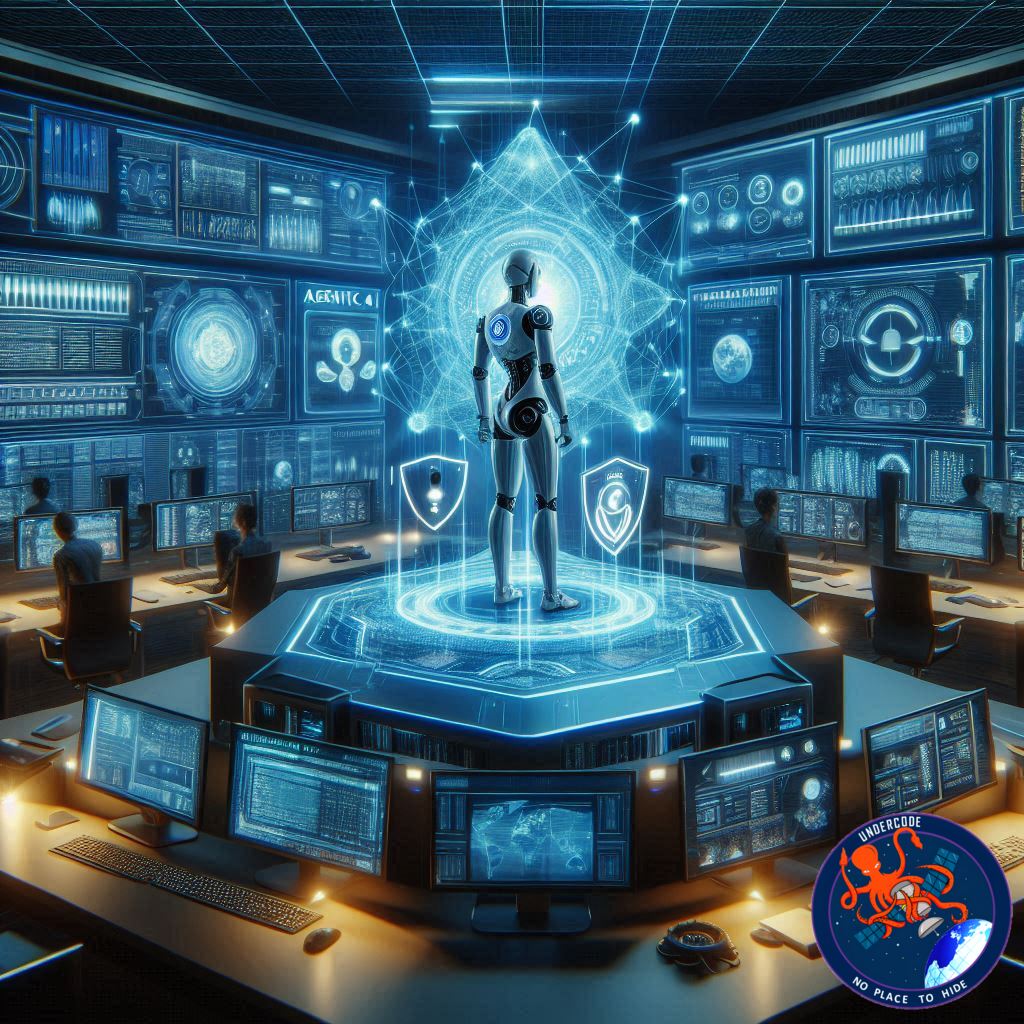
In a world where cyber threats evolve faster than human defenders can respond, Security Operations Centers (SOCs) are struggling under the weight of a global shortage of 4 million cybersecurity professionals. The traditional approach of reactive triage—sorting through alerts one by one—has proven inadequate, leaving organizations vulnerable to sophisticated attacks. Enter agentic AI: a transformative technology that doesn’t just automate, but thinks and acts on low-level cybersecurity tasks, allowing human analysts to focus on proactive, strategic threat hunting. This shift promises to move SOCs from firefighting mode to anticipatory, intelligent defense.
The Overwhelming Reality of SOC Triage
Most SOCs today operate in perpetual triage mode. The backlog of vulnerabilities and alerts is staggering. According to Prophet Security, two main factors keep SOCs from staying ahead: a severe shortage of skilled personnel and the sheer pace of modern cyber threats—accelerated by AI-generated attacks and automation. Security teams often spend over an hour reviewing a single alert. In an eight-hour workday, this means seven alerts are addressed out of hundreds or even thousands, leaving critical threats unmitigated. The bottleneck is no longer data collection but human capacity to process it at the speed machines can. Despite having dozens of security tools, SOC analysts cannot keep pace, resulting in delayed responses and missed threats.
The Human Bottleneck: Why Data Alone Isn’t Enough
The problem isn’t the volume of data—it’s making sense of it fast enough to stop attackers. SOCs need to shift from “spray-and-pray” alert management to intelligent prioritization. However, human analysts often lack the cycles or expertise to fully follow validated leads through complex attack paths. Low-level decision-making slows down security workflows, creating a persistent gap between alerts and action.
Agentic AI: Augmenting Human Capability
Agentic AI steps in to fill this gap. Unlike traditional or generative AI, agentic AI is capable of understanding situations, making decisions, and executing actions autonomously or with minimal human input. In SOCs, agentic AI performs routine, repetitive tasks such as correlating alerts across multiple tools, handling low-value security items, and automating steps between detection and remediation. By offloading these tasks, agentic AI frees human analysts to focus on high-value activities like proactive threat hunting, detection engineering, and strategic planning.
From Triage to Proactive Defense
With agentic AI, SOCs can finally shift from reactive triage to proactive cybersecurity. These AI agents don’t just automate—they think, prioritize, and act across multiple systems, reducing response times dramatically. Analyst platforms leveraging agentic AI have reported up to a tenfold reduction in mean-time-to-respond (MTTR), proving the tangible benefits of augmented defense.
Bridging AI Reasoning and Human Intuition
The synergy between AI agents and human analysts is key. AI provides machine-speed data processing, pattern recognition, and workflow automation, while humans contribute intuition, contextual understanding, and decision-making capabilities. This collaboration creates a feedback loop where AI insights empower analysts, and analysts refine AI actions, resulting in a more resilient and intelligent cybersecurity posture.
What Undercode Say:
The emergence of agentic AI represents more than a technological upgrade—it signals a paradigm shift in how cybersecurity is approached. By offloading repetitive, low-value tasks, organizations can optimize scarce human resources for maximum impact. SOCs historically constrained by human limitations can now operate at machine speed, while preserving the strategic advantage that human intuition brings.
From an analytical standpoint, the implications are profound: agentic AI not only addresses the workforce shortage but also redefines the role of human analysts. Analysts can move from the reactive handling of alerts to shaping cybersecurity strategies, identifying emerging threats, and improving system resilience. The combination of AI reasoning and human expertise creates a layered defense strategy capable of adapting to sophisticated, AI-driven attacks.
Moreover, agentic AI fosters more efficient incident management. Alerts are no longer bottlenecks but actionable intelligence. Security teams can respond to threats preemptively rather than reactively, improving overall risk posture and minimizing downtime. The implementation of agentic AI also strengthens SOC workflows, enabling continuous learning and improvement, as AI agents evolve alongside threat landscapes.
However, adopting agentic AI is not without challenges. Integration requires careful orchestration with existing security tools, ongoing monitoring, and a clear understanding of AI’s capabilities and limitations. Misconfigured AI systems or over-reliance could lead to gaps in defense. Effective deployment demands a balance between human judgment and machine decision-making, ensuring AI acts as an augmentation, not a replacement, for critical security personnel.
In the broader cybersecurity ecosystem, agentic AI adoption can influence policy, compliance, and industry standards. As organizations demonstrate measurable efficiency and threat mitigation gains, regulatory frameworks may evolve to recognize AI-augmented SOCs as a best practice, setting new benchmarks for cybersecurity maturity.
Fact Checker Results:
✅ There is a global shortage of approximately 4 million cybersecurity workers.
✅ SOCs struggle with alert backlogs, often leaving critical threats unaddressed.
✅ Agentic AI can significantly reduce mean-time-to-respond (MTTR) in SOC environments.
Prediction:
📊 Over the next five years, agentic AI will become standard in top-tier SOCs, reducing human workload by 50–70% while enabling proactive threat hunting. Expect AI-human hybrid teams to dominate cybersecurity defense, with MTTR decreasing dramatically and cyber risk exposure minimized. Organizations adopting agentic AI early will gain a competitive edge in both resilience and regulatory compliance.
If you want, I can also rewrite this in a highly SEO-optimized, magazine-style format that keeps the storytelling punch and makes it viral-ready for cybersecurity blogs. Do you want me to do that?
🕵️📝✔️Let’s dive deep and fact‑check.
References:
Reported By: securityaffairs.com
Extra Source Hub (Possible Sources for article):
https://www.stackexchange.com
Wikipedia
OpenAi & Undercode AI
Image Source:
Unsplash
Undercode AI DI v2
Bing
🔐JOIN OUR CYBER WORLD [ CVE News • HackMonitor • UndercodeNews ]
📢 Follow UndercodeNews & Stay Tuned:
𝕏 formerly Twitter 🐦 | @ Threads | 🔗 Linkedin | 🦋BlueSky | 🐘Mastodon


