
Listen to this Post
Introduction
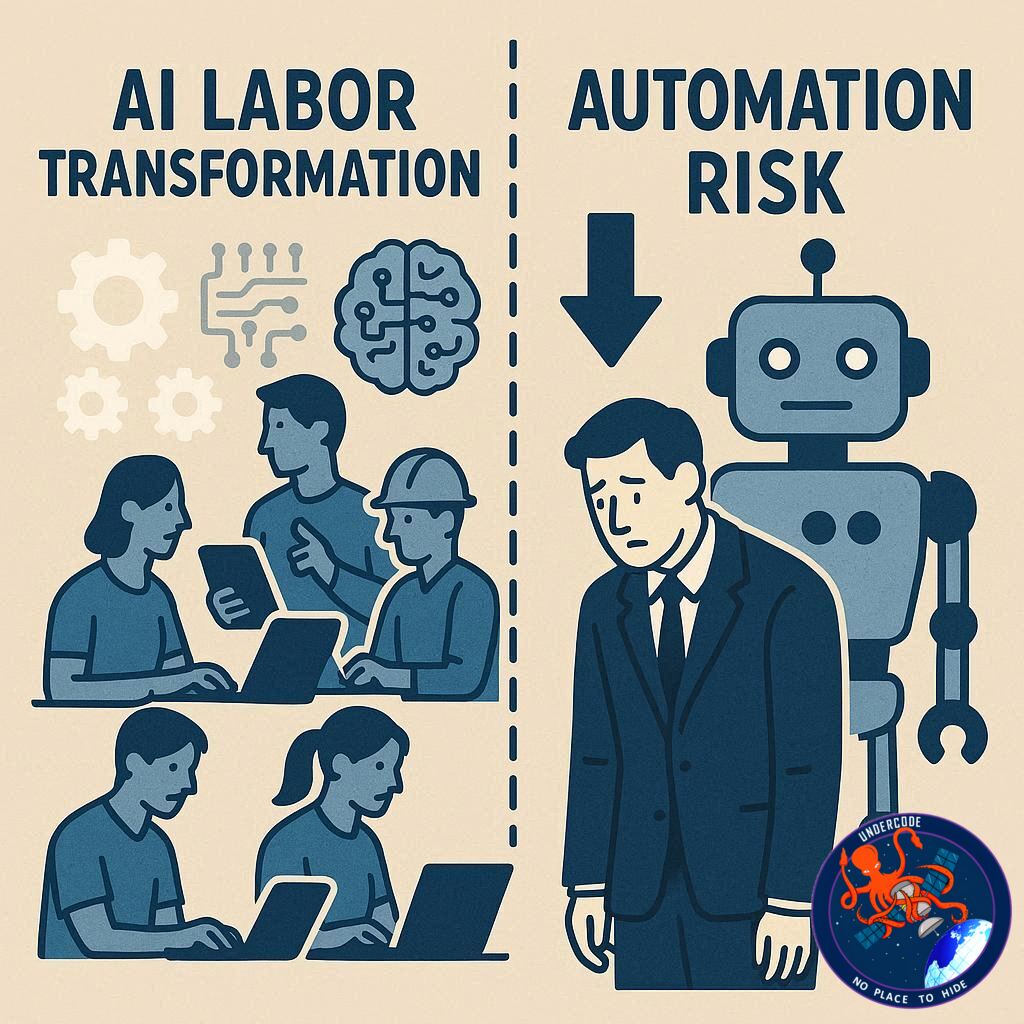
Artificial intelligence is no longer a distant disruptor of the labor market. It is already embedded in daily work routines, especially in occupations considered highly vulnerable to automation. A new study from OpenAI reveals a surprising pattern: the workers most exposed to AI-driven job disruption are also the ones using AI the most. However, this usage still represents only a small portion of AI’s full potential capabilities. Rather than pointing toward immediate job losses, the findings suggest a more complex transition where AI reshapes tasks, demand, and even job growth patterns across different sectors.
Summary of the Original
Workers in jobs considered highly vulnerable to automation, such as data-entry clerks, bookkeepers, and customer service representatives, are already using AI tools at significantly higher rates than workers in less exposed roles. According to a new OpenAI study, these high-risk occupation groups use AI for roughly three times more of their relevant tasks compared to others, even though this still represents only a fraction of what AI could theoretically automate. The research categorizes over 900 U.S. occupations into four groups based on their exposure to AI-driven change.
Approximately 18% of jobs are classified as facing the highest near-term automation risk, including administrative and clerical work. Around 24% may experience shrinking demand even if humans remain in those roles, such as certain HR and coordination jobs. Another 12% are expected to grow due to AI adoption, particularly roles like software development and AI-related engineering. The remaining 46% are considered relatively stable in the near term, including professions like teaching and caregiving.
Despite expectations of disruption, unemployment trends do not yet reflect widespread job losses in high-risk categories. In fact, workers in those roles have experienced a smaller increase in unemployment compared to groups perceived as less affected. OpenAI researchers emphasize that these categories are not predictions of job loss but rather indicators of where labor pressure may first emerge.
The study also highlights a major gap between current AI usage and its theoretical potential. In high-risk occupations, AI could potentially perform up to 90% of tasks, yet workers are currently using it for less than a quarter of that capacity. This suggests that adoption is still in early stages.
Finally, the report emphasizes a key economic tension: when AI makes tasks easier, overall demand for those tasks may increase rather than decrease. As OpenAI’s chief economist noted, tools that increase productivity often lead to expanded output and broader usage rather than reduced labor demand.
What Undercode Say:
The findings from OpenAI highlight a contradiction at the center of the AI labor debate. On one hand, automation risk is concentrated in routine-heavy occupations like bookkeeping and data entry. On the other hand, these very workers are the most active users of AI tools, suggesting that adoption is driven by necessity rather than replacement.
The data shows that exposure to AI does not immediately translate into job displacement. Instead, it reflects a gradual integration process where workers use AI to enhance productivity rather than eliminate roles entirely. This transition phase is critical because it masks the early signs of structural change in labor markets.
Another important insight is the uneven pace of adoption. While AI has the theoretical capacity to automate a large share of tasks in high-risk jobs, actual usage remains far below that threshold. This gap indicates barriers such as trust, training, regulation, and workflow integration.
The classification of jobs into four categories also suggests that automation will not act as a uniform force. Some roles will shrink, others will expand, and many will remain stable but transformed. This fragmentation makes forecasting job losses significantly more complex than earlier industrial automation cycles.
Interestingly, unemployment data does not yet show the expected surge in job losses among high-risk groups. This may indicate that AI is currently functioning more as a productivity enhancer than a replacement technology.
However, this balance may not remain stable. Historically, when productivity tools reduce the cost of producing goods or services, demand often expands. This means AI could increase total work volume even if it reduces time per task.
This creates a paradox: automation reduces effort per unit of work but potentially increases total workload demand across industries. The labor market impact therefore depends not only on what AI can do, but on how markets respond to lower production costs.
The report also implicitly challenges the simplistic narrative of mass unemployment. Instead of a sudden collapse, the shift is likely to be gradual, uneven, and sector-specific.
Workers in exposed occupations may not be replaced immediately but could face changing job definitions, requiring new skills and hybrid human-AI workflows.
This shift also places pressure on training systems and organizational structures to adapt quickly. Without reskilling, the productivity gains from AI may concentrate unevenly across the workforce.
Ultimately, the study suggests that AI is less of a job destroyer in the short term and more of a job reshaper. The real transformation lies in task redistribution rather than job elimination.
Fact Checker Results
AI is already widely used in high-automation-risk jobs for productivity enhancement.
Unemployment data does not yet show major displacement in those categories.
The claim that AI can perform up to 90% of tasks remains theoretical, not realized.
Prediction
In the near term, AI will continue to expand as a task-assist tool rather than a replacement system.
Medium-term labor shifts will likely appear first in administrative and coordination roles.
Long-term outcomes will depend on whether productivity gains create new demand faster than automation reduces labor needs.
🕵️📝✔️Let’s dive deep and fact‑check.
References:
Reported By: axioscom_1776357836
Extra Source Hub (Possible Sources for article):
https://www.instagram.com
Wikipedia
OpenAi & Undercode AI
Image Source:
Unsplash
Undercode AI DI v2
Bing
🔐JOIN OUR CYBER WORLD [ CVE News • HackMonitor • UndercodeNews ]
📢 Follow UndercodeNews & Stay Tuned:
𝕏 formerly Twitter 🐦 | @ Threads | 🔗 Linkedin | 🦋BlueSky | 🐘Mastodon


