
Listen to this Post
Introduction: Why Artificial Intelligence Is Suddenly a Fed Problem
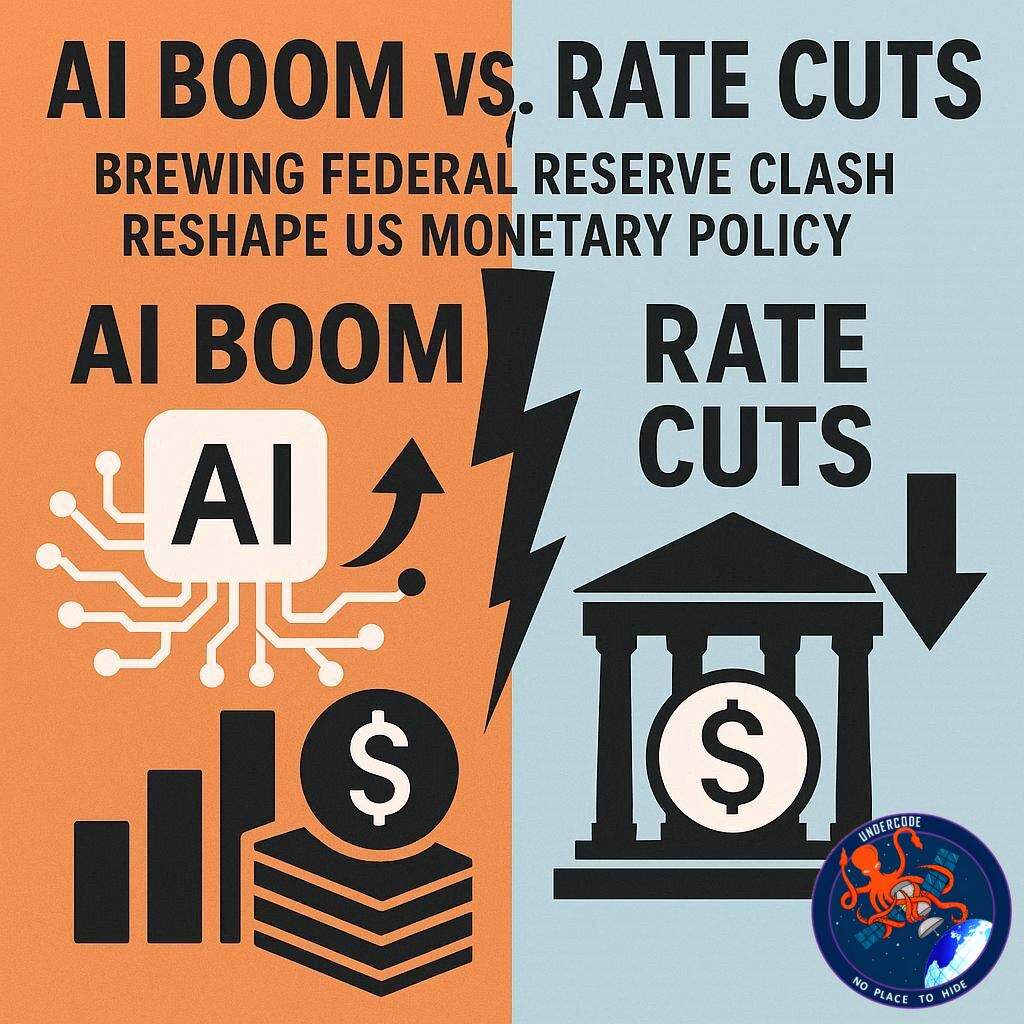
Artificial intelligence is no longer just a Silicon Valley obsession or a boardroom buzzword. It has landed squarely in the middle of U.S. monetary policy. As AI adoption accelerates across industries, a sharp debate is emerging inside the Federal Reserve over whether this technological wave should lead to lower interest rates—or justify keeping them higher for longer. Recent remarks from senior Fed officials reveal deep philosophical differences that could define the future of borrowing costs, inflation, and labor markets in the world’s largest economy.
the Original
A senior Federal Reserve official has poured cold water on the idea that artificial intelligence will lead to lower interest rates anytime soon, directly contradicting a more optimistic vision put forward by a leading contender to head the central bank. Speaking at an event in New York, Michael Barr, a Federal Reserve governor, said he does not expect the AI boom to justify cutting policy rates in the near term.
Barr’s comments stand in stark contrast to the views of Kevin Warsh, who was nominated by Donald Trump to succeed Jerome Powell when Powell’s term ends in May. Warsh has argued that widespread AI adoption could unleash the most powerful productivity surge in modern history, making the economy structurally disinflationary and clearing the path for lower interest rates.
Warsh has drawn historical parallels to the internet boom of the 1990s, suggesting that the Fed should once again take a leap of faith, as it did under former Chair Alan Greenspan, by leaning toward cheaper borrowing costs. Barr, however, signaled skepticism, highlighting early disagreement within the Fed’s influential 12-member rate-setting committee.
That disagreement matters because every member of the committee, including the chair, has just one vote when interest rates are set at the Fed’s eight annual meetings. Even if Warsh becomes chair, he would still need to persuade his colleagues to support meaningful rate cuts.
Barr acknowledged that AI will likely have a transformative impact on the economy, affecting productivity, hiring patterns, and wages. He said the most probable outcome is gradual job displacement, with some roles disappearing while new ones emerge as AI becomes embedded across industries. This gradual adoption, he argued, reduces the risk of mass unemployment, although short-term labor market disruptions remain possible.
Importantly, Barr emphasized that managing these disruptions should not fall solely on the Fed, but also on Congress and broader public policy. He also rejected the notion that productivity gains from AI are automatically disinflationary, warning that stronger productivity could actually raise the so-called neutral rate of interest.
A higher neutral rate would imply that the economy can tolerate higher borrowing costs, undermining calls for aggressive rate cuts. Barr is not alone in this view. Cleveland Fed President Beth Hammack has also suggested that AI-driven productivity could push the neutral rate upward. Meanwhile, market participants such as Michael Hans of Citizens Private Wealth caution that it is still too early to determine when AI’s productivity gains will meaningfully show up in economic data.
What Undercode Say:
The real story here is not artificial intelligence itself, but how uncertain its economic consequences remain—even among the world’s most powerful central bankers. AI is being treated less like a standard productivity tool and more like a macroeconomic wildcard. That alone explains why consensus inside the Fed is fracturing.
Historically, technology-driven productivity gains have often coincided with lower inflation. Cheaper production, faster logistics, and automation all tend to suppress prices over time. Warsh’s argument fits neatly into that narrative, framing AI as the next internet-scale disruption that could justify looser monetary policy.
Barr’s position, however, reflects a more cautious and arguably more modern reading of the economy. Productivity gains do not exist in a vacuum. If AI meaningfully boosts corporate profitability, demand for investment capital rises. Businesses borrow more, households anticipate higher lifetime earnings, and savings rates can fall. All of these dynamics push interest rates upward, not downward.
This is where the concept of the neutral rate becomes crucial. If AI raises the neutral rate, then cutting interest rates aggressively could actually overstimulate the economy, reigniting inflation rather than suppressing it. In that scenario, lower rates would not be a gift from innovation—they would be a policy mistake.
There is also a political undercurrent that cannot be ignored. Calls for lower rates align neatly with the Trump administration’s broader economic messaging, particularly as elections approach. Barr’s resistance signals that institutional guardrails inside the Fed remain strong, even as leadership transitions loom.
Labor markets add another layer of complexity. AI-driven displacement may be gradual, but even modest short-term disruptions can have outsized social and political consequences. Wage polarization, skills mismatches, and regional job losses could emerge long before AI’s productivity benefits are fully realized.
From a policy standpoint, Barr is effectively arguing that the Fed should wait for hard data, not hype. Productivity miracles promised by emerging technologies often take longer to materialize than expected. Acting too early risks mispricing capital across the entire economy.
What makes this debate especially consequential is timing. With inflation still a recent scar and global economic conditions fragile, the margin for error is thin. AI may eventually justify a lower-rate environment—but betting on that outcome prematurely could leave the Fed fighting a second inflation wave.
🔍 Fact Checker Results
✅ Michael Barr publicly stated that AI is unlikely to justify near-term rate cuts.
✅ Kevin Warsh has argued that AI could be structurally disinflationary.
❌ There is no concrete evidence yet that AI productivity gains have lowered inflation at a macro level.
📊 Prediction
AI will remain a central theme in Federal Reserve debates, but it will not drive major interest rate cuts in the short term. Over the next two years, policymakers are more likely to treat AI as a long-term structural factor rather than an immediate justification for cheaper borrowing.
🕵️📝✔️Let’s dive deep and fact‑check.
References:
Reported By: edition.cnn.com
Extra Source Hub (Possible Sources for article):
https://www.quora.com
Wikipedia
OpenAi & Undercode AI
Image Source:
Unsplash
Undercode AI DI v2
Bing
🔐JOIN OUR CYBER WORLD [ CVE News • HackMonitor • UndercodeNews ]
📢 Follow UndercodeNews & Stay Tuned:
𝕏 formerly Twitter 🐦 | @ Threads | 🔗 Linkedin | 🦋BlueSky | 🐘Mastodon


