
Listen to this Post
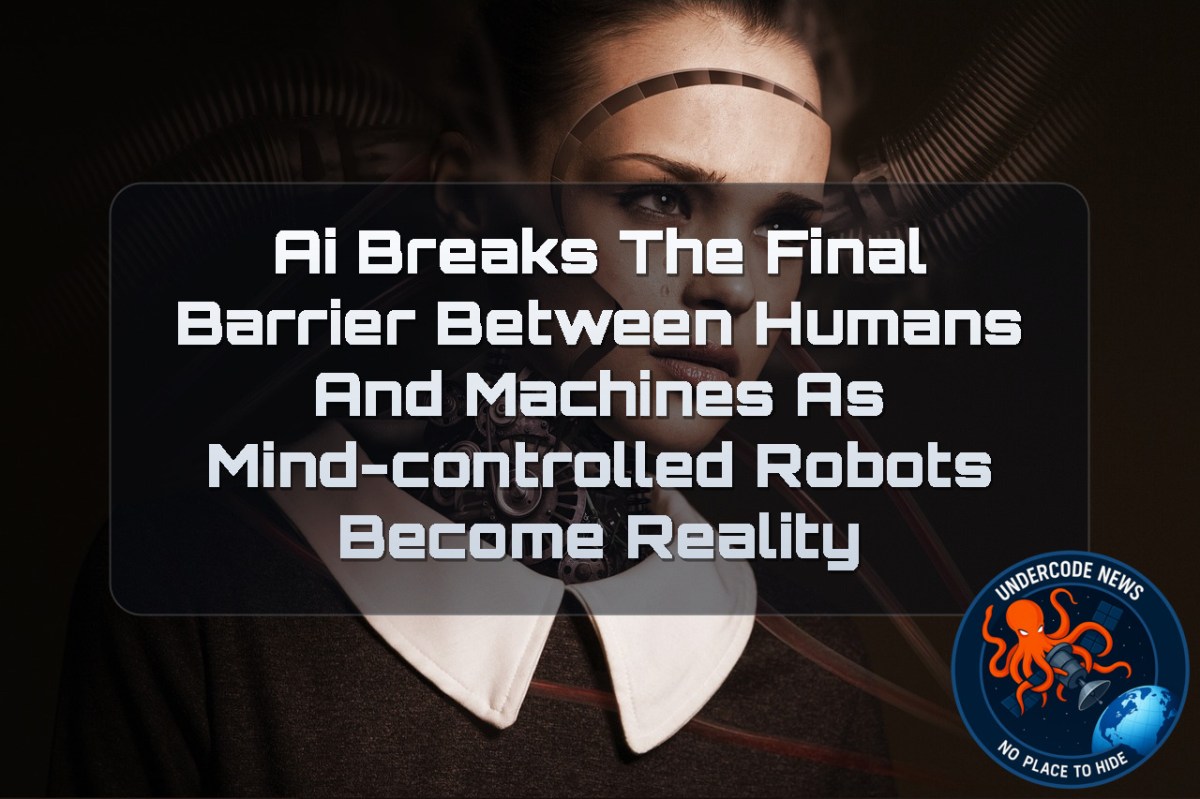 Introduction: The Moment Human Thought Starts Controlling Machines
For decades, the idea of controlling machines with the human mind belonged to science fiction. Movies imagined a future where humans could communicate with computers, robots, and artificial intelligence without speaking or touching a device. Today, that future is moving closer to reality as artificial intelligence, neuroscience, and robotics begin merging into a single technological ecosystem.
At VivaTech Paris, one of Europe’s largest technology events, researchers and companies showcased a new generation of AI-powered robotics that could redefine the relationship between humans and machines. A collaboration between French company HABS (Human Augmented Brain System) and robotics firm Innov8 demonstrated a system capable of allowing humans to interact with robots using brain signals, creating a bridge between biological intelligence and artificial machines.
This breakthrough represents more than a technological achievement. It raises a powerful question about the future of humanity: Are we entering an era where our thoughts themselves become a new form of digital command?
The Rise of Brain-Controlled Robotics
Artificial intelligence has rapidly evolved from software systems that analyze information into physical machines capable of understanding and responding to the world around them. Robots are no longer limited to repetitive factory tasks. They are becoming intelligent assistants, medical helpers, exploration machines, and potentially extensions of human abilities.
The demonstration at VivaTech showed how AI is helping remove one of the biggest barriers between humans and robots: communication. Instead of using keyboards, controllers, or voice commands, researchers are exploring ways for humans to directly interact with machines through brain activity.
The technology relies on brain-computer interfaces, commonly known as BCIs. These systems capture electrical signals generated by the brain and translate them into commands that machines can understand.
HABS and Innov8: Building a Human-Machine Connection
The partnership between HABS and Innov8 focuses on creating a direct connection between human intentions and robotic actions. The goal is not simply to control a robot, but to create a more natural interaction between people and intelligent machines.
During the demonstration, CNN’s Anna Stewart tested the system and explored how human thoughts could influence robotic movements. The technology highlighted a future where physical limitations may become less restrictive because machines could act as an extension of human intention.
A person who cannot physically move, for example, could potentially control robotic devices through thought alone. Workers could operate machines in dangerous environments without being physically exposed to risks. Surgeons, astronauts, and researchers could gain new ways to interact with complex systems.
From Science Fiction to Real Engineering
For generations, mind-controlled machines were considered futuristic concepts. However, advances in artificial intelligence, neuroscience, sensors, and computing power have transformed these ideas into active research fields.
Modern AI models are improving the ability to interpret complex biological signals. Brain activity contains enormous amounts of information, but decoding those signals requires powerful algorithms capable of identifying patterns.
Machine learning systems can analyze neural data, recognize intended actions, and convert those intentions into robotic commands. The process is extremely complex because every human brain produces unique signals.
The challenge is no longer only creating the connection. The challenge is making it accurate, safe, affordable, and practical for everyday use.
Why AI-Powered Robots Are Entering a New Era
The robotics industry is experiencing a major transformation. Traditional robots followed programmed instructions, but AI-powered robots can learn, adapt, and make decisions based on their environment.
When combined with brain-computer interfaces, robots could become personalized extensions of human capability.
A factory worker could control robotic arms with natural thoughts.
A disabled individual could operate advanced assistive devices.
A firefighter could use robotic systems to explore dangerous areas.
An astronaut could remotely control machines on another planet.
The possibilities extend far beyond entertainment or technology demonstrations.
The Medical Revolution Behind Brain Interfaces
One of the most promising areas for brain-controlled robotics is healthcare.
Millions of people worldwide live with paralysis, neurological conditions, or physical disabilities that limit movement. Brain-computer interfaces could provide new methods for restoring independence.
Future systems may allow patients to control robotic limbs, wheelchairs, communication devices, and medical equipment through neural signals.
This technology could transform rehabilitation and create new opportunities for people who have lost traditional physical abilities.
However, medical applications require extremely high accuracy and strict safety standards because mistakes could directly affect human health.
The Industrial Future of Human-Robot Collaboration
The future of work may not involve humans being replaced by robots, but humans and robots working together in a more integrated way.
AI-powered machines can handle dangerous, repetitive, or physically demanding tasks, while humans provide creativity, judgment, and strategic thinking.
Brain-controlled robotics could make this partnership even stronger by reducing the distance between human decisions and machine execution.
Instead of operating a machine through multiple layers of controls, workers could potentially communicate intentions directly.
This could create a new generation of highly efficient human-machine teams.
The Challenges Behind Mind-Controlled Machines
Despite the excitement surrounding this technology, many obstacles remain before brain-controlled robots become common.
The human brain is incredibly complex. Neural signals are constantly changing, making accurate interpretation difficult.
Privacy is another major concern. If technology can read brain activity, society must establish strict protections around mental data.
Cybersecurity will also become critical. A connected robotic system controlled by neural signals could become a target for hackers.
Future regulations will need to address ownership, consent, security, and ethical boundaries.
The Ethical Question: How Much Control Should Machines Have?
As AI becomes more connected to human biology, ethical debates will become unavoidable.
Should companies be allowed to collect brain activity data?
Who owns information produced by a person’s mind?
Could advanced systems influence human decisions?
Could cybercriminals attempt to manipulate connected robotic devices?
These questions demonstrate that the future of AI is not only about technical innovation. It is also about protecting human freedom and dignity.
What Undercode Say:
AI-powered brain-controlled robotics represents one of the most important technological transitions of the modern era.
The connection between humans and machines is moving from physical interaction toward biological communication.
The demonstration by HABS and Innov8 shows that AI is becoming a bridge between thought and action.
The biggest breakthrough is not only controlling robots with brain signals.
The real revolution is reducing the delay between human intention and machine response.
For decades, computers required humans to adapt to machines.
The future may reverse this relationship.
Machines could become designed around human thinking patterns.
Robotics combined with AI could create a new category of intelligent tools.
These systems may become digital extensions of human capability.
The healthcare industry could benefit dramatically from this technology.
Patients with severe mobility limitations may gain new independence.
Industrial environments could become safer because humans could operate machines remotely.
Space exploration could also be transformed because astronauts may control robots across extreme environments.
However, every technological advantage introduces new risks.
Brain data could become one of the most sensitive forms of personal information.
A password can be changed.
A fingerprint cannot.
But brain patterns represent something even more personal, the internal activity of human thought.
Cybersecurity will become essential as neural interfaces become connected to networks.
Security teams may eventually need to protect not only computers and servers but also human-machine connections.
Future penetration testing may include evaluating vulnerabilities in brain-interface communication systems.
Organizations developing these technologies should consider security from the beginning.
Basic monitoring commands such as:
sudo systemctl status neural-interface-service
could become part of future device management environments.
Security analysts may use:
journalctl -xe
to review system activity and detect unusual behavior.
Network monitoring tools like:
sudo tcpdump -i eth0
could help identify suspicious communication between robotic systems and external networks.
Artificial intelligence will likely become the foundation that allows machines to understand human intentions.
But human values must remain the foundation that controls how these systems are deployed.
The future should not be about replacing humans with machines.
It should be about creating technology that expands human potential.
The greatest success of AI robotics will not be when robots become more human.
It will be when machines help humans achieve things that were previously impossible.
Deep Analysis: Securing the Future of Brain-Controlled Robotics
As robotic systems become connected to AI platforms, cybersecurity will become a fundamental requirement.
Security researchers may need to analyze:
nmap -sV robotic-device-ip
to identify exposed services.
System administrators could monitor unauthorized access attempts using:
sudo tail -f /var/log/auth.log
AI robotics platforms should maintain strong authentication mechanisms:
sudo passwd user_account
Encrypted communication will become essential:
openssl s_client -connect robot-server:443
Security teams should continuously analyze:
top
for unusual resource consumption.
Future robotic infrastructure may require:
fail2ban-client status
to prevent automated attacks.
The combination of AI and robotics creates enormous opportunities, but every connected intelligence system increases the cybersecurity responsibility.
✅ The VivaTech event showcased AI and robotics innovations, including demonstrations involving human-machine interaction.
✅ Brain-computer interfaces are real technologies being researched for medical, industrial, and assistive applications.
❌ Fully controlling advanced robots with thoughts alone is not yet a mainstream consumer technology and remains limited to experimental systems.
Prediction
(+1) AI-powered brain-computer interfaces will continue improving as artificial intelligence becomes better at interpreting neural signals.
Medical robotics will likely become one of the first major industries to adopt practical brain-controlled machines.
Human-robot collaboration will increase in factories, healthcare, and dangerous work environments.
Smaller and more affordable neural devices may eventually make this technology available beyond research laboratories.
Privacy concerns surrounding brain data will create major regulatory debates.
Cybersecurity threats targeting connected robotic systems will become a growing challenge.
Public acceptance may slow adoption if people fear excessive machine integration with human biology.
The Future Has Already Started
The connection between the human mind and intelligent machines is no longer only a dream from science fiction. AI, neuroscience, and robotics are moving toward a future where thoughts can influence digital and physical environments.
The technology is still developing, but the direction is clear. Humanity is entering an era where the boundary between biological intelligence and artificial intelligence is becoming increasingly smaller.
The biggest question is no longer whether humans can connect with machines.
The question is how responsibly humanity will build that connection.
▶️ Related Video (80% Match):
🕵️📝Let’s dive deep and fact‑check.
🎓 Live Courses & Certifications:
Join Undercode Academy for Verified Certifications
🚀 Request a Custom Project:
Secure, high-velocity infrastructure and disruptive technological engineering. Contact our engineering team for high-tier development and proprietary systems:
[email protected]
💎 Smart Architecture | 🛡️ Secure by Design | ⭐ Trusted by Thousands
References:
Reported By: edition.cnn.com
Extra Source Hub (Possible Sources for article):
https://www.reddit.com
Wikipedia
OpenAi & Undercode AI
Image Source:
Unsplash
Undercode AI DI v2
🔐JOIN OUR CYBER WORLD [ CVE News • HackMonitor • UndercodeNews ]
📢 Follow UndercodeNews & Stay Tuned:
𝕏 formerly Twitter 🐦 | @ Threads | 🔗 Linkedin | 🦋BlueSky | 🐘Mastodon | 📺Youtube


