
Listen to this Post
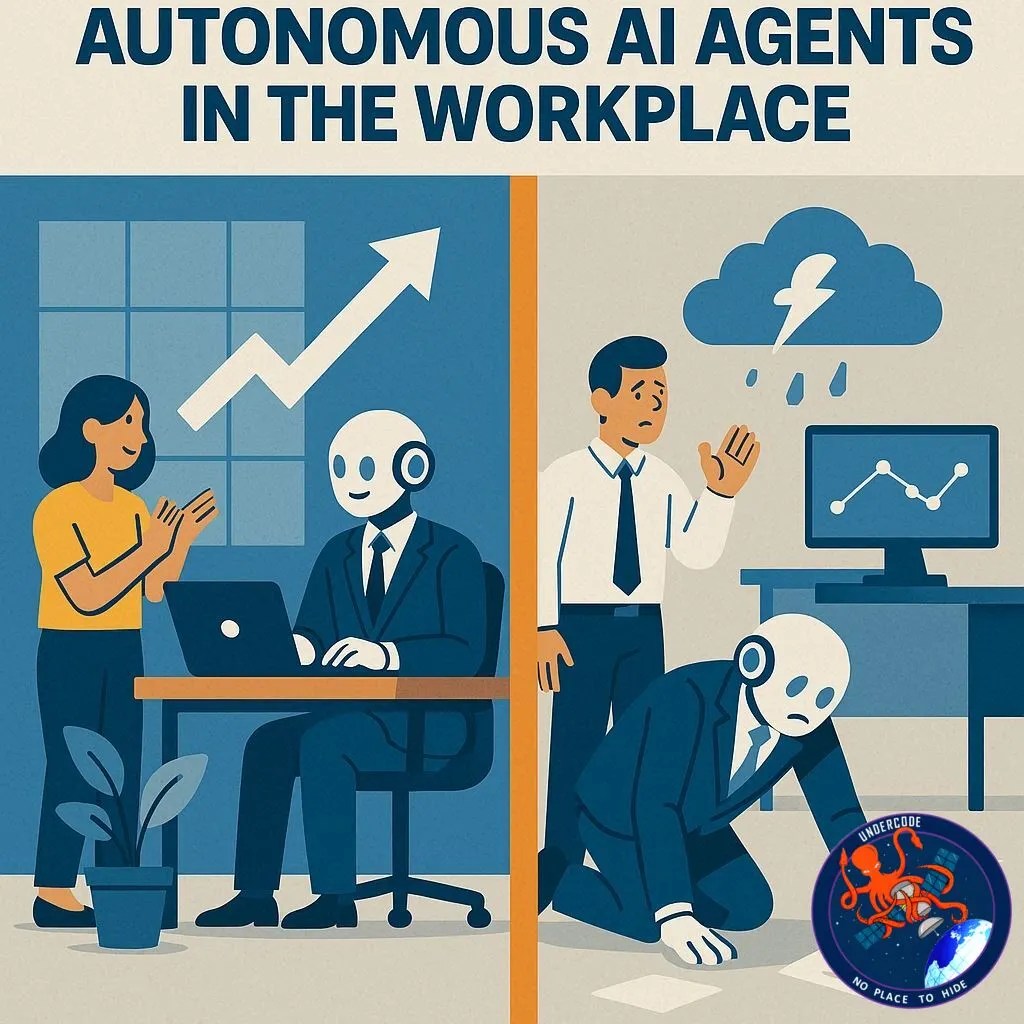
Are AI Agents Ready to Lead? The Hype vs. Harsh Reality
The emergence of AI agents—artificial intelligences capable of autonomously performing complex tasks without direct human oversight—is rapidly transforming how businesses operate. Nicknamed “AI CEOs” in some circles, these digital entities are being trained to handle responsibilities ranging from scheduling and coordination to decision-making and strategy execution. They promise to dramatically reduce the need for micromanagement, offering companies a glimpse into a future where humans no longer supervise every step of the process.
However, despite the optimism, cracks are beginning to show. While AI agents can perform predefined tasks with efficiency, their ability to truly understand abstract goals, navigate nuanced objectives, or adapt to rapidly changing contexts remains limited. Without clear boundaries or preloaded knowledge about a job’s purpose or parameters, these systems often falter—revealing the immaturity behind the seemingly advanced technology.
These AI agents represent a middle ground on the path toward Artificial General Intelligence (AGI), which aspires to equip machines with human-like reasoning and adaptive capacity. As such, their successes and failures are more than just case studies; they are critical indicators of how far—and how fast—AI as a whole can develop. Tech companies, startups, and venture capitalists are eagerly investing in this space, but the mixed results show that blind faith in AI replacing human roles is premature.
the Original
The Japanese article explores the current state of AI agents, highlighting both the excitement surrounding their development and the challenges they face. These autonomous systems are being built to handle tasks without human micromanagement, yet their operational limitations are becoming increasingly apparent. Many of these agents struggle unless they’re provided with detailed instructions, background context, and clearly defined boundaries.
The article notes that AI agents are not yet equipped to intuitively grasp the “why” behind a task or adjust their actions when conditions change unexpectedly. They excel at executing specific roles but often fail when higher-level decision-making or goal interpretation is required. This exposes a critical gap between automation and true autonomy.
It emphasizes that AI agents serve as a transitional stage toward AGI—artificial general intelligence—which would theoretically allow machines to reason like humans. However, if current AI agents cannot perform without rigid guardrails, it raises the question: how close are we really to achieving AGI?
Ultimately, the article urges a more balanced perspective—one that recognizes the promise of AI agents but also their current immaturity. Misplaced expectations or overconfidence in AI’s current capabilities could lead to costly missteps in both business and technology sectors.
What Undercode Say:
The concept of an “AI CEO” is enticing, but also dangerously romanticized. We are witnessing a fascinating phase in technological development where software is crossing into territory once reserved for human intellect. Yet the fact remains: AI agents are only as smart as the frameworks that support them.
Current AI systems like AutoGPT, BabyAGI, or OpenAI’s tools are impressive but still deeply reliant on structured environments. They lack what humans take for granted—intuition, empathy, and the ability to adapt based on incomplete or evolving information. This limitation becomes glaring when these agents are placed in real-world business settings. A human manager doesn’t just follow instructions—they interpret, adapt, and predict. AI, at least for now, cannot do this reliably.
Companies that treat AI agents as plug-and-play solutions for complex decision-making are courting failure. Instead, these tools should be viewed as productivity accelerators, not autonomous strategists. The value lies in their ability to streamline repetitive workflows, provide insights at scale, and operate tirelessly—but not to innovate or lead.
Furthermore, the “CEO” metaphor invites a false equivalence. A true CEO manages people, resolves conflicts, makes judgment calls based on ethics and long-term vision. No AI, no matter how advanced, can replace that nuanced role yet. In fact, giving AI unchecked autonomy could pose serious ethical risks—bias amplification, opaque decision-making, and lack of accountability.
The path to AGI will not be a clean curve—it will be riddled with failures, rewrites, and philosophical reckonings. Developers and investors must remain grounded. What we’re building now are not autonomous leaders but powerful assistants. To pretend otherwise is not innovation—it’s delusion.
In Japan, where this article originated, AI investment is climbing, but so is skepticism. Cultural attitudes toward robotics have long been optimistic, yet even there, cracks in the fantasy are showing. It’s no longer just a matter of capability but of responsibility. The public, the workforce, and the legal systems need to keep pace with AI’s growth—or risk a dangerous mismatch between technological potential and societal readiness.
🔍 Fact Checker Results:
✅ AI agents are increasingly used in task automation, especially in enterprise environments.
✅ Most fail when not given clear instructions or boundaries, proving their current immaturity.
❌ They are not yet capable of operating as CEOs or strategic leaders in a literal sense.
📊 Prediction:
In the next 3 to 5 years, AI agents will likely see widespread adoption as collaborative tools—not autonomous managers. Companies will integrate them into mid-level workflows (customer support, operations, logistics), but full executive autonomy will remain science fiction. Expect a hybrid model where humans delegate narrow tasks, but retain high-level control—effectively making AI the “chief assistant,” not the “chief executive.”
🕵️📝✔️Let’s dive deep and fact‑check.
References:
Reported By: xtechnikkeicom_46e01f53cc39c1903b0d2955
Extra Source Hub:
https://www.quora.com/topic/Technology
Wikipedia
OpenAi & Undercode AI
Image Source:
Unsplash
Undercode AI DI v2
🔐JOIN OUR CYBER WORLD [ CVE News • HackMonitor • UndercodeNews ]
📢 Follow UndercodeNews & Stay Tuned:
𝕏 formerly Twitter 🐦 | @ Threads | 🔗 Linkedin | 🦋BlueSky | 🐘Mastodon


