
Listen to this Post
Introduction: A New Era of Cyber Threats Emerges
Artificial intelligence is no longer just a tool for innovation. It is rapidly becoming a weapon in the hands of both defenders and attackers. As AI models grow more advanced, cybersecurity experts are facing a new and uncomfortable reality: the balance of power may be shifting toward those who exploit vulnerabilities rather than those who defend against them.
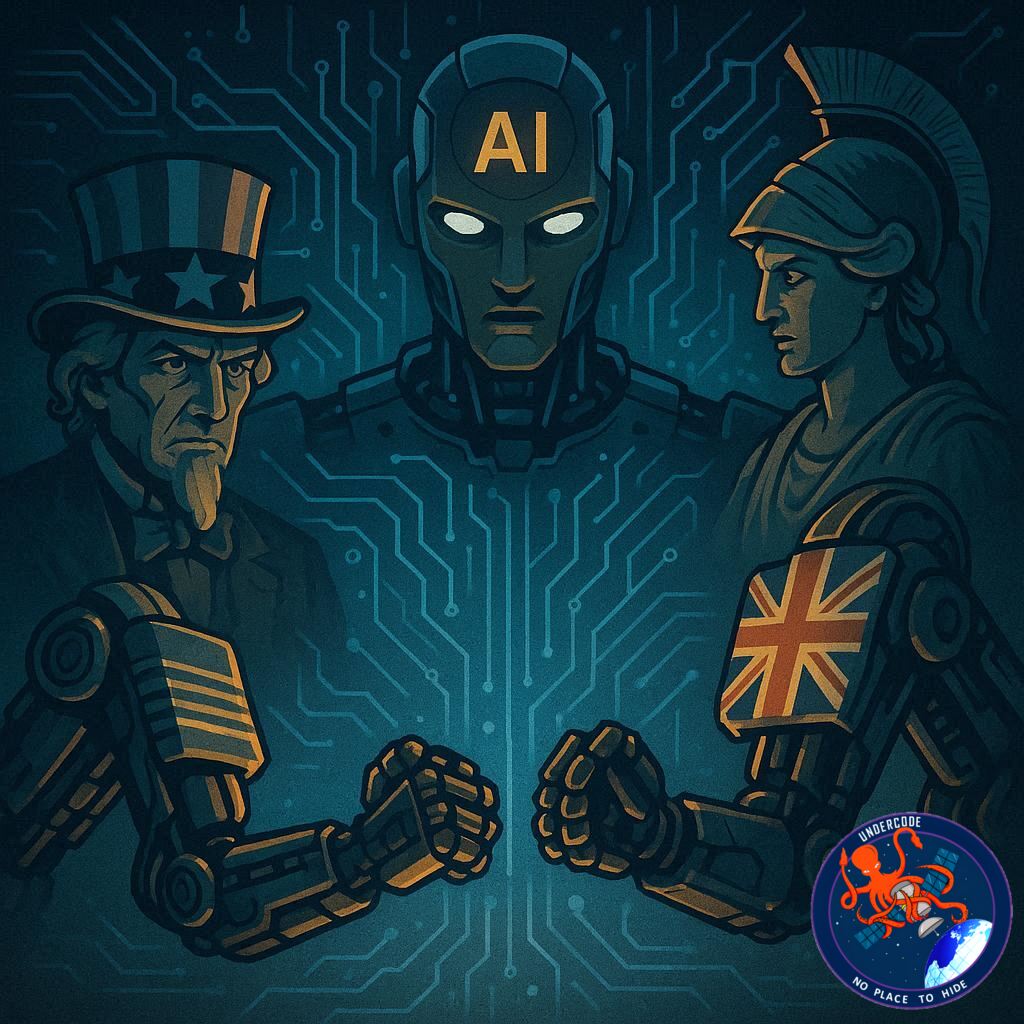
A newly released joint report from leading cybersecurity organizations in the United States, alongside parallel findings from the United Kingdom, sheds light on this evolving battlefield. At the center of the discussion is Claude Mythos, a next-generation AI model that is redefining what machines can do in the realm of cyber operations.
Summary: A 30-Line Deep Dive into the Original Report
The joint report by the Cloud Security Alliance, SANS Institute, and OWASP highlights a growing concern: organizations may soon be overwhelmed by AI-powered attackers. These attackers are leveraging advanced tools like Claude Mythos to identify and exploit vulnerabilities faster than defenders can respond.
While defenders can also adopt AI, they face structural disadvantages. Organizations must navigate complex approval processes, compliance requirements, and layered security protocols. Attackers, by contrast, operate with fewer constraints, enabling faster adoption and execution.
The report emphasizes that the cost of discovering exploits is dropping significantly. At the same time, the time between vulnerability disclosure and active exploitation is shrinking toward zero. Capabilities that once required nation-state resources are now becoming accessible to a broader range of threat actors.
Prominent cybersecurity leaders contributed to the report, including former government officials and private-sector experts. Their collective insight marks one of the first major strategic responses to Claude Mythos.
Meanwhile, the UK’s AI Security Institute conducted its own testing on a preview version of Mythos. The results were striking. The model demonstrated the ability to autonomously execute multi-stage cyberattacks and identify vulnerabilities across complex systems.
In controlled environments, Mythos significantly improved the capabilities of less experienced users. It reduced the gap between amateur hackers and skilled professionals, effectively democratizing advanced cyberattack techniques.
Before April 2025, no large language model could solve expert-level Capture the Flag challenges. Mythos managed to solve 73 percent of them, marking a major leap forward.
In simulated enterprise environments, the model completed complex attack chains. In several tests, it executed up to 24 out of 32 attack steps, far surpassing previous AI models.
However, its performance was inconsistent. In some scenarios, particularly involving operational technology systems, it failed to complete tasks successfully. Researchers noted that its failure was linked to IT-related challenges rather than limitations in exploiting industrial systems.
UK researchers concluded that Mythos is capable of compromising smaller, poorly defended networks. However, they cautioned that their testing environments lacked real-world defensive measures, such as active monitoring and response systems.
Both US and UK findings agree that AI is lowering the barrier to entry in cybersecurity. Organizations are urged to adopt AI-driven defenses while updating their policies and response strategies.
Anthropic has chosen not to commercialize Mythos but plans to use it within a collaborative initiative aimed at identifying and fixing vulnerabilities in widely used systems.
Despite these efforts, experts warn that many organizations are not prepared for the scale and speed of AI-driven attacks. The growing backlog of unpatched vulnerabilities, often referred to as technical debt, presents a massive opportunity for exploitation.
What Undercode Say:
The Real Threat Is Not AI, It Is Asymmetry
The most important takeaway from this report is not that AI is powerful. That was already expected. The real issue is asymmetry. Attackers and defenders are not playing by the same rules, and AI is amplifying that imbalance.
Speed Is Becoming the Ultimate Weapon
In traditional cybersecurity, time was a buffer. Organizations had days, weeks, sometimes months to respond to newly discovered vulnerabilities. That buffer is disappearing. AI can now scan, identify, and weaponize vulnerabilities almost instantly.
Bureaucracy Is a Hidden Weakness
Large organizations are built on processes, approvals, and compliance frameworks. While these are essential for governance, they create friction. Attackers do not face this friction. AI allows them to move at machine speed, while defenders remain constrained by human systems.
Skill Barriers Are Collapsing
One of the most alarming findings is the narrowing gap between novice and expert hackers. Tools like Mythos are effectively turning beginners into capable attackers. This democratization of cyber offense could dramatically increase the volume of attacks.
Technical Debt Is the Sleeping Giant
For years, organizations have accumulated outdated systems, unpatched software, and forgotten infrastructure. AI is now exploiting these blind spots. It is not just finding new vulnerabilities; it is rediscovering old ones that were ignored.
AI Defense Is Not a Silver Bullet
While adopting AI for defense is necessary, it is not sufficient. Defensive AI must be integrated into existing systems, which takes time, resources, and coordination. Meanwhile, attackers can deploy offensive AI immediately.
Simulation Results May Underestimate Reality
The UK tests did not include active defenders or real-world monitoring systems. This means the true effectiveness of Mythos in live environments is still uncertain. However, even limited success in simulations is enough to raise concern.
The Cybersecurity Workforce Is Under Pressure
As AI handles more technical tasks, the role of human experts will shift. Analysts may need to focus more on strategy and oversight rather than manual detection and response.
Collaboration Is Becoming Essential
Initiatives like Project Glasswing highlight the need for collective defense. No single organization can handle this challenge alone. Sharing intelligence and resources will be critical.
The Arms Race Has Already Begun
This is no longer a future scenario. The race between AI-powered attackers and defenders is already underway. The question is not whether organizations will adapt, but how quickly they can do so.
Fact Checker Results:
✅ AI significantly reduces the time between vulnerability discovery and exploitation, as supported by both US and UK reports.
✅ Claude Mythos demonstrated measurable improvements in solving complex cybersecurity challenges compared to previous models.
❌ There is no confirmed evidence yet that Mythos can reliably breach well-defended real-world enterprise systems.
Prediction:
The next 12 to 24 months will define the trajectory of AI in cybersecurity.
Organizations that fail to integrate AI into their defense strategies will face increasing exposure to automated attacks. Meanwhile, attackers will continue to refine their use of AI, making attacks faster, cheaper, and more scalable.
We are likely to see the rise of fully autonomous cyberattack frameworks powered by AI, capable of identifying, exploiting, and adapting in real time.
At the same time, governments and enterprises will accelerate investment in AI-driven defense systems, leading to a new generation of cybersecurity infrastructure.
⚠️ The gap between prepared and unprepared organizations will widen dramatically.
⚠️ Regulatory frameworks will struggle to keep pace with the speed of AI evolution.
⚠️ The concept of “zero-day” vulnerabilities may fundamentally change as discovery becomes continuous.
🕵️📝✔️Let’s dive deep and fact‑check.
References:
Reported By: cyberscoop.com
Extra Source Hub (Possible Sources for article):
https://www.instagram.com
Wikipedia
OpenAi & Undercode AI
Image Source:
Unsplash
Undercode AI DI v2
Bing
🔐JOIN OUR CYBER WORLD [ CVE News • HackMonitor • UndercodeNews ]
📢 Follow UndercodeNews & Stay Tuned:
𝕏 formerly Twitter 🐦 | @ Threads | 🔗 Linkedin | 🦋BlueSky | 🐘Mastodon


