
Listen to this Post
Introduction
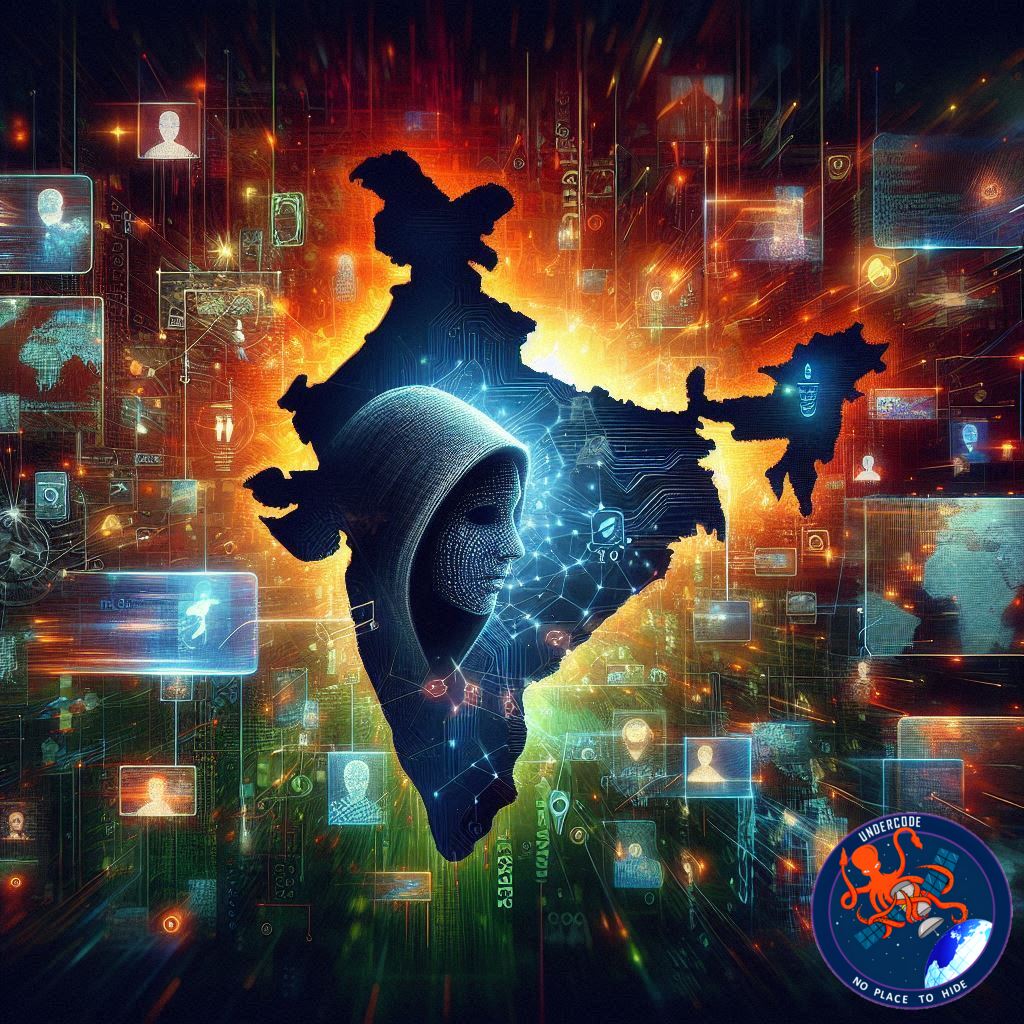
India is standing at a dangerous crossroads where technology’s brilliance collides with its darkest possibilities. Deepfakes, once a fringe digital curiosity, have evolved into a full-blown threat capable of bending public opinion, damaging reputations, and eroding the foundation of trust. In a nation where smartphones have become an extension of daily life, the scale of vulnerability is unprecedented. This unfolding crisis demands attention not just because of what technology can do, but because of how easily it can distort truth itself.
The Expanding Shadow of Deepfakes Across India
A Reality Distorted by Code
India is confronting an unsettling technological menace: hyper-realistic AI-generated deepfakes. These fabricated videos and audio clips are engineered not only to deceive but to destabilize. They manipulate collective perception, sow confusion, and quietly chip away at the integrity of public discourse.
A Nation Connected, A Nation Exposed
With over 85 per cent of Indian households owning at least one smartphone, digital devices have become everything from bank branches to entertainment hubs. This widespread accessibility makes citizens more susceptible to deception hidden behind polished AI illusions.
When Politics Meets Synthetic Reality
The 2024 election season showcased deepfakes as an unexpected campaign weapon. Satirical and misleading videos flooded social platforms, including fabricated clips of PM Narendra Modi dancing garba and another portraying Kamal Nath mocking welfare schemes. Despite investigations and arrests, the damage was clear: deepfakes blurred the line between satire and manipulation, directly threatening democratic integrity.
AI: The New Weapon in Cybercrime
Cybersecurity analysts report a sharp escalation in AI-powered crimes. Around 80 per cent of phishing campaigns in 2024 used AI assistance, and deepfakes became tools for both intimidation and financial fraud. The uncertainty is so pervasive that even genuine content becomes suspect.
Experts Sound the Alarm
Hany Farid, a noted UC Berkeley professor, summarized the crisis during a TOI interview: once images, audio and video can be forged, the public loses a reliable anchor. If everything could be fake, how do we verify anything?
Deepfakes Beyond Politics: A Wider Menace
The threat has now struck high-profile personalities. Finance minister Nirmala Sitharaman warned that AI was being abused to mimic her voice and craft fabricated videos aimed at misleading the public. She emphasized the risk of financial scams and the growing erosion of citizen trust.
A Vulnerable Generation
The danger is amplified by
The Evolution of the Tech
Deepfakes made their first appearance in 2016. What began as a joke has become a sophisticated system capable of producing lipsync fakes, cloned voices and impeccably realistic face swaps. Farid warns that with technological refinement comes increased misuse, especially the harassment of women through non-consensual sexual imagery.
A Dark Turning Point in Celebrity Misuse
The case of actress Rashmika Mandanna in 2023 marked a disturbing moment. A deepfake superimposing her face onto explicit content went viral, igniting outrage across India. Farid pointed out that the term “deepfake” itself originated from a Reddit user who used early AI tools to create pornography, calling today’s “Generative AI” label a sanitized rebranding by a male-dominated tech world.
A Call for Legal and Social Reinforcement
As AI capabilities grow, experts urge stronger laws, higher digital literacy and cross-sector collaboration. Farid suggests a labeling system that identifies what is real and what is synthetic. Transparency, he argues, is essential to preserving trust.
The Battle Begins
Media platforms like TOI have begun launching awareness campaigns such as “Don’t Get Scammed.” The mission is clear: equip citizens with the tools to recognize deception before it becomes irreversible.
What Undercode Say:
The deepfake crisis unfolding across India is more than a technological disruption. It is a cultural and political shockwave that strikes at the core of how societies understand truth. The sophistication of modern generative models means the barrier to entry is nearly nonexistent. Anyone with a smartphone and basic software access can engineer a lie convincing enough to sway thousands, if not millions.
The vulnerability is amplified by India’s digital ecosystem. A massive young population, rapid smartphone penetration, and fragmented media literacy create the perfect storm for widespread misinformation. When the majority of urban youth consumes content without verification tools, deepfakes become precision weapons aimed at cognitive loopholes.
The political ramifications are staggering. Democracies rely on informed citizens, but deepfakes muddy the waters so thoroughly that political accountability becomes foggy. Threat actors could weaponize synthetic media to manipulate sentiment, derail electoral narratives, or fabricate scandals with devastating timing. Even if exposed later, the damage is done. Public memory is short, and viral misinformation travels faster than corrections.
What makes the situation more alarming is the psychological dimension. Deepfakes do not just deceive. They destabilize. Once people realize that synthetic media can perfectly imitate reality, they begin to doubt everything, including legitimate content. This phenomenon, known as the “liar’s dividend,” empowers wrongdoers. They can dismiss authentic evidence as fake, undermining journalism, investigations, and the judicial process.
The impact on women is particularly severe. Non-consensual explicit deepfakes have become a digital weapon of humiliation, eroding safety in online spaces and reinforcing gendered power imbalances. The Rashmika Mandanna case was not an anomaly, it was a warning. As generative AI improves, the volume of such abuse will multiply unless strict legal frameworks evolve quickly.
India needs a multi-layered defense strategy. Legislation must define and punish malicious deepfake creation. Platforms must adopt mandatory watermarking. Educational systems must incorporate digital literacy as a core competency. Citizens need tools to verify content instantly. Without these layers, the country risks entering an era where reality is negotiable and trust becomes a scarce resource.
Above all, combating deepfakes requires a cultural shift. Truth can no longer be assumed. It has to be verified. And societies must value accuracy over speed, skepticism over blind belief. The technology will improve. The question is whether public awareness and legal systems can keep pace.
Fact Checker Results
Deepfake usage in phishing campaigns has risen sharply in 2024. ✅
Rashmika Mandanna’s viral deepfake incident in 2023 is verified and widely reported. ✅
No evidence supports claims that deepfakes are harmless entertainment; risks remain substantial. ❌
Prediction
India is heading toward a regulatory surge as deepfakes become central to political, financial and social manipulation. 🔮
Expect mandatory watermarking, platform accountability protocols and AI-integrated fact-checking tools becoming mainstream. 📱
Public skepticism will rise, pushing citizens toward trusted sources while forcing policymakers to accelerate digital safety reforms. 🛡️
🕵️📝✔️Let’s dive deep and fact‑check.
References:
Reported By: timesofindia.indiatimes.com
Extra Source Hub (Possible Sources for article):
https://www.facebook.com
Wikipedia
OpenAi & Undercode AI
Image Source:
Unsplash
Undercode AI DI v2
Bing
🔐JOIN OUR CYBER WORLD [ CVE News • HackMonitor • UndercodeNews ]
📢 Follow UndercodeNews & Stay Tuned:
𝕏 formerly Twitter 🐦 | @ Threads | 🔗 Linkedin | 🦋BlueSky | 🐘Mastodon


