
Listen to this Post
Introduction
Across the U.K., millions of tea drinkers unknowingly put their electricity grid to the test during UEFA EURO 2020. At half-time of the England vs. Germany match, a sudden surge in kettle use caused National Grid to experience a spike of about 1 gigawatt—the equivalent of a nuclear reactor’s output—within minutes. This “TV pickup” phenomenon highlights the growing challenge of balancing energy demand, especially as more high-power consumers, like AI factories, connect to the grid. But what if these new energy-intensive users could actively help stabilize the system instead of straining it? Recent innovations in power-flexible AI factories suggest they can.
Revolutionizing the Grid with AI Factories
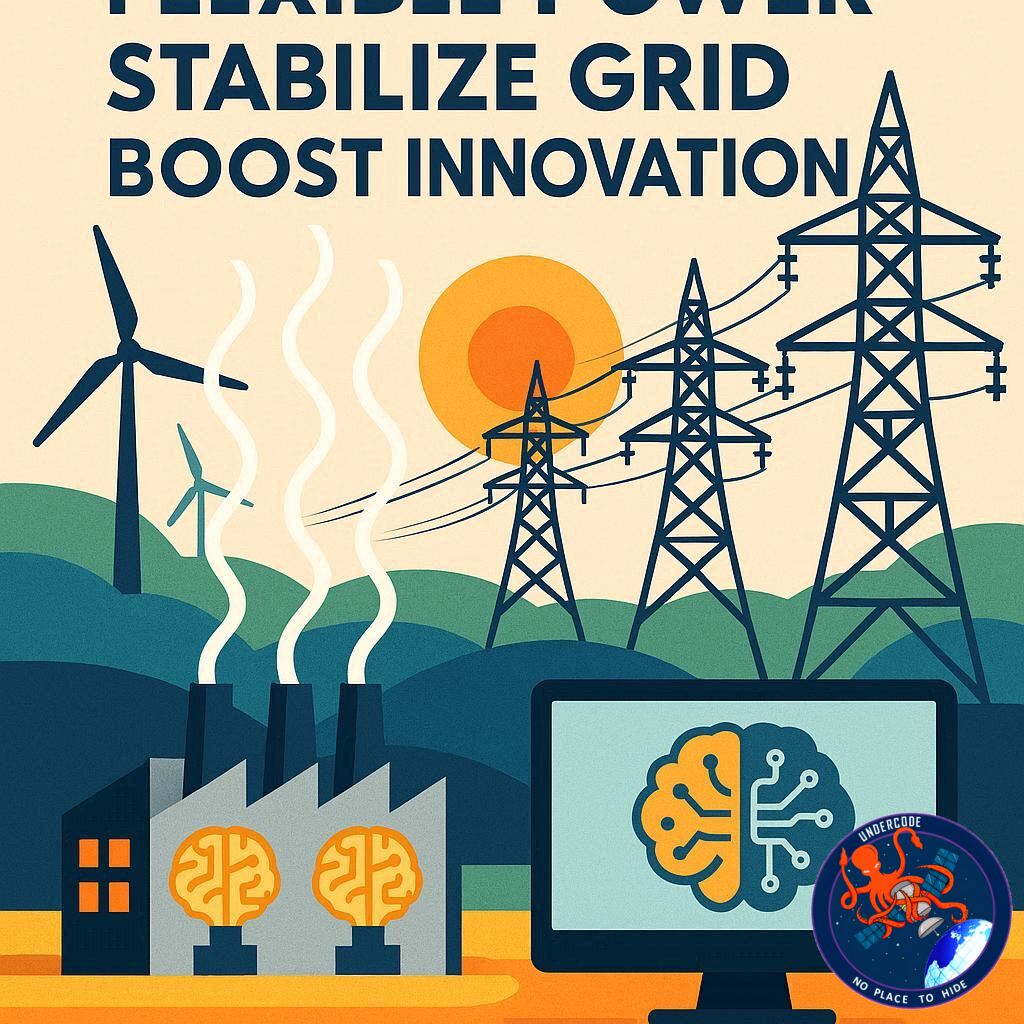
Emerald AI, in partnership with NVIDIA, EPRI, National Grid, and Nebius, has pioneered the concept of “power-flexible” AI factories. These factories can autonomously adjust energy consumption in response to grid stress. By temporarily reducing power during peak periods, they act like shock absorbers for the electricity network, keeping critical AI workloads running while easing demand surges for the broader system.
After successful trials in the U.S., Emerald AI brought its Conductor Platform to the Nebius AI factory in London, one of the first facilities of its kind in the U.K. Using a cluster of 96 NVIDIA Blackwell Ultra GPUs, the platform monitors second-level power telemetry via NVIDIA’s System Management Interface. In collaboration with EPRI and National Grid, the AI factory responded to simulated grid stress events, including the sudden energy spike of millions of virtual kettles turning on at half-time. The result: the AI workloads continued uninterrupted while the grid’s stability was maintained.
How Power-Flexibility Benefits Everyone
Power-flexible AI factories provide multiple advantages. They allow faster grid connections without waiting for lengthy infrastructure upgrades, reduce the need to overbuild power systems for peak loads, and ultimately help keep electricity rates affordable. Emerald AI demonstrated 100% alignment with over 200 power instructions during London trials, proving that large-scale industrial AI operations can serve as cooperative grid assets rather than purely energy consumers.
This approach also opens doors for economic growth. By integrating flexible AI factories, London’s grid can support new industry talent, spur AI research, and attract hyperscalers, all while avoiding costly and time-consuming expansions. Steve Smith, National Grid’s strategy officer, emphasizes that the technology optimizes existing infrastructure while enabling innovation in AI at a national scale.
Boiling the Kettle Without Breaking the Grid
The U.K.’s “TV pickup” is a simple but powerful example: millions of simultaneous, small-scale energy actions can create massive stress on a power system. Emerald AI’s solution scales this concept to industrial users, showing that AI factories can become stress relievers rather than burdens. In practice, this means the grid can handle sudden surges efficiently, preventing expensive overcapacity investments and stabilizing rates for consumers.
What Undercode Say:
The rise of AI and other high-demand computing facilities presents a paradox: while essential for technological advancement, they threaten to overload aging power grids. Emerald AI’s flexible approach tackles this head-on. By enabling AI factories to modulate energy in real time, it transforms a traditionally static energy consumer into a dynamic, cooperative participant in grid management.
This has profound implications for national energy strategy. In the U.K., grid operators face limitations in infrastructure expansion due to cost and urban density. Flexible AI factories reduce peak demand, which means fewer upgrades are needed to accommodate new high-load industries. Beyond that, this model could redefine how utilities interact with industrial clients, incentivizing “smart consumption” and aligning energy use with real-time system needs.
From a technical perspective, the integration of NVIDIA GPUs with the Emerald AI Conductor Platform demonstrates the viability of high-performance computing that adapts to environmental constraints. Unlike traditional throttling, which can compromise performance, this approach prioritizes critical workloads while selectively delaying less urgent tasks. This ensures productivity remains high without destabilizing the grid.
Economically, the benefits extend beyond electricity bills. Faster grid connections allow new AI centers to come online sooner, accelerating research, creating jobs, and enhancing national competitiveness in AI development. For energy providers, the ability to manage peak loads without massive infrastructure investment translates to cost savings, which can be passed down to consumers.
Environmentally, flexible power use could reduce reliance on standby fossil-fuel plants that currently compensate for peak demand. This makes AI factories not only smarter but also greener, supporting net-zero and decarbonization goals.
Strategically, this sets a precedent for other high-load industries, such as data centers and manufacturing, to adopt similar cooperative energy practices. The concept scales globally: wherever grids face volatility from simultaneous high demand events, power-flexible consumers could stabilize the system.
Policy-wise, governments could incentivize such solutions through regulatory frameworks or subsidies, creating a new class of “grid-friendly” industrial facilities. This would align national energy security with industrial growth and sustainability goals.
The success of London’s trial paves the way for replication. Aurora AI Factory in Virginia is next, indicating a growing trend toward global deployment. If widely adopted, flexible AI factories could become essential partners in energy resilience, turning what was once a vulnerability into an asset.
By turning power-hungry AI facilities into cooperative grid participants, Emerald AI offers a model where technology drives both innovation and sustainability. The “kettle effect” may soon be less a stress test and more a demonstration of how modern grids and AI can harmoniously coexist.
Fact Checker Results
✅ National Grid saw a ~1 gigawatt spike during EURO 2020 half-time.
✅ Emerald AI successfully tested flexible power adjustments at Nebius AI factory in London.
❌ No public evidence of full-scale deployment across all U.K. AI facilities yet.
Prediction
⚡ Flexible AI factories will increasingly become grid-stabilizing assets in the next 5 years, reducing infrastructure bottlenecks.
📈 Widespread adoption could cut energy costs and accelerate AI industry growth.
🌱 Integration of power-flexible AI centers could support decarbonization and sustainability goals globally.
▶️ Related Video (84% Match):
🕵️📝✔️Let’s dive deep and fact‑check.
References:
Reported By: blogs.nvidia.com
Extra Source Hub (Possible Sources for article):
https://www.instagram.com
Wikipedia
OpenAi & Undercode AI
Image Source:
Unsplash
Undercode AI DI v2
Bing
🔐JOIN OUR CYBER WORLD [ CVE News • HackMonitor • UndercodeNews ]
📢 Follow UndercodeNews & Stay Tuned:
𝕏 formerly Twitter 🐦 | @ Threads | 🔗 Linkedin | 🦋BlueSky | 🐘Mastodon


