
Listen to this Post
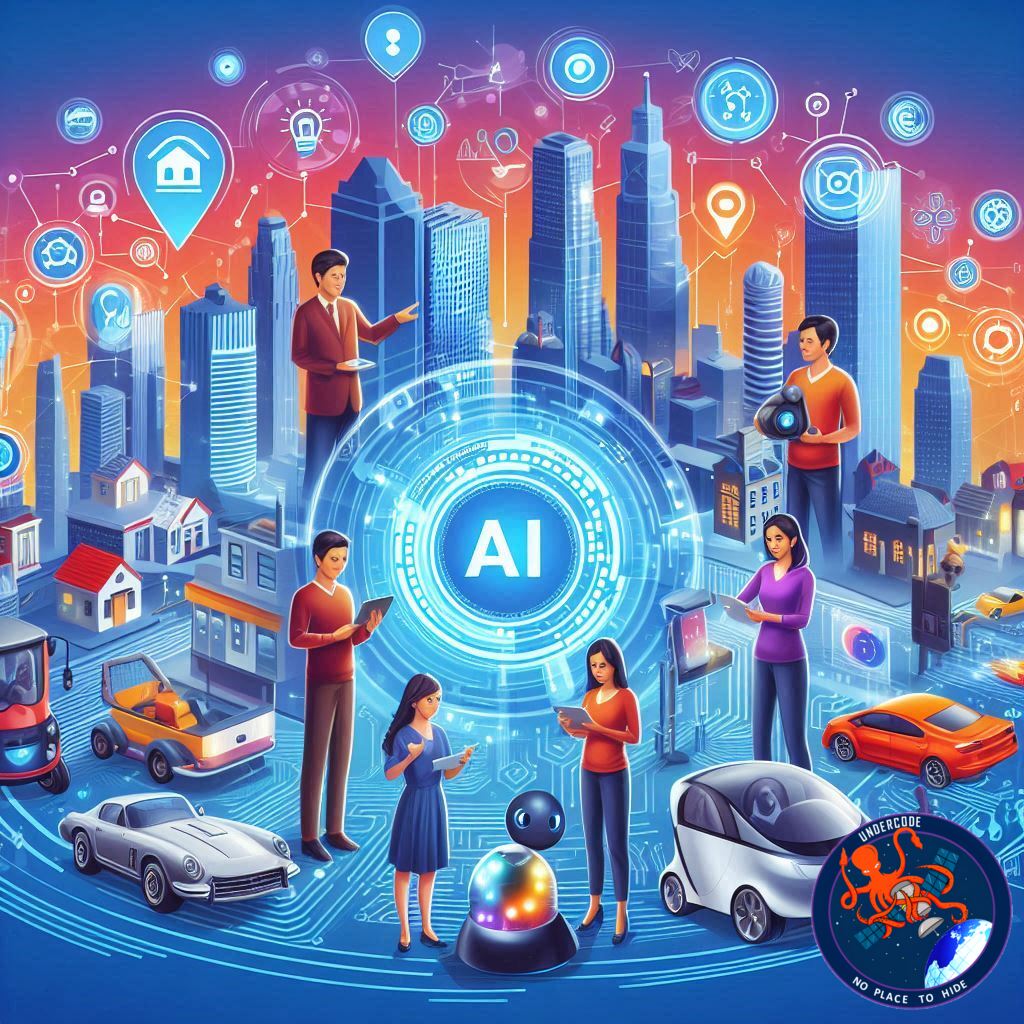 Artificial Intelligence (AI) is no longer a futuristic concept; it has become an integral part of how we live, work, and interact. From personal assistants like Siri and ChatGPT to recommendation systems on Netflix and YouTube, AI quietly powers countless decisions, suggestions, and automated tasks around us. But what exactly is AI, and how does it work? This guide will break down the fundamentals of AI, explain how AI tools function, and explore the implications of this transformative technology.
Understanding Artificial Intelligence
Artificial Intelligence is a branch of computer science that focuses on creating systems capable of performing tasks that traditionally require human intelligence. These tasks include understanding language, recognizing patterns, solving problems, making predictions, and learning from experience. At its core, AI is about teaching machines to process information, identify trends, and make decisions without relying solely on hardcoded instructions.
For instance, when YouTube recommends a video based on your previous viewing habits, or when Google Assistant recognizes your commands, AI is at work. These systems analyze vast amounts of data, identify patterns, and generate outputs designed to meet your needs.
How AI Works: Learning, Predicting, Improving
AI operates through a cycle of learning, predicting, and improving:
Learning: AI systems are trained on massive datasets, such as text, images, audio, or video, to recognize patterns. ChatGPT, for example, has processed millions of documents to understand language structure and context.
Predicting/Generating: Once trained, AI can generate outputs by predicting the most likely continuation or solution based on patterns in the data. It does not think like humans but produces logical, contextually appropriate results.
Improving: AI improves over time by incorporating new data, user feedback, and periodic retraining. Tools like Grammarly, Siri, and predictive text functions on smartphones exemplify AI learning from continuous input.
Categories of AI
AI is commonly divided into two main types:
Narrow AI (Weak AI): Specializes in specific tasks. Examples include spam filters, ChatGPT for text generation, and Siri for voice commands. It is highly efficient in its domain but cannot operate outside its predefined scope.
General AI (Strong AI): A theoretical concept capable of performing any intellectual task a human can, such as writing, driving, or playing chess. Currently, General AI remains in research and science fiction.
AI Tools in Daily Life
AI tools are applications that leverage AI to perform tasks resembling human intelligence. They are software-based, rather than physical robots, and rely on technologies such as:
Machine Learning (ML): Enables AI to learn from data and improve predictions without explicit programming. Netflix recommendations are a prime example.
Natural Language Processing (NLP): Helps machines understand, interpret, and generate human language. ChatGPT answering questions or Google Translate translating sentences illustrates NLP in action.
Computer Vision (CV): Allows AI to recognize and analyze images or videos, essential for applications like self-driving cars or plant identification apps.
Prediction & Decision-Making: AI transforms learned data into actionable insights, like spam filters identifying junk emails or recommendation engines suggesting products.
Continuous Improvement: AI systems evolve over time, enhancing performance with new data or developer updates.
What Undercode Say:
AI has fundamentally changed the pace and efficiency of human work and creativity. Its ability to process vast datasets and identify patterns allows it to outperform humans in narrowly defined tasks, making repetitive, data-driven work faster and more accurate. However, it is crucial to recognize the limitations: AI does not possess true understanding or consciousness. Its “intelligence” is an emergent property of statistical modeling, pattern recognition, and algorithmic processing.
In education, AI tools can help students draft essays, learn new concepts interactively, and provide personalized learning paths. In workplaces, AI enhances productivity, offering data-driven insights for business decisions, streamlining customer support, and automating routine tasks. In creative industries, AI assists artists, writers, and developers in ideation and content creation, pushing human imagination further by removing mundane limitations.
Ethically, AI presents challenges. Misuse of AI-generated content, reliance on biased datasets, and privacy concerns are pressing issues. Narrow AI may inadvertently reinforce stereotypes or provide incorrect advice if trained on flawed data. Therefore, responsible deployment and human oversight remain essential. Moreover, the promise of General AI raises debates around autonomy, control, and the potential replacement of human cognitive labor—scenarios that require careful governance and public discourse.
Technically, the evolution of AI depends heavily on advancements in algorithms, data quality, computational power, and cross-disciplinary integration. Machine learning models continue to become more sophisticated, enabling nuanced understanding of context, sentiment, and decision-making patterns. Tools like ChatGPT exemplify progress in generating human-like responses while maintaining controllable reliability and safety. The combination of NLP, CV, and predictive analytics opens doors to AI systems that can assist in healthcare diagnostics, environmental modeling, financial forecasting, and more, creating unprecedented opportunities for societal improvement.
However, the human element remains irreplaceable. Critical thinking, ethical judgment, and emotional intelligence are areas where AI supports but cannot supplant human capabilities. The most successful applications of AI will likely emerge in collaboration with humans, leveraging AI’s analytical power while retaining human creativity, empathy, and oversight.
Looking forward, AI’s integration into daily life will deepen. Personalized virtual assistants, autonomous systems, adaptive learning platforms, and intelligent recommendation engines are just the beginning. The conversation around AI is shifting from whether it works, to how it can augment human potential responsibly. Investment in data literacy, algorithmic transparency, and ethical AI frameworks will define the next phase of this technology’s growth.
Fact Checker Results
✅ AI does not think like humans; it operates based on data patterns.
✅ Narrow AI exists and is widely used; General AI is still theoretical.
❌ AI can fully replace human creativity and decision-making independently.
Prediction
📊 AI will increasingly integrate into personalized learning and workplace productivity tools, creating smarter, more adaptive systems. Expect AI-assisted creativity to grow, with tools helping artists, writers, and developers achieve faster, higher-quality outputs. Over the next decade, we may see AI become an indispensable collaborator rather than a mere utility, reshaping industries and redefining human-AI interaction.
🕵️📝✔️Let’s dive deep and fact‑check.
References:
Reported By: www.deccanchronicle.com
Extra Source Hub (Possible Sources for article):
https://www.facebook.com
Wikipedia
OpenAi & Undercode AI
Image Source:
Unsplash
Undercode AI DI v2
Bing
🔐JOIN OUR CYBER WORLD [ CVE News • HackMonitor • UndercodeNews ]
📢 Follow UndercodeNews & Stay Tuned:
𝕏 formerly Twitter 🐦 | @ Threads | 🔗 Linkedin | 🦋BlueSky | 🐘Mastodon


