
Listen to this Post
Introduction
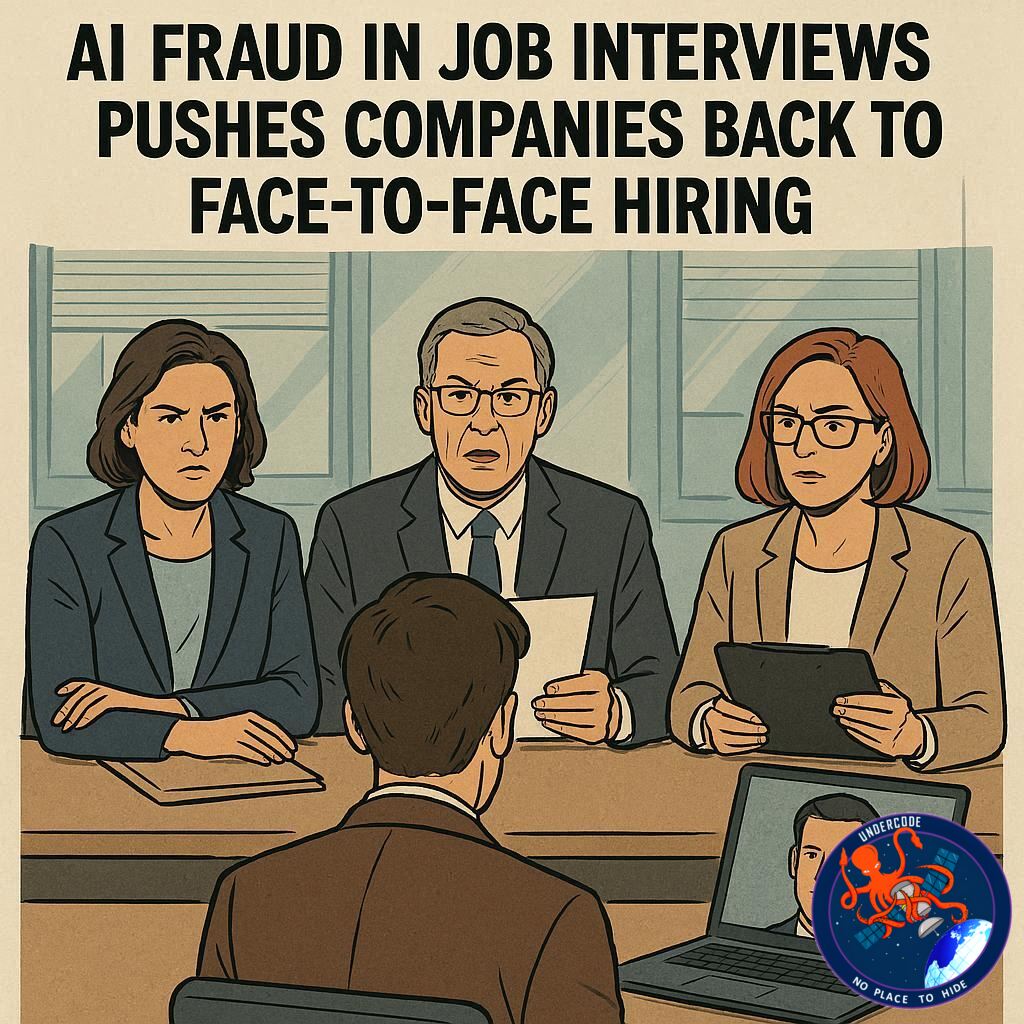
Artificial Intelligence (AI) is transforming workplaces worldwide, but not always for the better. While businesses embrace AI for efficiency, a darker side of the technology is emerging—job candidates using AI tools to cheat their way into positions. This rising trend of fraudulent AI-assisted interviews has forced major corporations to rethink their hiring processes. The Wall Street Journal reports that tech giants like Google, Cisco, and McKinsey are reinstating in-person interviews to verify skills and authenticity, particularly in high-demand remote roles such as software engineering and programming. The shift signals a significant reversal in recruitment strategies, revealing how AI, once a tool for productivity, is now challenging the integrity of the job market.
the Original
Artificial intelligence is disrupting the hiring landscape in ways recruiters never anticipated. Some companies are now abandoning fully virtual recruitment and returning to in-person interviews due to growing concerns about candidates misusing AI during the hiring process. According to The Wall Street Journal, recruiters have observed a rise in job seekers using AI tools during online interviews—often covertly—to complete tasks like coding tests.
Software-engineering and programming positions, many of which are remote, have been the most targeted. At Google, CEO Sundar Pichai confirmed that at least one round of in-person interviews is being reintroduced to ensure candidates meet basic requirements. The trend is widespread—Mike Kyle of Coda Search/Staffing noted that client requests for in-person interviews jumped from 5% in 2024 to 30% this year.
Candidates are reportedly using AI not just for drafting resumes but also for real-time assistance during interviews. Deepfake technology is enabling unqualified individuals and even scammers to impersonate legitimate candidates. The FBI recently warned that North Korean operatives have been applying for U.S. remote jobs while posing as Americans.
A Gartner survey revealed that 6% of job seekers admitted to committing interview fraud, and projections suggest that by 2028, one in four candidate profiles could be fake. McKinsey now insists that managers meet candidates in person before hiring to evaluate trustworthiness.
Employers are also deploying technology to counter this threat. Companies like Greenhouse have partnered with Clear for identity verification, while Cisco employs biometric checks. Interestingly, merely announcing that a role involves an in-person stage has deterred some suspicious candidates. Cisco’s chief people officer, Kelly Jones, said they have encountered cases where applicants dropped out once an in-person meeting was required, validating concerns over fraudulent profiles.
What Undercode Say:
The current shift from remote to in-person interviews reveals a fascinating—and alarming—paradox in modern recruitment. AI was originally touted as a tool to make hiring faster and fairer, but now, it’s forcing employers to slow down and revert to old-school face-to-face methods.
The abuse of AI in interviews is not surprising given the rapid pace of generative AI development. Tools that can code, write, or simulate human conversation in real time are widely accessible. For a job seeker lacking certain skills, it’s tempting to rely on these tools to pass initial assessments. The problem is, when the job begins, the skill gap becomes glaring—and in fields like cybersecurity or critical infrastructure, this gap could have severe consequences.
From a corporate perspective, the return to in-person interviews is more than just a hiring policy change—it’s a statement about trust and authenticity. Companies like Google and Cisco are essentially acknowledging that technology can’t fully replace human intuition when assessing a candidate’s suitability. Seeing someone in person, reading their body language, and gauging how they respond without technological crutches is becoming essential again.
However, this shift creates its own set of challenges. Remote work remains attractive to top talent, and mandatory in-person interviews might alienate skilled candidates in different geographic locations. The balance between security and accessibility will be a key challenge moving forward.
Another dimension is the geopolitical aspect. The FBI’s warning about North Korean operatives targeting U.S. jobs highlights how AI-aided fraud is not merely an HR inconvenience but a national security issue. If foreign actors can infiltrate corporate systems through fraudulent hiring, the risks extend far beyond productivity losses.
On the detection front, companies are beginning to catch up. Biometric verification, deepfake detection, and real-time identity checks are promising tools—but these also raise privacy concerns. Candidates may feel uneasy about sharing biometric data, and legal frameworks for handling such information are still evolving.
In essence, the recruitment world is now a battleground between AI-enabled fraud and AI-enabled detection. While in-person interviews may offer a temporary safeguard, the longer-term solution will likely require a hybrid model—one that uses AI ethically to improve hiring while maintaining robust human oversight.
For job seekers, the message is clear: authenticity is becoming a premium currency in the job market. Shortcuts through AI might get you through a few doors, but without genuine skill, those doors will close quickly. Employers, on the other hand, must accept that the convenience of fully remote hiring comes with the price tag of heightened vigilance.
If history is any guide, the pendulum may swing again. Once detection technology catches up, remote interviews could return to dominance. Until then, the hiring process might look a lot like it did before the pandemic—handshakes, office tours, and face-to-face conversations.
🔍 Fact Checker Results
✅ Verified: Google, Cisco, and McKinsey have publicly stated moves toward in-person interviews.
✅ Verified: FBI has issued warnings about North Korean actors applying for U.S. remote jobs.
❌ Not Proven: Exact proportion of fraudulent interviews in the tech sector beyond the cited Gartner survey figure.
📊 Prediction
By 2028, the hiring process will likely merge biometric verification with remote interviews, creating a hybrid model where candidates are screened through both AI-powered tools and live human interaction. The percentage of companies using at least one in-person stage could remain above 25%, especially in sensitive roles like cybersecurity, finance, and defense. Fraud will evolve alongside detection methods, making recruitment an ongoing technological chess match.
🕵️📝✔️Let’s dive deep and fact‑check.
References:
Reported By: timesofindia.indiatimes.com
Extra Source Hub:
https://stackoverflow.com
Wikipedia
OpenAi & Undercode AI
Image Source:
Unsplash
Undercode AI DI v2
🔐JOIN OUR CYBER WORLD [ CVE News • HackMonitor • UndercodeNews ]
📢 Follow UndercodeNews & Stay Tuned:
𝕏 formerly Twitter 🐦 | @ Threads | 🔗 Linkedin | 🦋BlueSky | 🐘Mastodon


