
Listen to this Post
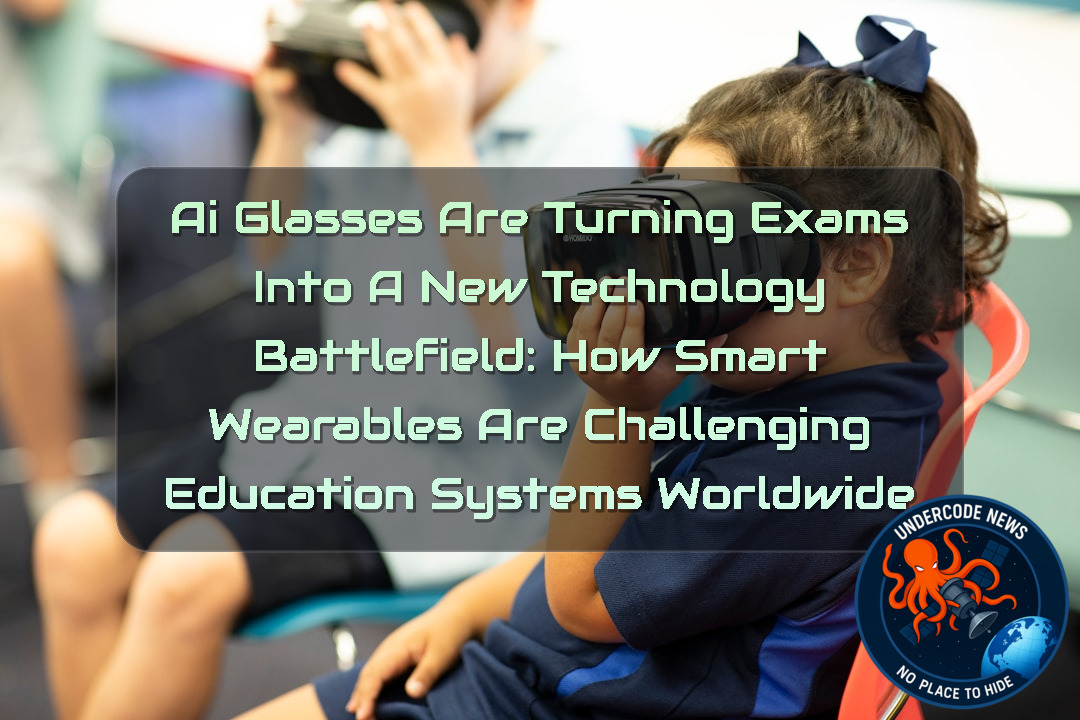 Introduction: When Artificial Intelligence Enters the Examination Room
The rise of artificial intelligence has transformed the way people work, create, communicate, and learn. However, the same technology designed to increase human ability is now creating a difficult challenge inside classrooms and examination halls. AI-powered smart glasses, once viewed as futuristic devices for productivity and accessibility, are becoming a new tool for students attempting to gain unfair advantages during exams.
Educational institutions across East Asia are now facing a complicated problem: how to maintain academic integrity in an era where hidden AI assistants can fit inside a pair of glasses. Unlike traditional cheating methods, modern AI wearables can potentially provide real-time information, recognize text, process questions, and communicate answers without obvious signs of misconduct.
The situation represents a much larger debate about artificial intelligence. As technology becomes smaller, faster, and more invisible, schools, universities, and governments must rethink how assessments are designed and how trust is maintained in education.
The New Era of AI-Assisted Cheating
Smart Glasses Become a Hidden Examination Tool
According to reports from CNN, educators in East Asia are increasingly concerned about students using AI-powered glasses during examinations. These devices combine cameras, artificial intelligence models, internet connectivity, and display technology, creating possibilities that were previously limited to science fiction.
Unlike smartphones, which are easier for teachers to detect, smart glasses can appear like normal eyewear. A student wearing them may be able to capture exam questions, analyze information through AI systems, and receive assistance without making noticeable movements.
The challenge is not simply about stopping one cheating method. It reflects how quickly consumer technology is evolving beyond the ability of traditional rules and monitoring systems to keep pace.
Why AI Glasses Are Different From Traditional Cheating Methods
Invisible Technology Creates New Difficulties for Schools
For decades, schools have dealt with cheating through methods such as hidden notes, unauthorized calculators, or smartphone usage. These methods usually required physical actions that could be detected by teachers.
AI glasses introduce a different category of problem because the technology operates quietly. A student may not need to touch a device, open a screen, or communicate visibly with another person.
The combination of cameras, voice assistants, and artificial intelligence creates a situation where the boundary between legitimate technology use and academic dishonesty becomes increasingly difficult to define.
The Growth of AI Wearables Beyond Education
Technology Companies Are Building the Future of Personal Computing
AI glasses are not designed only for cheating. Companies developing wearable artificial intelligence systems are attempting to create a new generation of personal computing.
Devices connected with AI assistants can help users translate languages, identify objects, navigate cities, summarize information, and interact with digital services more naturally.
The same features that make these devices useful in everyday life also create risks in controlled environments such as classrooms, professional certifications, and competitive examinations.
The problem is not the technology itself, but the way powerful tools can be misused when placed in situations where equal conditions are required.
Schools Are Forced to Rethink How Exams Work
Traditional Testing Methods May No Longer Be Enough
Many education systems still rely heavily on memorization-based examinations. These tests were designed during an era when accessing outside information required obvious actions.
Artificial intelligence challenges this model. If information can be accessed instantly through invisible devices, educators may need to move toward assessments that measure reasoning, creativity, problem-solving, and practical application rather than simple information recall.
The future of education may require fewer restrictions and more intelligent evaluation systems that recognize AI as part of modern life rather than treating it only as a threat.
The Global Debate Around Artificial Intelligence and Academic Integrity
Trust Becomes the Most Valuable Resource in Education
The introduction of AI tools into classrooms creates a difficult balance. Completely banning technology may be unrealistic because artificial intelligence is becoming essential in workplaces and research environments.
At the same time, allowing unrestricted AI assistance during exams could damage confidence in academic qualifications.
Education systems must decide where AI should support learning and where human performance must remain independent.
This debate will likely continue as artificial intelligence becomes increasingly integrated into everyday devices.
Deep Analysis: Linux Commands, Windows Tools, and Mac Security Thinking Behind AI Wearable Risks
Understanding the Technology Infrastructure Behind AI Glasses
AI glasses are not just simple cameras. They represent a combination of hardware sensors, operating systems, cloud services, artificial intelligence models, and communication networks.
From a cybersecurity perspective, understanding these systems requires analyzing how devices collect information and exchange data.
Linux environments are often used by security researchers to inspect connected devices and analyze network behavior.
Linux Command Analysis for Connected AI Devices
Security researchers can use basic Linux commands to study network activity:
ip addr
This command displays network interfaces and helps identify connected devices.
netstat -tulnp
This can reveal active network connections and services running on a system.
tcpdump -i wlan0
This command allows researchers to inspect network traffic for security analysis.
nmap -sV device_ip_address
This helps identify available services on connected devices during authorized testing.
Windows and Mac Security Perspective
Windows administrators can use:
Get-NetTCPConnection
to review active network connections.
Mac users can analyze network activity with:
lsof -i
which displays applications communicating over the network.
These tools demonstrate an important point: modern technology requires modern security awareness. As AI devices become smaller and more powerful, understanding their digital behavior becomes essential.
AI Glasses Represent a Bigger Security Challenge
The issue is not only examination cheating. Similar technology could create concerns involving privacy, workplace monitoring, confidential information exposure, and unauthorized recording.
A pair of glasses capable of understanding the environment around a person creates a new category of digital privacy questions.
The future will require stronger policies, clearer regulations, and better awareness about responsible AI usage.
What Undercode Say:
Artificial intelligence glasses represent one of the first examples of invisible computing becoming accessible to ordinary users. The education sector is experiencing the consequences because examinations depend heavily on controlled environments.
The traditional idea of cheating was based on physical separation between the student and external information. AI destroys that separation by bringing external knowledge directly into personal devices.
The challenge for schools is not simply detecting devices. Detection alone will become increasingly difficult as technology continues shrinking.
The bigger question is whether education systems are prepared for a world where information access is unlimited.
Students today are growing up in an environment where AI assistants are becoming normal. Completely preventing AI usage may be impossible and potentially counterproductive because future workplaces will require AI skills.
However, examinations designed to measure individual knowledge still need protection from unfair advantages.
The solution may involve redesigning assessments rather than creating endless battles against technology.
Universities and schools may need to focus more on critical thinking, creativity, research ability, and real-world problem solving.
AI can provide answers, but it cannot fully replace human judgment, originality, and understanding.
Another important issue is privacy. AI glasses are not only capable of helping users but also potentially recording environments without obvious awareness.
This creates ethical concerns in classrooms, workplaces, and public spaces.
Technology companies developing AI wearables must consider security from the beginning, including encryption, user permission systems, and transparency.
Governments may eventually introduce regulations specifically targeting AI-powered recording devices.
The education sector is becoming a testing ground for how society manages artificial intelligence.
The AI glasses problem is not really about glasses. It is about how humanity adapts when powerful computing becomes invisible and always available.
The next generation of education will likely not be defined by banning AI, but by learning how to use it responsibly while protecting fairness.
✅ AI-powered wearable technology is becoming increasingly advanced.
Modern smart glasses can combine cameras, artificial intelligence assistants, and connectivity features that create new possibilities for productivity and information access.
✅ Educators are concerned about AI-assisted cheating.
Schools and universities worldwide are examining new policies as artificial intelligence tools create challenges for traditional examination systems.
❌ AI glasses are not automatically proof of widespread cheating.
Reports of misuse represent emerging concerns, but there is limited public evidence showing that AI glasses have become a dominant cheating method globally.
Prediction: The Future of AI Glasses and Education
(+1) AI glasses will become valuable learning tools.
Educational institutions may eventually integrate AI wearables into classrooms for accessibility, translation, research assistance, and personalized learning.
(+1) Examinations will evolve toward creativity-based evaluation.
Schools may move away from memorization-heavy tests and focus more on reasoning, analysis, and practical skills.
(-1) Academic cheating methods will become harder to detect.
As AI devices become smaller and more discreet, traditional monitoring techniques may become less effective.
(-1) Privacy concerns will increase.
AI glasses with cameras and constant AI processing may create new debates about surveillance, consent, and personal data protection.
(+1) AI literacy will become a core educational skill.
Future students may be judged not only on what they know but also on how responsibly they use artificial intelligence.
▶️ Related Video (72% Match):
🕵️📝Let’s dive deep and fact‑check.
🎓 Live Courses & Certifications:
Join Undercode Academy for Verified Certifications
🚀 Request a Custom Project:
Secure, high-velocity infrastructure and disruptive technological engineering. Contact our engineering team for high-tier development and proprietary systems:
[email protected]
💎 Smart Architecture | 🛡️ Secure by Design | ⭐ Trusted by Thousands
References:
Reported By: edition.cnn.com
Extra Source Hub (Possible Sources for article):
https://www.quora.com/topic/Technology
Wikipedia
OpenAi & Undercode AI
Image Source:
Unsplash
Undercode AI DI v2
🔐JOIN OUR CYBER WORLD [ CVE News • HackMonitor • UndercodeNews ]
📢 Follow UndercodeNews & Stay Tuned:
𝕏 formerly Twitter 🐦 | @ Threads | 🔗 Linkedin | 🦋BlueSky | 🐘Mastodon | 📺Youtube


