
Listen to this Post
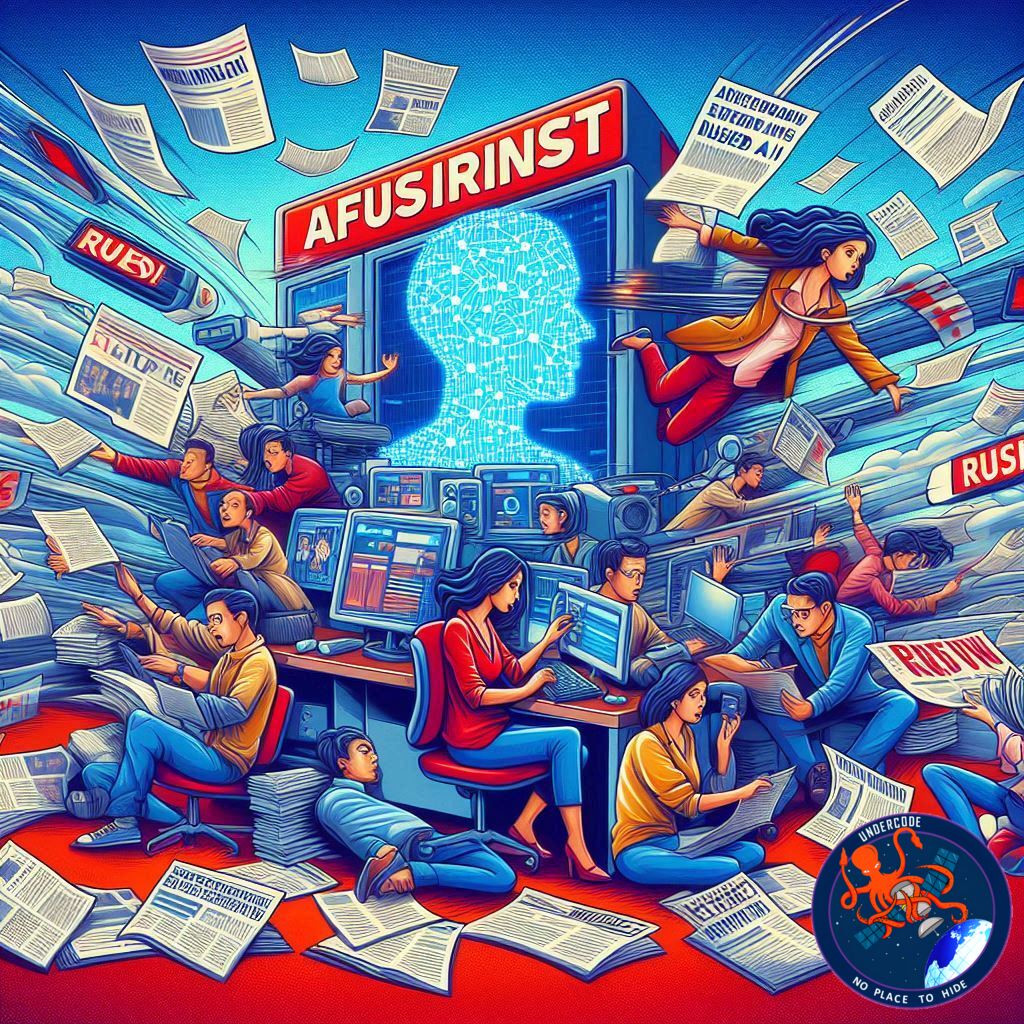
Introduction: AI’s Growing Pains in the Content Industry
Artificial intelligence has rapidly moved from experimental novelty to operational necessity across media, publishing, and global brands. From automated summaries to AI-generated videos, companies are racing to deploy tools that promise speed, scale, and cost savings. But as recent incidents show, the rush to integrate AI without rigorous editorial oversight is triggering public backlash, factual errors, and reputational damage. What was meant to signal innovation is increasingly exposing a lack of quality control—and the consequences are becoming harder to ignore.
Summary of the Original A Pattern of Costly AI Missteps
The article outlines a growing list of publishers and brands facing criticism after poorly executed AI experiments went public. The central issue is not AI adoption itself, but the careless way it has been implemented. Amazon recently removed an AI-generated video recap of the first season of Fallout from Prime Video after viewers spotted factual inaccuracies, including incorrect flashback timing and a distorted portrayal of a character’s motivations. McDonald’s Netherlands pulled a Christmas advertisement featuring AI-generated visuals following online backlash, later describing the incident as a learning experience. Even Saturday Night Live faced criticism for using AI-generated imagery in a recent episode.
News organizations have been especially vulnerable. The Washington Post launched AI-generated podcasts that reportedly misattributed or fabricated quotes. Since the release of ChatGPT in 2022, publishers have repeatedly stumbled. CNET drew early scrutiny in 2023 after inaccuracies surfaced in AI-written articles, followed by similar problems at G/O Media. Axel Springer’s AI-powered “live summary” on Politico’s homepage during the 2024 Democratic National Convention fabricated quotes and misspelled names, breaching editorial standards. The Chicago Sun-Times published an AI-generated summer reading list that included books that do not exist. Business Insider, Wired, and other outlets later removed articles written under a fictional byline after discovering they were AI-generated.
Despite these failures, companies continue to pursue AI to improve efficiency and reduce costs. Some publishers, including Axios, have entered licensing deals with OpenAI, granting journalists access to AI tools for summaries and multimedia content. Success stories tend to involve strict testing, transparent disclosure, and strong editorial review. Meanwhile, lawmakers are considering new regulations, such as New York’s proposed Senate Bill S6748, which would require publications to label AI-generated content. AI adoption has also drawn union scrutiny, with journalists pushing back against management over how these tools are introduced into newsrooms.
What Undercode Say:
Speed Without Safeguards Is the Real Risk
The repeated failures highlighted in this article reveal a common pattern: AI systems are being deployed faster than editorial frameworks can adapt. Automation magnifies mistakes at scale, meaning a single error can instantly reach millions.
AI Is Exposing Weak Editorial Infrastructure
These incidents suggest that AI is not the root problem but a stress test. Newsrooms and brands with fragile editorial processes are seeing those weaknesses amplified when machines generate content without human verification.
Public Trust Is More Fragile Than Tech Optimism
Audiences are willing to accept experimentation, but not deception or sloppiness. Fabricated quotes, nonexistent books, and factual errors erode trust far faster than traditional human mistakes, because they signal systemic negligence.
Transparency Is Becoming Non-Negotiable
Labeling AI-generated content is no longer a courtesy—it is an expectation. Readers and viewers want to know when machines are involved, especially in journalism, where credibility is the product.
Cost-Cutting Narratives Are Backfiring
While AI is often sold internally as a way to reduce labor costs, these missteps are creating new expenses: content takedowns, reputational damage, union disputes, and regulatory scrutiny.
Editorial Buy-In Determines Success or Failure
The few examples of smoother AI integration share one trait: journalists and editors are involved in testing and oversight. When AI is imposed without newsroom consent, resistance and mistakes multiply.
Regulation Is Catching Up Faster Than Expected
Proposed legislation like New York’s S6748 indicates that policymakers are no longer waiting for the industry to self-correct. Mandatory disclosure could soon become standard across media.
AI Errors Are Teaching the Wrong Lessons
Some companies frame these incidents as “learning moments,” but repeated failures suggest lessons are not being institutionalized. Without formal guardrails, experimentation turns into repetition.
The Industry Is at a Credibility Crossroads
Media organizations are balancing innovation against their core mission: accuracy. If AI continues to undermine that mission, its long-term value proposition weakens.
AI Needs Editors More Than Ever
Contrary to fears of replacement, these events reinforce one truth: AI-generated content without experienced human editors is not scalable, sustainable, or trustworthy.
Fact Checker Results
Accuracy of Reported Incidents
✅ Documented examples of AI errors at major publishers and brands are consistent with public reporting.
Representation of Industry Trends
✅ The article accurately reflects a broader pattern of experimental AI adoption followed by public backlash.
Claims About Regulation and Unions
❌ Some regulatory outcomes remain proposed rather than enacted, indicating future risk rather than current enforcement.
Prediction:
Increased Mandatory AI Labeling 🟢
Governments are likely to require clearer disclosure of AI-generated content across digital and print media.
Slower, More Controlled AI Rollouts 🟡
Publishers will shift from public-facing experiments to internal tools with stricter editorial checkpoints.
Stronger Human Oversight Models 🔵
AI adoption will increasingly prioritize hybrid workflows, where automation supports—but never replaces—editorial judgment.
🕵️📝✔️Let’s dive deep and fact‑check.
References:
Reported By: axioscom_1765904897
Extra Source Hub (Possible Sources for article):
https://stackoverflow.com
Wikipedia
OpenAi & Undercode AI
Image Source:
Unsplash
Undercode AI DI v2
Bing
🔐JOIN OUR CYBER WORLD [ CVE News • HackMonitor • UndercodeNews ]
📢 Follow UndercodeNews & Stay Tuned:
𝕏 formerly Twitter 🐦 | @ Threads | 🔗 Linkedin | 🦋BlueSky | 🐘Mastodon


