
Listen to this Post
Introduction
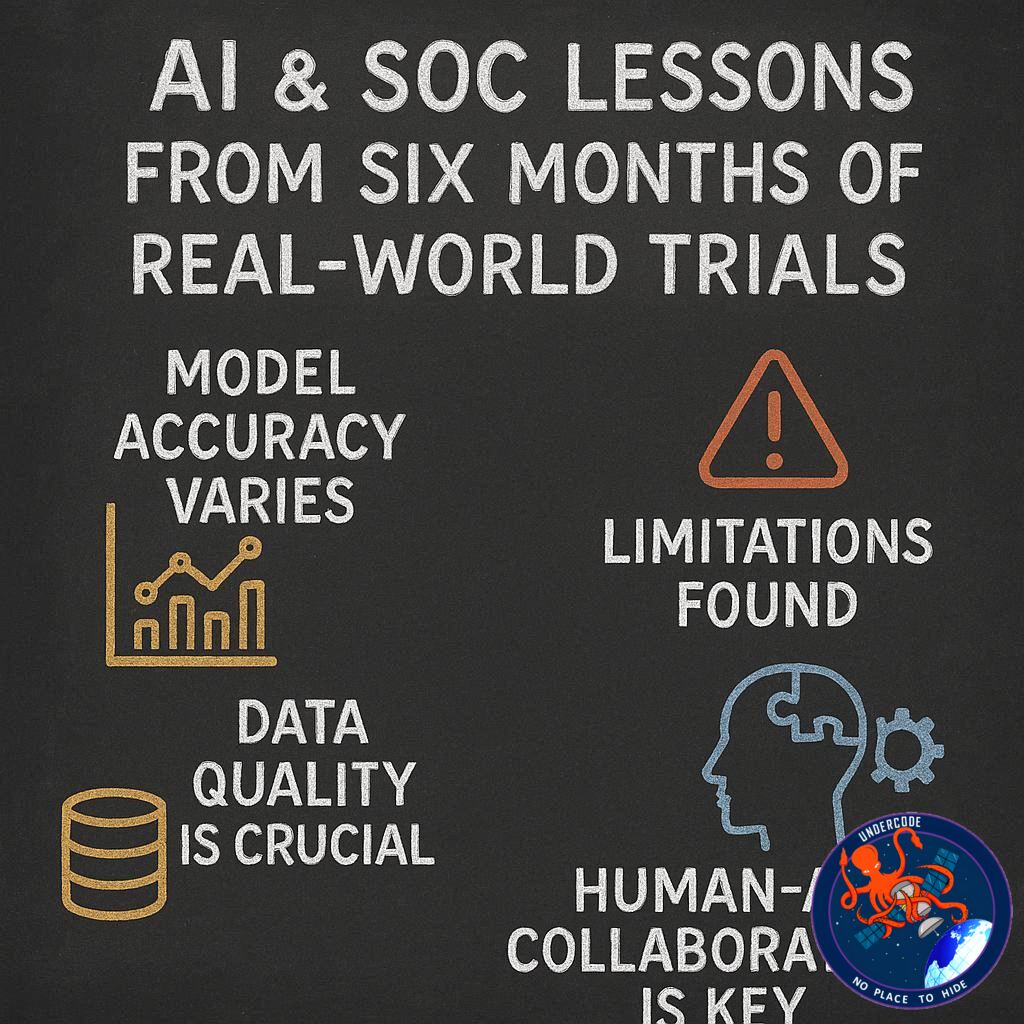
Artificial intelligence promises to transform cybersecurity operations centers (SOCs), offering faster threat detection, streamlined workflows, and reduced human fatigue. Yet, the rush to deploy AI also raises significant questions about reliability, governance, and operational safety. At the RSAC 2026 Conference, two enterprise cybersecurity leaders shared their six-month experiments with AI in their SOCs—shedding light on what works, what doesn’t, and where caution is critical. Their experiences reveal a nuanced picture: AI can be a powerful assistant but is far from a replacement for human judgment.
AI in the Fortune 500 Food Manufacturing SOC
Shilpi Mittal implemented a large language model (LLM) as a “read-only triage assistant” inside her company’s SOC. The AI helped synthesize data from multiple sources and analyze alerts according to pre-established rules. Over the trial, key metrics improved: mean time to discovery (MTD) dropped 26–36%, mean time to response (MTTR) fell by 22%, and false positives decreased by 16 points. The team maintained strict guardrails, including enforced citations, human approval gates, tool allow lists, and full audit logging.
AI even demonstrated proactive threat prevention, such as detecting a suspicious .git file, quarantining it, and shutting down the endpoint. Yet challenges remained. Additional false positives arose, and integrating AI with complex operational technology (OT) and legacy systems posed ongoing risks. Mittal emphasized that AI in manufacturing must respect operational realities; downtime impacts revenue, production lines, and worker safety. Consequently, AI was confined to case management workflows, never directly controlling PLCs, SCADA systems, or production equipment.
AI in the Financial
Ankit Gupta tested AI in a financial organization, which deals with highly regulated, sensitive data. While AI accelerated tasks like fraud detection, automated underwriting, algorithmic trading, customer service, and risk modeling, its use in SOC operations was less successful. A two-week experiment granting AI full control on a non-production system led to errors—AI mistakenly removed users due to incomplete or ambiguous alert data.
Gupta concluded that AI can assist but cannot replace human decision-making in the SOC. Its strengths lie in summarizing data, correlating context, and generating structured narratives from multiple security tools. Notably, AI reduced analyst fatigue by taking over repetitive documentation and information gathering, freeing analysts for higher-value tasks. In finance, where oversight is constant and regulations are strict, AI’s role is supplementary rather than autonomous.
Challenges Across Sectors
Both leaders noted that external pressures—from executives and boards eager for AI-driven efficiency—create urgency to adopt AI. Yet these trials demonstrate that SOC deployment is not a simple “plug-and-play” scenario. Manufacturing must prioritize operational safety, while finance must navigate regulatory compliance. Across sectors, AI adoption demands careful governance, human oversight, and realistic expectations. Security teams should support innovation rather than block it, acknowledging that business priorities drive security measures.
What Undercode Say: Analyzing AI Integration in SOCs
The RSAC 2026 findings reveal a dual reality. On one hand, AI can accelerate data analysis, reduce repetitive workload, and enhance proactive detection. On the other, AI remains context-sensitive and highly dependent on accurate, structured inputs. Its missteps in the financial SOC underscore a critical limitation: AI lacks judgment in ambiguous scenarios and cannot reliably replace humans where decisions have high stakes.
In manufacturing, AI’s value comes from careful integration rather than autonomous operation. Restricting AI to read-only workflows mitigates risk to production lines while still extracting efficiency gains. By contrast, financial SOCs highlight the necessity for AI to supplement, rather than control, human analysts. Here, regulatory compliance and consumer trust are non-negotiable, and AI serves as a tool to reduce cognitive load rather than take decisive action.
From a strategic standpoint, these pilots emphasize that AI adoption in cybersecurity is not uniform. SOC leaders must evaluate their operational environment, risk tolerance, and regulatory context before implementation. Hybrid workflows—where AI handles routine, data-intensive tasks and humans retain decision authority—appear to be the most effective approach. Additionally, governance mechanisms such as approval gates, audit logs, and restricted interfaces are critical for maintaining safety and accountability.
Moreover, the pilots illustrate the importance of domain-specific adaptation. Manufacturing AI needs safeguards for physical processes, whereas finance AI must respect data privacy and legal constraints. Companies attempting generic AI deployment may overestimate benefits and underestimate operational risks. Over time, the most successful SOCs will likely adopt modular AI systems that integrate gradually, allowing teams to scale capabilities safely while learning from real-world feedback.
Finally, these experiments highlight a cultural dimension: AI adoption is not just technological but organizational. Analysts must trust AI outputs, managers must align expectations with realistic capabilities, and boards must understand that speed and automation cannot come at the expense of accuracy or compliance. Leadership that balances innovation with vigilance will reap the largest benefits from AI integration.
Fact Checker Results
✅ AI improved MTD by 26–36% and MTTR by 22% in manufacturing SOCs.
✅ Financial SOC trials confirm AI reduces analyst fatigue but cannot fully automate alert responses.
❌ AI is not yet safe to fully control industrial or financial systems without human oversight.
Prediction
📊 In the next 3–5 years, AI in SOCs will increasingly handle repetitive and data-heavy tasks, reducing human fatigue.
📊 Hybrid workflows with human oversight will become the industry standard, particularly in regulated sectors like finance and healthcare.
📊 AI-driven threat detection will expand, but fully autonomous SOCs remain unlikely due to operational, regulatory, and ethical constraints.
▶️ Related Video (86% Match):
🕵️📝✔️Let’s dive deep and fact‑check.
References:
Reported By: www.darkreading.com
Extra Source Hub (Possible Sources for article):
https://www.github.com
Wikipedia
OpenAi & Undercode AI
Image Source:
Unsplash
Undercode AI DI v2
Bing
🔐JOIN OUR CYBER WORLD [ CVE News • HackMonitor • UndercodeNews ]
📢 Follow UndercodeNews & Stay Tuned:
𝕏 formerly Twitter 🐦 | @ Threads | 🔗 Linkedin | 🦋BlueSky | 🐘Mastodon


