
Listen to this Post
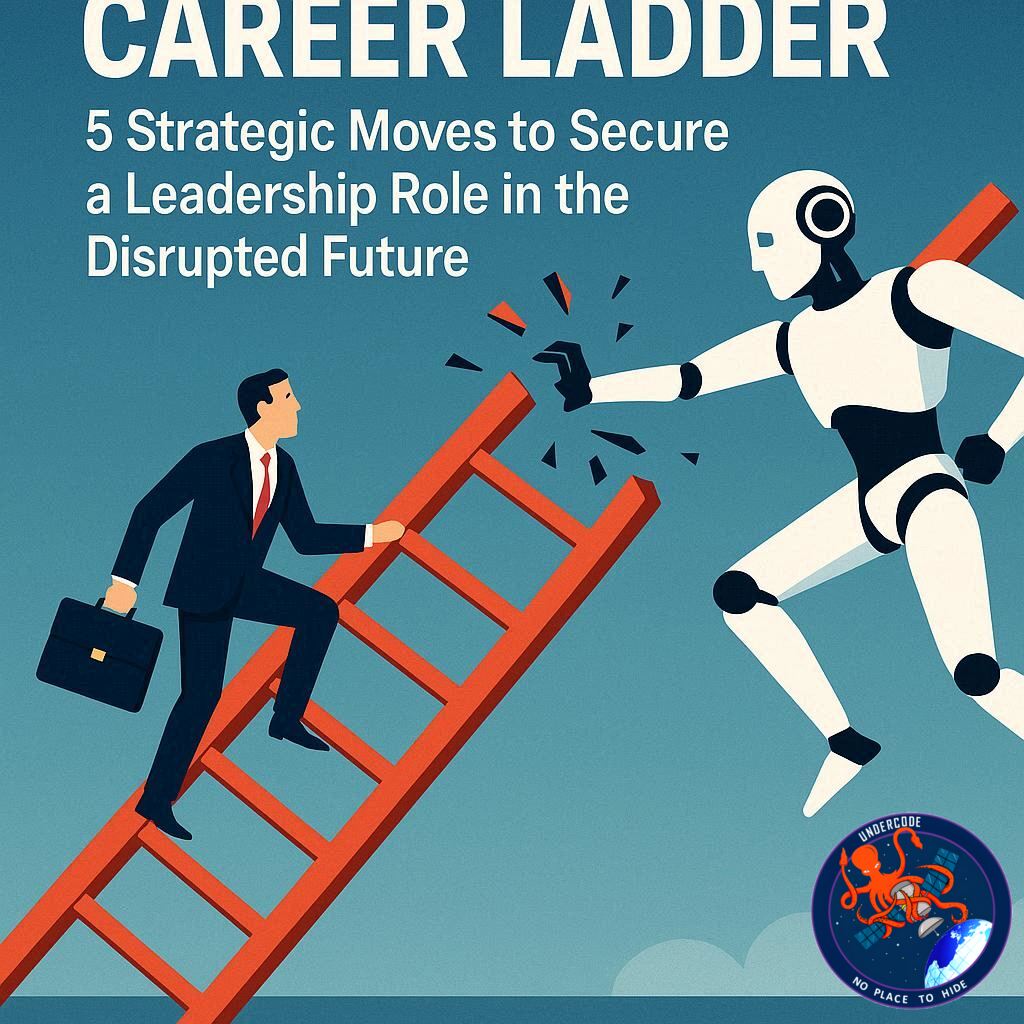
Introduction: The End of Predictable Career Growth
For decades, career progression followed a familiar script. Work hard, gain experience, climb step by step, and eventually reach leadership. That predictable ladder is now collapsing under the weight of artificial intelligence and rapid business transformation. Roles are evolving faster than job titles can keep up, and traditional promotion pathways are no longer guaranteed. In this new reality, becoming a leader is less about tenure and more about adaptability, perspective, and influence. Those who rise are not just skilled, but strategically aware, emotionally intelligent, and capable of thinking beyond their immediate responsibilities.
Summary: How Modern Leaders Are Rising in an AI-Driven Workplace
The modern workplace is undergoing a structural shift, where automation and AI are flattening hierarchies and redefining what leadership looks like. Traditional career ladders are no longer linear, and professionals often find themselves stuck mid-way, unable to progress through conventional means. To break through, individuals must actively reshape their approach to career development.
One of the most critical steps is stepping outside comfort zones. Leaders like Barry Panayi emphasize the importance of seeking unconventional opportunities, such as non-executive roles or positions outside one’s core expertise. These experiences broaden perspective, helping professionals understand the wider business environment rather than remaining confined to a single domain. Exposure to diverse responsibilities enables individuals to contribute meaningfully at higher levels, where decisions are rarely limited to one discipline.
Equally important is demonstrating commitment beyond operational duties. Jason Pyle highlights the need for strategic thinking, where professionals align their work with broader organizational goals. Leadership is not just about managing tasks but understanding how decisions impact overall business performance. Those aiming for executive roles must think commercially, considering profitability, growth, and long-term sustainability in every action they take.
Another defining trait of successful leaders is humility. Joe Depa stresses that leadership in today’s complex environment requires openness to feedback and collaboration. Leaders who assume they have all the answers often fail because they ignore valuable insights from stakeholders, customers, and partners. In contrast, those who listen, adapt, and evolve are better positioned to navigate uncertainty and drive innovation.
Leadership also involves responsibility toward others. Dawn McCarroll underscores the importance of integrity and mentorship. Building trust within teams and fostering the next generation of talent is essential. True leaders are not only focused on personal advancement but on creating a legacy by empowering others to grow and succeed.
Finally, aspiring executives must adopt a hands-off leadership style. Effective leaders build teams that can operate independently, demonstrating scalability and trust. When a team performs well without constant supervision, it signals that the leader is ready for greater responsibilities. Organizations are more likely to promote individuals who can elevate others rather than those who remain indispensable in day-to-day operations.
In essence, the path to leadership today is defined by adaptability, strategic awareness, humility, and the ability to create impact beyond individual performance. Those who embrace these qualities are more likely to rise, even as AI continues to reshape the professional landscape.
What Undercode Say: The Real Power Shift Behind Leadership in the AI Era
The article presents practical advice, but beneath the surface lies a deeper transformation that many professionals underestimate. The collapse of traditional career ladders is not just a structural change, it is a power shift. AI is not simply automating tasks; it is redefining value within organizations. The individuals who succeed are those who transition from being task executors to value creators.
Taking “unusual opportunities” is not merely about gaining experience. It is about signaling adaptability in an unpredictable environment. In a world where AI can outperform humans in specialized tasks, being narrowly skilled is risky. Breadth of understanding becomes a competitive advantage. Leaders are no longer defined by what they know, but by how well they connect different domains into meaningful strategies.
Strategic thinking, as highlighted in the article, is often misunderstood. Many professionals believe it involves long-term planning or high-level discussions. In reality, it is about consistently linking everyday decisions to business outcomes. AI can generate insights, but it cannot replace human judgment in prioritizing what truly matters. Leaders who think commercially are essentially translating complexity into direction.
The emphasis on humility is particularly significant in the AI era. Technology evolves faster than any individual can fully comprehend. Leaders who pretend to have all the answers create fragile systems that collapse under pressure. Humility, in this context, is not weakness but an operational advantage. It allows leaders to build ecosystems of knowledge, leveraging diverse perspectives to make better decisions.
Mentorship and legacy-building also take on a new dimension. As AI automates routine work, the human element of leadership becomes more valuable. Developing people is no longer optional; it is a core leadership function. Organizations that fail to nurture talent risk stagnation, regardless of how advanced their technology becomes.
The concept of a “hands-off” leadership style is often misinterpreted as disengagement. In reality, it reflects a higher level of leadership maturity. It requires building systems, processes, and cultures that function independently of constant oversight. This is where true scalability lies. Leaders who cannot detach from daily operations become bottlenecks, limiting organizational growth.
What the article indirectly reveals is that leadership is shifting from control to influence. The future belongs to those who can guide, align, and inspire rather than command. AI may disrupt roles, but it amplifies the need for human-centered leadership qualities. The professionals who recognize this shift early will not just survive the disruption, they will define the next generation of leadership.
Fact Checker Results
✅ AI is actively reshaping traditional career structures and reducing reliance on linear promotion paths.
✅ Strategic thinking and cross-functional awareness are widely recognized as essential leadership traits.
❌ The idea that technical expertise alone guarantees leadership success is outdated and increasingly inaccurate.
Prediction
📊 AI will accelerate the decline of rigid job hierarchies, making leadership roles more fluid and project-based.
📊 Future executives will be evaluated more on adaptability and influence than years of experience or titles.
📊 Organizations will prioritize leaders who can integrate human talent with AI systems effectively.
🕵️📝✔️Let’s dive deep and fact‑check.
References:
Reported By: www.zdnet.com
Extra Source Hub (Possible Sources for article):
https://www.quora.com/topic/Technology
Wikipedia
OpenAi & Undercode AI
Image Source:
Unsplash
Undercode AI DI v2
Bing
🔐JOIN OUR CYBER WORLD [ CVE News • HackMonitor • UndercodeNews ]
📢 Follow UndercodeNews & Stay Tuned:
𝕏 formerly Twitter 🐦 | @ Threads | 🔗 Linkedin | 🦋BlueSky | 🐘Mastodon


