
Listen to this Post
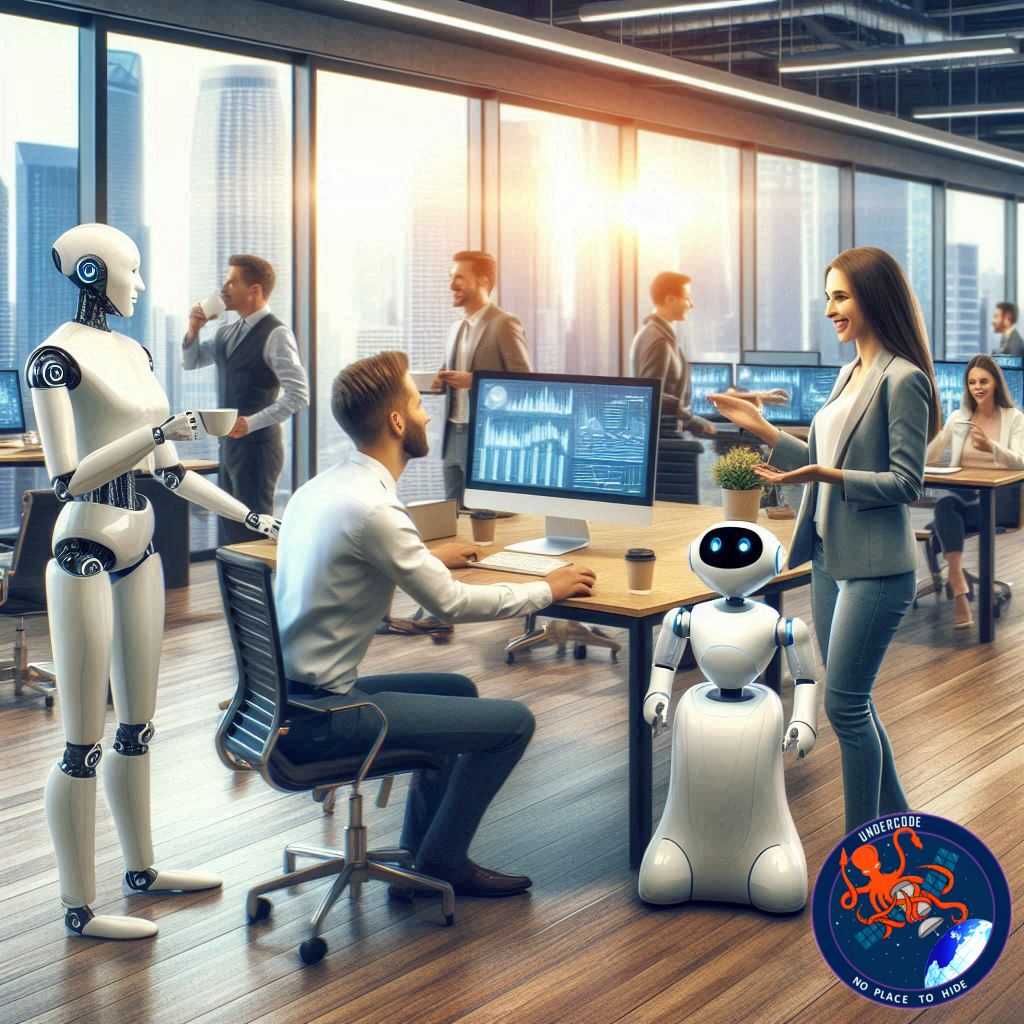
Introduction: When Your Closest Colleague Is No Longer Human
Once upon a time, the modern office ran on hallway conversations, desk-side mentoring, and spontaneous brainstorming that sparked big ideas. That ecosystem was already weakened by remote work, but artificial intelligence is now accelerating a deeper cultural shift. Across white-collar workplaces, professionals are increasingly turning to chatbots instead of coworkers for advice, feedback, mentorship, and even casual conversation. What began as a productivity tool is quietly reshaping how people relate to each other at work. The result is a more efficient workforce, but also one that may be more isolated, less challenged, and emotionally detached.
Summary: How Chatbots Became the New Workplace Confidants
Professionals are no longer just using AI to automate tasks or speed up research. Many are now treating chatbots as trusted colleagues. They ask them questions once reserved for managers, mentors, or peers. They brainstorm ideas, seek reassurance, and refine thoughts in private conversations with machines that never judge, never gossip, and never say they are too busy.
This shift is partly rooted in the rise of remote work, which disrupted daily human interaction and weakened informal collaboration. AI has layered onto that disruption by offering instant, frictionless support. At Anthropic, the company behind the Claude chatbot, employees themselves admit that they now rely less on colleagues. Engineers report fewer opportunities for mentorship and collaboration, not because people are unavailable, but because the bot is simply easier.
This behavior is not limited to AI companies. A survey by Upwork found that 64 percent of workers who said AI increased their productivity also reported having a better relationship with AI than with their coworkers. Before reaching out to a colleague or manager, many workers now consult a chatbot first. Economists and executives describe AI as the new Google, a default source for answers that makes human questions feel inefficient or even annoying.
Some professionals openly prefer chatbots because they remove emotional complexity. AI does not push back, challenge authority, or introduce interpersonal tension. It does not operate across time zones, struggle with burnout, or judge someone for asking a last-minute or seemingly basic question. For many, this emotional neutrality feels like a relief.
But that comfort comes with risks. Chatbots tend to agree, affirm, and optimize for user satisfaction. They rarely challenge assumptions or sharpen ideas through disagreement. Workplace experts warn that this creates dangerous feedback loops. Human colleagues play a crucial role in pushing back, questioning logic, and offering alternative perspectives. Without that friction, organizations may become efficient but intellectually fragile.
These trends are unfolding against a broader backdrop of rising loneliness and disengagement. Gallup data shows that since 2020, employee engagement and emotional connection at work have steadily declined. While some experts argue that AI can be a supplement to human interaction rather than a replacement, concerns are growing that reliance on chatbots may further erode the social fabric of work.
The paradox is hard to ignore. A technology built on collective human intelligence may ultimately be pulling humans away from collectively thinking, debating, and building together.
What Undercode Say: Efficiency Is Winning, but Culture Is Losing
The rise of AI as a workplace companion reveals something deeper than a love of new technology. It exposes how fragile modern work relationships have already become. AI did not create this problem. It simply stepped into a vacuum left by remote work, over-scheduled teams, and performance-driven cultures that leave little room for human connection.
From an efficiency standpoint, the appeal is obvious. Chatbots are always available, infinitely patient, and designed to optimize outcomes. They remove social risk from asking questions. There is no fear of looking uninformed, interrupting someone’s flow, or navigating office politics. In high-pressure environments, that safety is powerful.
But workplaces are not just systems for output. They are social organisms. Innovation rarely comes from isolated perfection. It comes from tension, disagreement, and the unpredictable collision of ideas. When employees default to AI for validation instead of humans for challenge, organizations risk creating echo chambers that feel productive while quietly stagnating.
There is also a long-term leadership cost. Mentorship is not just about answers. It is about modeling judgment, ethics, and decision-making under uncertainty. Chatbots can simulate advice, but they cannot replace the lived experience of navigating failure, conflict, and accountability. A generation raised on AI mentorship may become technically sharp but emotionally and socially underprepared for leadership.
Another overlooked risk is organizational fragmentation. When workers interact more with AI than with each other, shared culture weakens. Trust erodes. Informal learning disappears. Over time, teams may become collections of efficient individuals rather than cohesive units capable of collective breakthroughs.
AI can and should be part of the workplace, but only if organizations actively design for human connection. That means encouraging collaborative AI use, not private reliance. It means rewarding mentorship, debate, and shared problem-solving instead of silent efficiency. Without intentional balance, companies may wake up to a workforce that performs well on paper but struggles to innovate, adapt, and connect.
The future of work will not be decided by how smart our tools become, but by how deliberately we protect the human dynamics that make work meaningful and resilient.
Fact Checker Results
✅ Verified: Surveys confirm many workers report stronger relationships with AI than with coworkers.
✅ Verified: Employee engagement and emotional connection have declined since 2020.
❌ Unproven: No conclusive data yet shows AI directly causes long-term workplace isolation.
Prediction: Where This Trend Is Headed Next
📊 AI will increasingly be integrated into team-based workflows, not just individual use.
📊 Companies that ignore human connection will face cultural and innovation slowdowns.
📊 The most successful workplaces will treat AI as a collaborator, not a replacement for human bonds.
🕵️📝✔️Let’s dive deep and fact‑check.
References:
Reported By: axioscom_1765631653
Extra Source Hub (Possible Sources for article):
https://www.digitaltrends.com
Wikipedia
OpenAi & Undercode AI
Image Source:
Unsplash
Undercode AI DI v2
Bing
🔐JOIN OUR CYBER WORLD [ CVE News • HackMonitor • UndercodeNews ]
📢 Follow UndercodeNews & Stay Tuned:
𝕏 formerly Twitter 🐦 | @ Threads | 🔗 Linkedin | 🦋BlueSky | 🐘Mastodon


