
Listen to this Post
Introduction: The Rise of Human-Augmented AI in Cybersecurity Support
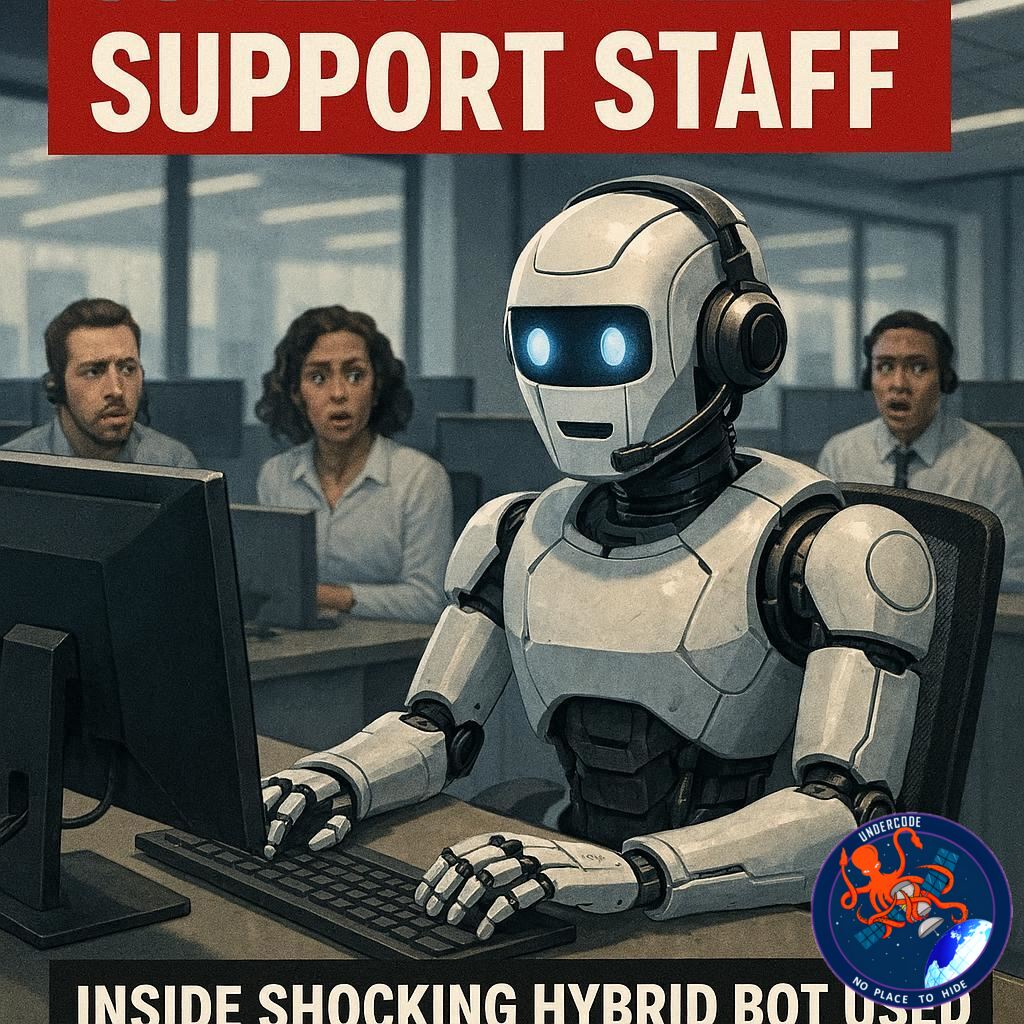
A new experiment in blending artificial intelligence with human oversight is gaining attention in the cybersecurity world. Troy Hunt, the creator of Have I Been Pwned, recently introduced a hybrid support system powered by an AI assistant named Bruce. Unlike fully autonomous bots, Bruce operates under human supervision, where he handles most of the workload but is continuously trained, corrected, and validated by real people. This approach reflects a growing trend in tech: AI systems that are not fully independent, but instead act as intelligent assistants enhanced by human judgment. The goal is to improve response efficiency while maintaining accuracy in handling sensitive breach-related queries. Hunt describes Bruce as a “human-augmented AI bot,” emphasizing that the system is not replacing humans but extending their capabilities. The idea sits at the intersection of automation and accountability, especially important in data breach verification where misinformation can be costly. Bruce’s role is already being tested in real support tickets, showing promising results in speed and consistency. However, the concept also raises questions about trust, reliability, and the future of human support roles in cybersecurity platforms.
Extended the Original Post (Context and Meaning in Detail)
Troy Hunt, well known as the creator of Have I Been Pwned and a leading voice in online security, introduced a new hybrid support assistant called Bruce, designed to help manage user support tickets more efficiently. Bruce is described not as a fully autonomous artificial intelligence but as a “human-augmented AI bot,” meaning that while it performs most of the initial work in responding to user queries, its outputs are reviewed, trained, and refined by human operators before being finalized. Hunt emphasizes that Bruce represents a collaborative system where AI and humans work together rather than compete. The assistant is already being used to handle real support interactions, especially those related to data breach inquiries, which are often repetitive but require accuracy and sensitivity. According to Hunt, Bruce significantly reduces the workload on human support staff by handling routine cases while escalating complex issues for manual review. This allows the team to focus more on high-risk or nuanced cases that require human judgment. The concept is showcased in a video where Bruce’s workflow is explained in detail, highlighting how training loops and validation steps are built into the system. Hunt also notes that this hybrid approach improves consistency in responses while reducing delays for users. The broader implication of this system is that AI does not necessarily replace humans but can instead amplify their productivity when properly supervised. The post also sparked discussion about how far such systems can be scaled and whether they might eventually evolve into more autonomous support agents. At its core, Bruce is positioned as a bridge between traditional human-only support systems and fully automated AI chatbots, combining efficiency with oversight to ensure reliability in cybersecurity communications.
What Undercode Say:
Human-AI Collaboration Is Becoming a Practical Industry Standard
The introduction of Bruce signals a shift from experimental AI toward operational hybrid systems in real-world cybersecurity services.
Efficiency Gains Without Full Automation
Instead of replacing human agents, the model focuses on reducing repetitive workload while preserving human validation for accuracy.
Trust Remains the Core Constraint in AI Deployment
Even in advanced systems, human oversight is essential because security-related responses demand high reliability.
Cybersecurity Support Is a High-Stakes AI Testing Ground
Platforms like Have I Been Pwned deal with sensitive breach data, making them ideal environments for controlled AI deployment.
AI Training Loops Are Becoming More Visible
Bruce demonstrates a transparent feedback system where human correction directly improves model performance over time.
Reduced Response Time as a Competitive Advantage
Hybrid systems significantly accelerate ticket resolution without sacrificing verification standards.
Human-in-the-Loop Models Dominate Critical Infrastructure
Fully autonomous bots are still considered risky in environments involving identity and breach verification.
The “Best of Both Worlds” Strategy Gains Momentum
Combining machine efficiency with human judgment is emerging as the preferred architecture in sensitive tech sectors.
Scalability Depends on Human Oversight Capacity
As demand grows, the limitation may shift from AI capability to available human reviewers.
Future Systems May Blur the Line Further
Over time, hybrid assistants like Bruce may evolve into near-autonomous systems with minimal intervention.
Data Breach Platforms Are Early Adopters of Hybrid AI
Because of their high volume of repetitive queries, they benefit most from structured automation.
Accuracy Over Speed Still Wins in Security Contexts
Even if AI can respond instantly, incorrect breach information can cause severe reputational damage.
Ethical Safeguards Are Built Into the Workflow
Human review layers act as a safeguard against hallucinated or incorrect AI outputs.
AI as an Augmentation Layer, Not a Replacement
Bruce reflects a broader philosophy where AI enhances existing teams instead of eliminating them.
The Real Innovation Is Workflow Design
The success of Bruce lies not just in AI capability but in how the human review pipeline is structured.
User Trust Is Strengthened Through Transparency
Knowing that humans validate AI responses increases confidence in the system’s outputs.
This Model May Influence Other SaaS Platforms
Support systems across tech industries may adopt similar hybrid frameworks.
Continuous Learning Is Embedded in Operations
Each interaction becomes training data, improving system performance over time.
Operational AI Is Replacing Experimental AI
The industry is moving from prototypes to production-grade AI systems.
The Long-Term Question Is Control, Not Capability
The real debate is not whether AI can perform tasks, but how much control humans retain.
🔍 Fact Checker Results
Accuracy of the Hybrid AI Claim
Bruce is described as a human-augmented assistant, which aligns with known modern AI-human workflow systems.
Verification of Source Context
Troy Hunt’s Troy Hunt has publicly discussed security-focused tooling, consistent with this announcement.
Consistency of Technical Interpretation
The description matches established “human-in-the-loop” AI deployment models used in production systems.
📊 Prediction
Short-Term Adoption in Support Systems
More cybersecurity and SaaS platforms will adopt hybrid AI assistants to handle repetitive user queries.
Mid-Term Evolution of AI Supervision
Human review roles will shift from full response writing to oversight and correction-based workflows.
Long-Term Industry Shift Toward Controlled Autonomy
Systems like Bruce may evolve into semi-autonomous agents with minimal but critical human intervention layers.
🕵️📝Let’s dive deep and fact‑check.
References:
Reported By: x.com
Extra Source Hub (Possible Sources for article):
https://www.reddit.com/r/AskReddit
Wikipedia
OpenAi & Undercode AI
Image Source:
Unsplash
Undercode AI DI v2
Bing
🔐JOIN OUR CYBER WORLD [ CVE News • HackMonitor • UndercodeNews ]
📢 Follow UndercodeNews & Stay Tuned:
𝕏 formerly Twitter 🐦 | @ Threads | 🔗 Linkedin | 🦋BlueSky | 🐘Mastodon


