
Listen to this Post
Introduction
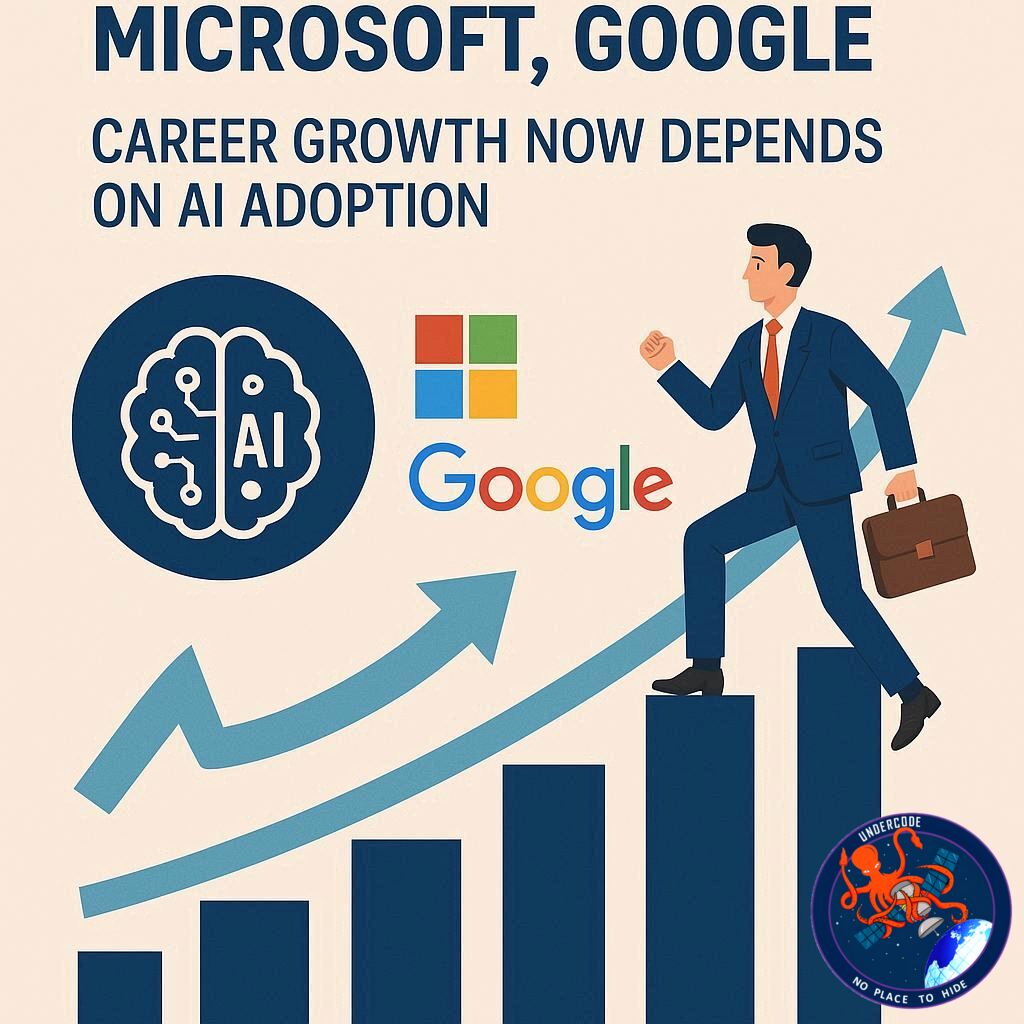
The era of optional artificial intelligence usage in the workplace is officially over. Tech titans Microsoft and Google have made it clear: proficiency in AI is no longer a side skill but a core requirement for professional growth. Employees across engineering, sales, and even legal teams are being evaluated on how effectively they integrate AI into their daily tasks. This transformation reflects the broader race among global tech firms to maximize productivity and competitiveness through AI. What once was considered experimental is now mandatory, and workers who resist risk career stagnation.
the Original
Top executives at both Microsoft and Google are sending an unmistakable message to their workforces: AI adoption is mandatory for career advancement.
At Microsoft, Julia Liuson, president of the Developer Division, declared in June that “using AI is no longer optional — it’s core to every role and every level.” She urged managers to assess employees’ AI usage in performance reviews, treating AI proficiency as a standard workplace skill alongside collaboration and data-driven decision-making. Google CEO Sundar Pichai echoed this sentiment in July, stating that employees must become “AI-savvy” to help the company stay competitive against rivals leveraging AI for productivity gains.
The policies are not symbolic. Google’s engineering VP Megan Kacholia instructed engineers to adopt AI tools for coding, while updating job descriptions to reflect mandatory AI problem-solving. More than 30% of Google’s code is now AI-generated, compared with 25% a year earlier. Microsoft, meanwhile, is considering formal AI usage metrics in reviews to address slow adoption of GitHub Copilot.
Both companies have also launched structured initiatives to enforce adoption. Google rolled out its “AI Savvy Google” program with training modules and expects teams to rely on its in-house Cider AI coding tool. Microsoft managers are instructed to include AI integration in evaluations. Former GitHub CEO Thomas Dohmke defended the policy, comparing mandatory AI use to essential job requirements: employees unwilling to comply could “find work elsewhere.”
The mandates extend beyond engineering. Sales, legal, and other departments are being told to integrate AI tools into workflows. While some employees remain skeptical, most acknowledge that AI proficiency is crucial for staying relevant and advancing careers.
The trend is spreading across the tech sector. Amazon CEO Andy Jassy has urged employees to adopt AI tools for efficiency, while Shopify requires teams to show AI usage before receiving new resources. The message across Silicon Valley is consistent: adapt to AI-enhanced workflows or risk being left behind.
What Undercode Say:
The decision by Microsoft and Google to embed AI adoption into performance reviews signals a new phase in corporate culture. This is not merely about keeping pace with innovation but about reshaping the professional landscape at scale.
1. A Shift from Optional to Mandatory
Until recently, employees could treat AI tools as optional productivity boosters. Now, refusal to engage with AI could be viewed as a lack of professional adaptability. This fundamentally alters the employer–employee dynamic, where technological literacy is elevated to a core competency.
2. Implications for Workplace Equity
Mandating AI use may create disparities. Workers who are less tech-savvy, or whose roles historically required less automation, may find themselves disadvantaged. Companies risk alienating talent if training and support are not sufficient to bridge this gap.
3. Expansion Beyond Engineering
By extending mandates into sales, legal, and administrative functions, Microsoft and Google signal that AI will no longer remain a tool for developers alone. It is becoming a company-wide expectation, embedding AI into every function. This shift accelerates normalization but also heightens the risk of overreliance on automation.
4. Corporate Pressure as a Strategic Move
Mandating AI use is also a defensive strategy. Both firms know that lagging adoption internally would weaken their competitive stance. If employees resist, innovation slows, and rivals gain an edge. By institutionalizing AI as a metric of success, leadership ensures alignment with broader corporate goals.
5. Employee Pushback and Cultural Tension
There is a cultural cost. Mandates risk being perceived as top-down impositions, potentially fueling dissatisfaction. However, much like the shift to mandatory digital communication tools in the past, resistance may fade as employees adjust.
6. Long-Term Industry Consequences
If these policies succeed, they may set a standard across industries, far beyond Silicon Valley. Financial firms, healthcare organizations, and manufacturing companies may follow, making AI proficiency a universal career requirement.
7. The Risk of Burnout
Continuous pressure to adopt and optimize AI could increase workloads rather than reduce them. Employees might feel forced to demonstrate AI usage, even when unnecessary, to secure favorable evaluations. This could distort workplace efficiency goals.
- The Rise of “AI Fluency” as a Core Skill
The concept of “AI fluency” is emerging as the new literacy of the digital economy. Just as computer literacy became non-negotiable in the 1990s, AI literacy is now becoming indispensable for career relevance.
9. Comparisons with Historical Shifts
The AI mandate mirrors previous corporate transformations: email in the 1990s, cloud adoption in the 2010s, and now AI in the 2020s. Each wave of mandatory technology integration redefined workplace expectations and filtered the workforce.
10. Competitive Workforce Realignment
Those unwilling to adopt AI may exit these firms, creating space for a new generation of workers who embrace automation. This could accelerate generational shifts in the workforce.
In conclusion, Microsoft and Google are not just rolling out productivity tools — they are reshaping workplace culture, redefining skills hierarchies, and forcing a global workforce realignment around AI. What once was a choice has become a mandate.
🔍 Fact Checker Results
✅ Microsoft and Google executives confirmed AI adoption is tied to employee performance.
✅ Google’s internal coding is now over 30% AI-generated.
❌ No evidence yet that AI mandates are universally applied across all industries outside tech.
📊 Prediction
Within the next five years, AI proficiency will become a baseline requirement across major industries, not just tech. Performance reviews in sectors like finance, healthcare, and logistics will include AI usage as a measurable skill. Workers who fail to adapt may see their career trajectories stall, while AI-fluent professionals will rise faster in organizational hierarchies.
Recommendation: Treat AI literacy as a non-negotiable professional skill.
Next step: Invest in hands-on AI training and integrate AI tools into daily workflows.
🕵️📝✔️Let’s dive deep and fact‑check.
References:
Reported By: timesofindia.indiatimes.com
Extra Source Hub:
https://www.linkedin.com
Wikipedia
OpenAi & Undercode AI
Image Source:
Unsplash
Undercode AI DI v2
🔐JOIN OUR CYBER WORLD [ CVE News • HackMonitor • UndercodeNews ]
📢 Follow UndercodeNews & Stay Tuned:
𝕏 formerly Twitter 🐦 | @ Threads | 🔗 Linkedin | 🦋BlueSky | 🐘Mastodon


