
Listen to this Post
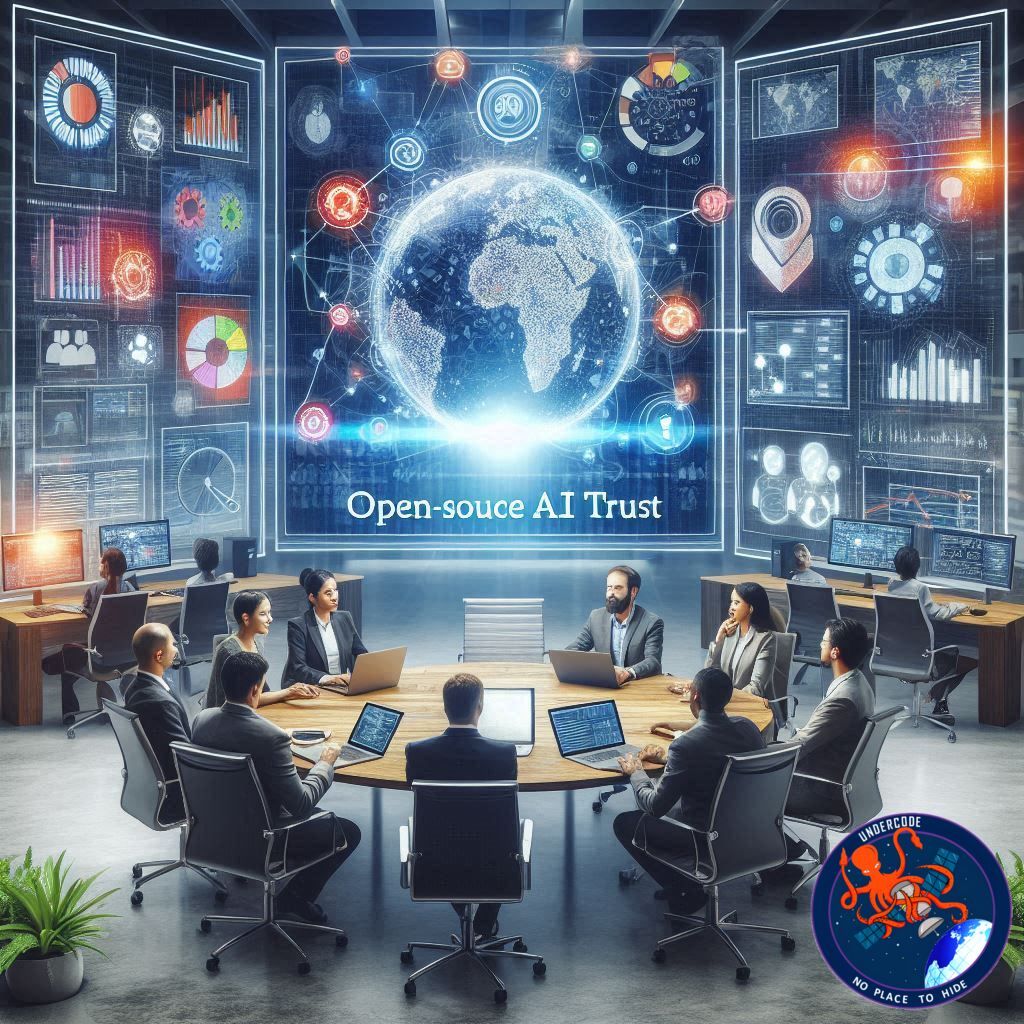
Introduction: A Quiet Shift Inside Familiar Tools
Cybersecurity threats no longer announce themselves with loud alarms or obvious malware signatures. They move silently, blending into trusted environments, open-source frameworks, and AI-powered systems that millions rely on every day. A recent report highlighted by Cybersecurity News Everyday reveals how attackers are hiding malicious activity inside legitimate tools such as Nezha, exploiting AI chatbots, and abusing cloud infrastructure to gain stealthy access. This evolution signals a deeper transformation in how cyber operations function. The battlefield is no longer defined by brute force attacks but by trust manipulation, automation, and psychological invisibility. What appears safe, collaborative, and intelligent is increasingly being repurposed into a delivery mechanism for compromise.
Summary: The Core of the Report
The original article describes a growing pattern in which attackers embed malicious operations within trusted open-source tools and widely used platforms. Instead of deploying obvious malware, threat actors now leverage legitimate software such as Nezha to mask command-and-control activity. This approach allows attackers to hide in plain sight, blending malicious traffic with normal operational behavior. The report emphasizes how AI-driven tools, including chatbots, are being abused to automate disinformation, reconnaissance, and even social engineering workflows. Cloud environments are also being exploited, offering scalable infrastructure that enables attackers to move laterally, remain persistent, and avoid detection for extended periods.
The article points to a strategic shift in cyber operations, where visibility is intentionally reduced and attribution becomes increasingly complex. Attackers exploit trust in open-source ecosystems, knowing that many organizations integrate these tools rapidly without deep inspection. AI further amplifies this threat by generating realistic content, accelerating attack cycles, and lowering the skill barrier for cybercriminals. The convergence of AI, cloud platforms, and open-source software creates an environment where malicious intent can hide behind innovation. The report frames this evolution as a fundamental reshaping of the global threat landscape, where traditional security models struggle to detect behavior that appears legitimate on the surface but is malicious at its core.
The Rise of Trust-Based Exploitation
Trust has become the most valuable currency in modern cybersecurity, and attackers are exploiting it with precision. Open-source tools are widely adopted because they promote transparency, collaboration, and speed. Yet these same qualities create blind spots. When a tool is widely trusted, its behavior is rarely questioned. Attackers exploit this assumption, embedding malicious logic deep within otherwise legitimate workflows. This tactic reduces suspicion and delays detection, allowing long-term persistence inside networks.
AI as an Accelerator, Not Just a Tool
Artificial intelligence no longer serves only defensive purposes. Attackers use AI to automate reconnaissance, craft adaptive phishing narratives, and simulate human interaction at scale. AI-driven chatbots can now convincingly mimic employees, support agents, or community members, making social engineering attacks more effective. The article highlights how this automation compresses attack timelines and enables smaller threat groups to achieve disproportionate impact.
Cloud Infrastructure as a Silent Enabler
Cloud platforms provide elasticity, anonymity, and global reach. Attackers exploit these advantages to host payloads, route traffic, and obscure origins. Because cloud services are essential to modern business, security teams often hesitate to restrict them aggressively. This hesitation creates an ideal hiding place for malicious activity that blends seamlessly with legitimate workloads.
The Disinformation Layer
Beyond technical exploitation, AI-driven disinformation campaigns now operate alongside intrusion tactics. False narratives, synthetic content, and automated amplification distort perception and decision-making. These campaigns do not merely support cyberattacks; they shape the environment in which attacks succeed, eroding trust in institutions, platforms, and information itself.
The Erosion of Traditional Detection Models
Signature-based detection struggles in an ecosystem where threats imitate normal behavior. When malware behaves like standard software and communication mirrors legitimate traffic, security tools lose their effectiveness. This shift forces defenders to rethink detection strategies, focusing more on behavioral analysis, contextual awareness, and long-term pattern recognition.
Open-Source Communities Under Pressure
Open-source ecosystems thrive on openness, but this openness also invites exploitation. Malicious contributions can be subtle, incremental, and difficult to trace. The report suggests that attackers increasingly view open-source projects as supply-chain entry points rather than direct targets. Once compromised, downstream users inherit the risk unknowingly.
Human Trust as the Final Vulnerability
Technology alone does not fail. Human assumptions do. Trust in familiar tools, trusted brands, and familiar interfaces creates a psychological vulnerability. Attackers understand this deeply and design operations that feel normal, routine, and safe. The human element becomes the final gateway.
What Undercode Say:
A Strategic Shift Hidden in Plain Sight
The developments described reflect a deeper transformation in cyber conflict. This is not about louder attacks or more destructive payloads. It is about invisibility. The most effective threat today is the one that does not look like a threat at all. Attackers are no longer trying to break systems. They are trying to live inside them.
The Weaponization of Normalcy
What makes these campaigns dangerous is their reliance on normal behavior. Security teams are trained to detect anomalies, yet modern attacks are engineered to appear routine. This creates a paradox where the more stable an environment appears, the more compromised it may be. Normalcy becomes camouflage.
AI as a Force Multiplier for Deception
AI removes friction from malicious operations. It enables rapid adaptation, personalization, and scale. This does not just increase attack volume; it increases credibility. When AI generates language, behavior, and timing that feel human, detection becomes a psychological challenge as much as a technical one.
The Illusion of Control in Cloud Environments
Cloud infrastructure gives organizations a sense of control through dashboards and metrics. Yet attackers exploit the same features to remain invisible. The illusion of transparency masks the reality that visibility is often fragmented across services, providers, and regions.
Security as a Cultural Challenge
Technical solutions alone cannot address this shift. Organizations must redefine how they think about trust, validation, and verification. Security culture must evolve to assume compromise as a baseline condition, not an exceptional event.
The Quiet Collapse of Perimeter Thinking
Perimeter-based defense models fail in environments where boundaries no longer exist. Cloud services, remote work, APIs, and AI agents dissolve traditional edges. Defense must move inward, focusing on identity, behavior, and intent rather than location.
Open Source Is Not the Enemy
The issue is not open source itself but the absence of rigorous oversight. Open ecosystems require shared responsibility, continuous auditing, and community-driven accountability. Without these, transparency becomes an attack surface.
A New Phase of Cyber Conflict
This moment represents a shift from technical hacking to psychological and systemic manipulation. The battlefield is not infrastructure alone but trust itself. Organizations that fail to adapt will not fall suddenly. They will erode quietly, one unnoticed action at a time.
Fact Checker Results
✅ The article accurately reflects emerging trends in AI-driven cyber threats.
❌ No public evidence confirms a single coordinated global campaign behind all referenced tactics.
✅ The use of open-source tools and cloud abuse is widely documented across security research.
Prediction
🔮 Cyber threats will increasingly disguise themselves as productivity enhancements rather than malware.
🔮 AI-powered deception will become the dominant vector in social and technical attacks.
🔮 Security strategies will shift from detection to continuous behavioral verification.
🕵️📝✔️Let’s dive deep and fact‑check.
References:
Reported By: x.com
Extra Source Hub (Possible Sources for article):
https://www.pinterest.com
Wikipedia
OpenAi & Undercode AI
Image Source:
Unsplash
Undercode AI DI v2
Bing
🔐JOIN OUR CYBER WORLD [ CVE News • HackMonitor • UndercodeNews ]
📢 Follow UndercodeNews & Stay Tuned:
𝕏 formerly Twitter 🐦 | @ Threads | 🔗 Linkedin | 🦋BlueSky | 🐘Mastodon


