
Listen to this Post
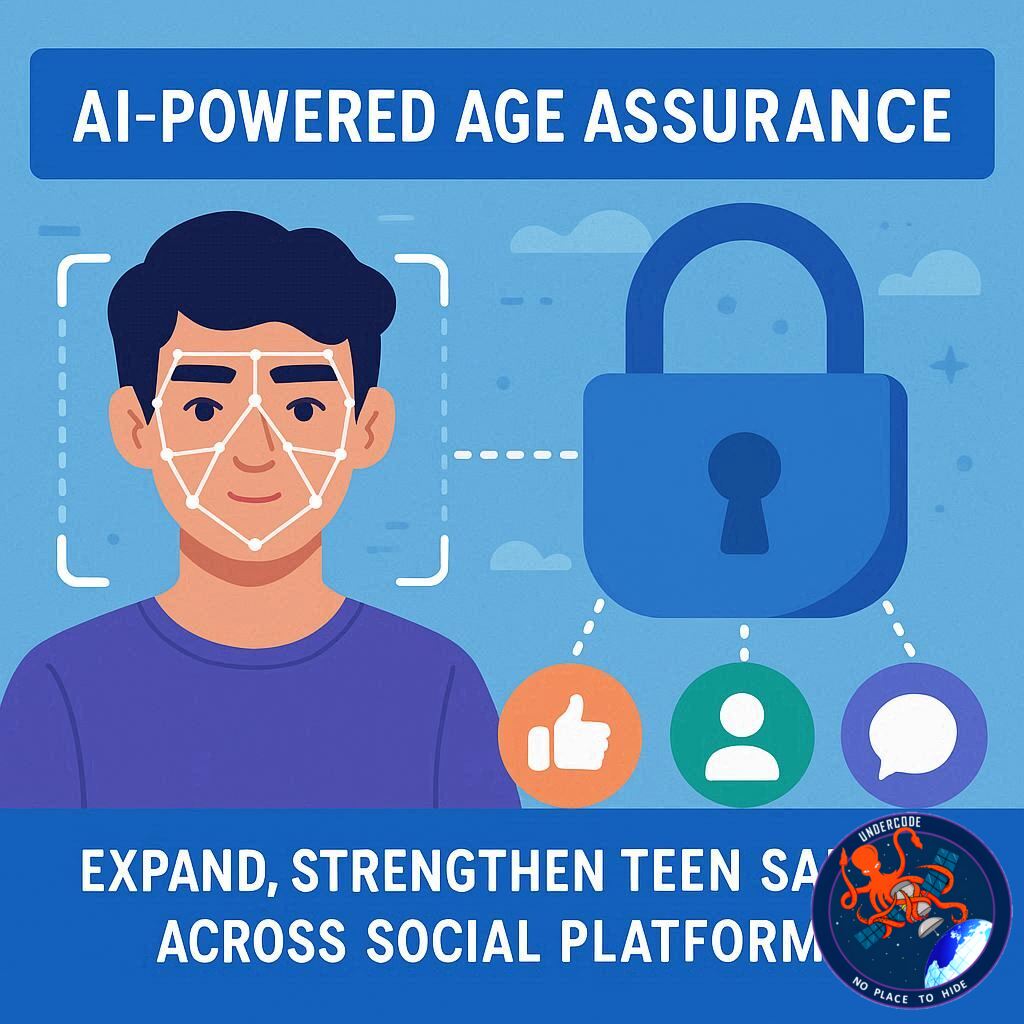
Introduction: A New Phase in Protecting Young Users Online
The digital world has become a defining space for younger generations, shaping how they communicate, learn, and express themselves. Yet, alongside these opportunities comes an urgent responsibility to ensure their safety. Social platforms are now entering a more aggressive phase of enforcement, leveraging artificial intelligence and advanced detection systems to verify user age and enforce appropriate experiences. The latest updates reflect a broader shift toward proactive protection, where technology no longer waits for violations but actively identifies risks before they escalate.
Summary: Expanding AI-Driven Age Verification and Teen Protections
Over the past decade, social platforms have steadily built tools designed to create safer online environments for teenagers. One of the most notable initiatives has been the introduction of Teen Accounts, which automatically apply stricter privacy settings, limit unwanted contact, and filter sensitive content. These systems are designed to ensure that users under 18 are placed into controlled digital environments suited to their age group.
A central challenge in enforcing these protections lies in accurately determining a user’s age. Since online platforms rely heavily on self-reported data, many users can misrepresent their age, either intentionally or unintentionally. To address this, companies are investing heavily in age assurance technologies that go beyond basic profile information. These systems now analyze behavioral patterns, textual clues, and even visual elements to estimate a user’s real age.
Recent advancements include AI models capable of scanning entire profiles for contextual signals. These signals may include references to school life, birthday celebrations, or other indicators commonly associated with younger users. The analysis extends across posts, captions, comments, and bios, allowing platforms to build a more comprehensive understanding of each account. If an account is flagged as potentially underage, it may be deactivated until the user verifies their age through official documentation or approved verification tools.
A significant addition to this system is visual analysis technology. Unlike facial recognition, which identifies individuals, this method focuses on general physical characteristics such as height proportions or bone structure to estimate age ranges. By combining visual data with textual and behavioral analysis, platforms can significantly improve detection accuracy and reduce reliance on self-declared information.
Another major improvement involves the reporting process. Users can now more easily flag accounts suspected of belonging to underage individuals. These reports are processed using a combination of human moderation and AI systems that ensure consistent and faster decision-making. Early testing indicates that AI-assisted reviews outperform traditional methods in both speed and accuracy.
In parallel, platforms are strengthening measures to prevent underage users from rejoining after removal. This includes monitoring patterns that suggest repeated attempts to bypass restrictions. These efforts aim to close loopholes that previously allowed users to create new accounts after being removed.
The rollout of these technologies is expanding globally. While some features, such as advanced visual analysis, are currently limited to select regions, broader implementation is underway. In particular, proactive age detection systems are being extended to multiple countries, ensuring that suspected teen accounts are automatically placed into protective environments even if they claim to be adults.
Parental involvement remains a key component of this strategy. Platforms are introducing notifications and educational tools to help parents verify their children’s ages and encourage honest online behavior. Dedicated family dashboards provide resources to guide conversations about digital responsibility and safety.
Finally, there is a growing push for industry-wide solutions. Companies are advocating for app stores and operating systems to take on a larger role in age verification. By centralizing this process, platforms could ensure consistent standards across all applications while reducing privacy risks associated with fragmented verification systems.
What Undercode Say: The Strategic Shift Toward Predictive Digital Safety
The evolution of age assurance technology marks a turning point in how digital safety is conceptualized. What was once a reactive system, dependent on user reports and manual moderation, is now transforming into a predictive infrastructure powered by artificial intelligence. This shift carries both promise and complexity.
At its core, the new approach acknowledges a fundamental flaw in traditional online systems: self-reported identity is unreliable. For years, platforms operated on the assumption that users would provide accurate personal information. Reality proved otherwise. Teenagers, driven by curiosity or social pressure, often bypass restrictions by simply entering a different birth year. The result has been a persistent gap between policy and enforcement.
AI-driven analysis attempts to close this gap by interpreting behavior rather than declarations. This is a crucial distinction. Behavior is far harder to fake consistently. A user might claim to be 25, but their content patterns, language, and interactions may tell a different story. By analyzing these signals collectively, platforms gain a more realistic picture of user identity.
The introduction of visual analysis adds another layer of sophistication. While controversial at first glance, its design avoids direct identification, focusing instead on generalized characteristics. This reflects an effort to balance safety with privacy, though questions remain about accuracy and potential bias. Estimating age from appearance is inherently imperfect, and errors could lead to false positives or unnecessary restrictions.
Another critical aspect is scalability. Human moderation alone cannot keep pace with billions of users. AI provides the only viable path to consistent enforcement at scale. However, reliance on automated systems introduces new risks, including algorithmic bias and lack of contextual understanding. The integration of human oversight remains essential, not as the primary mechanism, but as a corrective layer.
The expansion of Teen Accounts also reveals a broader strategic goal: standardization. By automatically placing users into predefined safety categories, platforms reduce ambiguity and minimize the impact of incorrect age declarations. This approach simplifies enforcement while ensuring a baseline level of protection.
Parental involvement, while valuable, highlights a deeper issue. Digital safety cannot rely solely on technology or family supervision. It requires a cultural shift in how online identity is perceived. Encouraging honesty about age is not just a technical challenge but a behavioral one.
The proposal to move age verification to app stores represents perhaps the most significant long-term change. Centralization could eliminate redundancy and create a unified standard across the digital ecosystem. Yet, it also raises questions about data control and the concentration of power in a few dominant platforms.
Ultimately, these developments signal a recognition that online safety must be built into the architecture of digital platforms rather than added as an afterthought. The combination of AI, policy reform, and user education suggests a more mature phase of platform governance, one that prioritizes prevention over reaction.
🔍 Fact Checker Results
✅ AI systems are increasingly used for behavioral and contextual age estimation
✅ Teen Accounts and restricted content settings are actively implemented across platforms
❌ Visual analysis alone cannot reliably determine exact user age without error
📊 Prediction
📈 AI-driven age verification will become a standard feature across all major platforms within the next 2 years
🔒 App store-level age verification systems are likely to gain regulatory support globally
⚠️ Privacy debates around visual analysis and behavioral tracking will intensify as adoption expands
▶️ Related Video (84% Match):
🕵️📝Let’s dive deep and fact‑check.
References:
Reported By: about.fb.com
Extra Source Hub (Possible Sources for article):
https://www.quora.com/topic/Technology
Wikipedia
OpenAi & Undercode AI
Image Source:
Unsplash
Undercode AI DI v2
Bing
🔐JOIN OUR CYBER WORLD [ CVE News • HackMonitor • UndercodeNews ]
📢 Follow UndercodeNews & Stay Tuned:
𝕏 formerly Twitter 🐦 | @ Threads | 🔗 Linkedin | 🦋BlueSky | 🐘Mastodon


