
Listen to this Post
Introduction: A Rapidly Evolving Cybersecurity Landscape
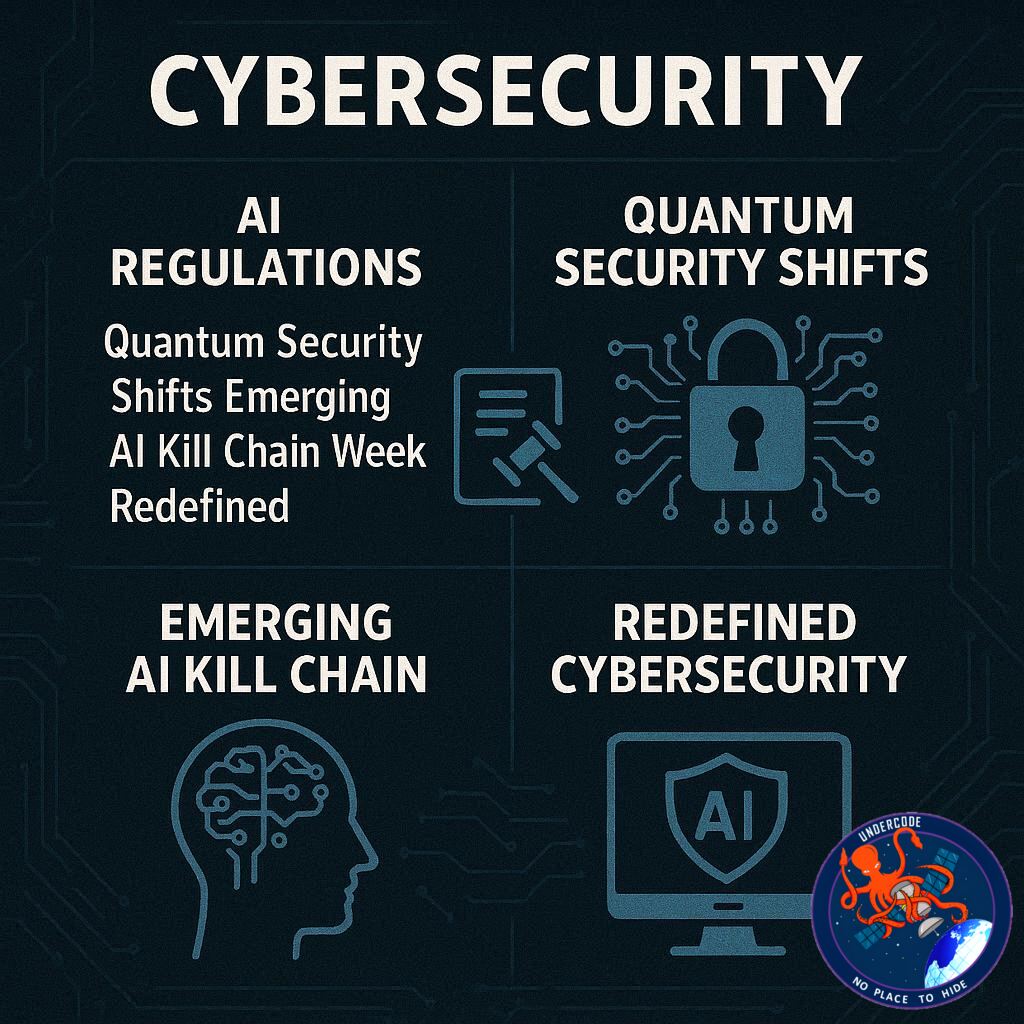
The global cybersecurity landscape is undergoing one of its most transformative periods in decades. Governments are racing to regulate artificial intelligence, security experts are preparing for the post-quantum era, and researchers are developing entirely new frameworks to understand how attackers exploit AI systems. Recent developments across the European Union, Canada, Finland, and the United States illustrate just how fast this ecosystem is evolving. From regulatory easing in the EU’s AI Act to technical frameworks like the AI kill chain, the past week has offered a snapshot of the future of digital defense and policy.
the Original
The original report highlights several major developments in cybersecurity and AI regulation from around the world. In Europe, the EU introduced the Digital Omnibus initiative, designed to simplify and ease compliance with the AI Act. This move aims to reduce bureaucratic friction for companies while still maintaining safety and accountability standards for AI deployment. Meanwhile, Canada is progressing with Bill C-22, which focuses on enhancing privacy protection and setting new rules around the handling of personal data and AI systems, reinforcing the country’s commitment to responsible technology governance.
Finland has taken a bold step by accelerating its transition to post-quantum cryptography (PQC), acknowledging the growing threat that future quantum computers pose to classical encryption. This shift reflects a broader global effort to prepare national infrastructure for quantum-era risks before they become practical threats. In the United States, New York lawmakers are working on a bill aimed at ensuring the accuracy and reliability of generative AI outputs, signaling rising concern about misinformation, hallucinations, and accountability in AI-generated content.
The article also discusses the concept of the AI kill chain, a framework describing how attackers systematically target AI systems. The five stages—reconnaissance, poisoning, hijacking, persistence, and impact—mirror traditional cyber kill chains but are tailored to machine learning environments. NVIDIA has contributed a narrative framework to explain these stages, while MITRE’s ATLAS knowledge base expands this into 14 different tactics to standardize how defenders detect and respond to AI-focused attacks. Together, these developments show a growing recognition that AI is not only a tool for defense but also a new attack surface requiring dedicated strategies and global coordination.
What Undercode Say:
The Quiet Shift from Innovation to Regulation
What stands out most in these developments is how quickly governments are moving from encouraging AI innovation to actively regulating it. The EU’s Digital Omnibus shows a balancing act: regulators understand that strict compliance burdens can stifle startups and slow down technological competitiveness, especially against the United States and China. By easing AI Act requirements without abandoning safety standards, the EU is attempting to remain both innovative and cautious—a strategy that could become a model for other regions.
Canada’s Bill C-22 Signals a Privacy-First AI Strategy
Canada’s legislative direction reveals a different emphasis: data sovereignty and privacy. While the U.S. tends to regulate AI through sector-specific rules, Canada is building a broader legal framework that integrates AI governance with personal data protection. This approach reflects the country’s historical alignment with European privacy values and may position Canada as a bridge between EU-style regulation and American market-driven innovation.
Finland’s PQC Adoption Is a Warning Shot for the Industry
Finland’s accelerated adoption of post-quantum cryptography is more than just a technical upgrade—it is a strategic signal. Quantum computing may still be years away from breaking RSA and ECC at scale, but the “harvest now, decrypt later” threat is already real. Sensitive data stolen today can be stored and decrypted once quantum capabilities mature. Finland’s move suggests that forward-looking governments are no longer treating quantum risk as theoretical; they are budgeting and deploying defenses now.
The AI Kill Chain Formalizes AI as a Battlefield
The introduction of the AI kill chain is arguably the most conceptually important development. Traditional cybersecurity frameworks were built around networks, endpoints, and human users. AI introduces entirely new vulnerabilities—training data, model weights, inference pipelines—that were never part of classical threat models. By defining stages such as data poisoning and model hijacking, researchers are creating a common language that security teams can use to track, detect, and respond to AI-specific threats.
NVIDIA and MITRE’s Role in Standardizing AI Security
When major industry players like NVIDIA collaborate with organizations like MITRE, the result is often the creation of de facto standards. MITRE’s ATLAS framework already functions as a reference point for security teams, much like MITRE ATT&CK did for traditional cyber threats. As more organizations map incidents to these AI-specific tactics, security tooling—from SIEM platforms to EDR systems—will likely integrate AI threat modeling into their default configurations.
Regulatory Fragmentation Could Create Compliance Chaos
Despite the progress, one major risk is regulatory fragmentation. The EU, Canada, and U.S. states like New York are each developing different legal definitions and compliance requirements for AI systems. For multinational companies, this means navigating a patchwork of rules covering model transparency, data retention, explainability, and liability. The cost of compliance could become so high that only large tech companies can afford to operate globally, potentially reducing competition and slowing innovation.
The Rising Importance of AI Output Accuracy
New York’s proposed legislation focusing on generative AI accuracy reflects growing public concern about misinformation. As generative AI systems become embedded in search engines, customer support, and journalism, inaccurate outputs are no longer just technical flaws—they become societal risks. Legal frameworks that hold companies accountable for AI hallucinations could force developers to invest more heavily in guardrails, verification systems, and traceability.
Cybersecurity Is Expanding Beyond Infrastructure into Algorithms
Historically, cybersecurity focused on protecting servers, networks, and devices. With the rise of AI, the focus is shifting toward protecting algorithms and datasets. Data poisoning attacks, for example, can subtly manipulate a model’s behavior without ever breaching a network perimeter. This shift means security teams must now collaborate with data scientists and machine learning engineers—two groups that previously operated in separate silos.
The Strategic Race Toward Post-Quantum Readiness
Finland’s actions also reflect a broader geopolitical competition. Countries that transition early to quantum-resistant encryption will be better positioned to protect national secrets, financial systems, and critical infrastructure. Late adopters may find themselves vulnerable not only to cybercriminals but also to state-sponsored actors with access to advanced quantum research.
AI Security Frameworks Will Shape Future Cyber Insurance Policies
Another under-discussed consequence of frameworks like the AI kill chain is their impact on cyber insurance. Insurers rely on standardized threat models to calculate risk and premiums. As AI becomes a core part of business operations, companies without proper model monitoring, dataset integrity checks, or adversarial testing may soon face higher insurance costs or even denial of coverage.
The Convergence of Policy, Technology, and Threat Intelligence
Taken together, these developments show a convergence of three domains: government policy, technical security research, and private-sector innovation. In the past, these areas evolved at different speeds. Now, they are interacting in near real-time. A new research framework can influence legislation within months, while regulatory pressure can force rapid adoption of security technologies that might otherwise take years to mature.
Fact Checker Results
Verification of Regulatory Developments
Recent legislative and regulatory discussions in the EU, Canada, and U.S. states confirm that governments are actively refining AI governance and privacy frameworks, aligning with the claims presented in the article.
Accuracy of the AI Kill Chain Concept
The AI kill chain and MITRE ATLAS are recognized frameworks in the cybersecurity community, and their stages and tactics are consistent with publicly documented research on machine learning threat modeling.
Post-Quantum Cryptography Adoption Trends
Multiple national cybersecurity agencies have publicly recommended early migration to post-quantum cryptographic standards, supporting the claim that Finland’s shift reflects a broader global trend rather than an isolated policy decision.
Prediction
The Next Phase: Mandatory AI Security Certifications
In the coming years, AI systems are likely to face mandatory security certification processes similar to existing standards for medical devices or aviation software. Governments will increasingly require proof that models are resilient against poisoning, adversarial inputs, and unauthorized modification before they can be deployed in critical sectors. This will give rise to a new industry of AI security auditors, compliance platforms, and automated testing tools designed specifically to validate the safety and integrity of machine learning systems before they reach the public.
🕵️📝✔️Let’s dive deep and fact‑check.
References:
Reported By: x.com
Extra Source Hub (Possible Sources for article):
https://www.pinterest.com
Wikipedia
OpenAi & Undercode AI
Image Source:
Unsplash
Undercode AI DI v2
Bing
🔐JOIN OUR CYBER WORLD [ CVE News • HackMonitor • UndercodeNews ]
📢 Follow UndercodeNews & Stay Tuned:
𝕏 formerly Twitter 🐦 | @ Threads | 🔗 Linkedin | 🦋BlueSky | 🐘Mastodon


