
Listen to this Post
Introduction
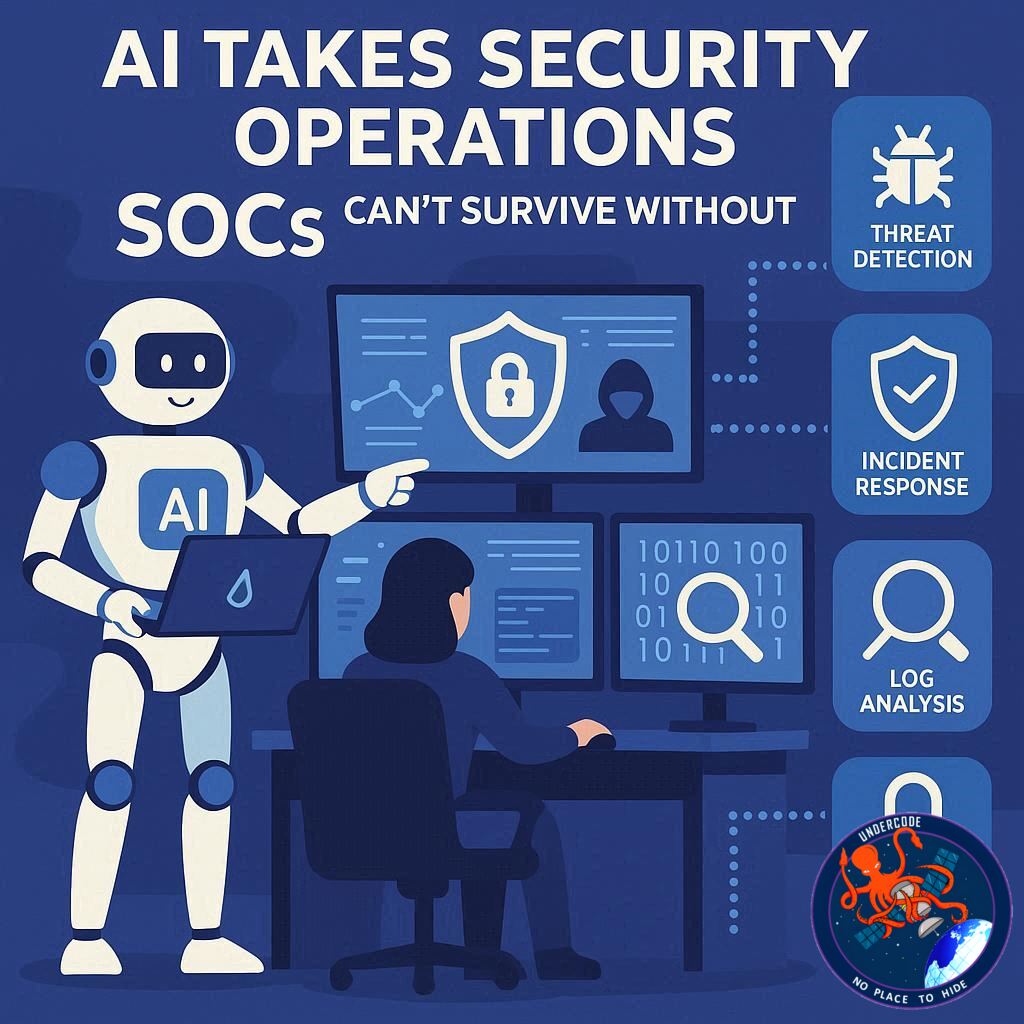
The cybersecurity battlefield has never been more intense. Security Operations Centers (SOCs) worldwide are drowning in an endless flood of alerts, with analysts unable to keep pace. Burnout, missed threats, and delayed investigations have pushed traditional models to a breaking point. Enter Artificial Intelligence: once considered experimental, now viewed as the only lifeline for overwhelmed security teams. This article breaks down the latest survey of 282 security leaders, exposing the harsh realities of modern SOCs, and explores why AI is no longer optional—but essential.
The Current State of Security Operations
Security leaders across industries reveal a troubling picture: alerts are piling up faster than analysts can review them, leaving organizations vulnerable to unmonitored threats. The report shows a massive reliance on AI-powered tools to handle detection engineering, triage, and threat hunting. What was once a futuristic vision has become a survival strategy.
Alert Volume Crisis
SOCs now manage an average of 960 alerts per day, with large enterprises facing over 3,000 alerts daily from more than 30 different tools. This tsunami of data forces analysts into impossible decisions about which alerts to investigate and which to ignore.
Investigations Are Painfully Slow
It takes 70 minutes on average to fully investigate an alert, with a 56-minute delay before action even begins. Meanwhile, threats like Business Email Compromise can escalate in just 48 minutes. This mismatch creates a dangerous gap between detection and response.
The Hidden Costs of Overwhelmed SOCs
Over 40% of alerts are never investigated, and 61% of security teams admit ignoring alerts that later turned out to be critical. This isn’t negligence—it’s survival in an environment where analysts face impossible workloads. The result is a dangerous blind spot in organizational defenses.
24/7 Coverage Struggles
Many SOCs lack the staffing for full round-the-clock coverage. Skeleton crews on night shifts face the same volume as daytime teams, leading to overlooked threats. Burnout has become rampant, with some teams suppressing detection rules just to keep workloads manageable—creating further blind spots.
AI Rises from Experiment to Strategic Priority
AI has jumped into the top three priorities for security leaders, alongside cloud and data security. Already, 55% of SOCs use AI copilots, and another 60% plan adoption within a year. In three years, AI is expected to handle 60% of all SOC workloads.
Where AI Makes the Biggest Impact
Surveyed leaders highlight triage (67%), detection tuning (65%), and threat hunting (64%) as the top use cases for AI. These tasks are repetitive and time-consuming—making them perfect candidates for automation while leaving complex judgment calls to human analysts.
Roadblocks to Adoption
Despite the enthusiasm, barriers remain. Organizations worry about data privacy, system integration, and the explainability of AI decisions. Yet the momentum toward AI-driven SOCs is undeniable.
The Future SOC
The next evolution is a hybrid SOC model—where AI handles routine alerts while humans focus on high-value, complex investigations. Success will be measured by faster Mean Time to Investigation (MTTI), reduced Mean Time to Response (MTTR), and improved training for analysts.
How Prophet Security Is Leading the Charge
Prophet Security offers an AI-powered SOC platform that automates triage, accelerates investigations, and ensures no alert goes ignored. By reducing incident dwell time and increasing analyst efficiency, Prophet enables organizations to maximize their existing teams while strengthening defenses.
What Undercode Say:
SOCs are at a tipping point, where human capacity no longer matches the speed and scale of cyber threats. The numbers speak volumes: thousands of alerts daily, dozens of tools creating fragmented data, and critical incidents slipping through the cracks. This is not just inefficiency—it’s a security liability.
The rise of AI in SOCs isn’t just about efficiency; it’s about survival. Without AI, many organizations will continue to miss critical threats, leaving themselves vulnerable to breaches that could have been prevented.
AI-driven triage is particularly transformative. By filtering out noise and prioritizing true threats, AI not only accelerates response times but also reduces the cognitive burden on analysts. This directly combats burnout—a problem that has plagued SOCs for years.
The hybrid model, where AI handles 60% of workloads, reflects a pragmatic balance. Humans remain essential for high-level decision-making, contextual analysis, and strategy. But the repetitive, resource-draining work? That’s AI’s domain now.
Barriers like integration and privacy concerns are real but solvable. History shows that once industries recognize efficiency gains at scale, adoption accelerates quickly. Just as cloud security went from optional to mandatory, AI in SOCs will follow the same path.
From a business perspective, AI in SOC operations is no longer just a security investment—it’s a cost efficiency strategy. Reduced dwell times mean reduced breach impact, faster resolution, and stronger trust with stakeholders.
In short: The SOC of the future isn’t “AI vs. humans.” It’s AI and humans together, each playing to their strengths. Those who embrace this shift early will define the next era of cybersecurity.
✅ Fact Checker Results
SOCs process nearly 1,000–3,000 alerts daily depending on size.
40% of alerts go uninvestigated, and 61% of ignored alerts have proven critical.
AI adoption is accelerating, with 55% already deployed and 60% more planned within a year.
🔮 Prediction
AI will soon handle the majority of SOC workloads, transforming alert management from a manual struggle into a streamlined, intelligent system. Organizations that adopt AI early will not only reduce analyst burnout but also strengthen their resilience against the ever-evolving cyber threat landscape.
🕵️📝✔️Let’s dive deep and fact‑check.
References:
Reported By: thehackernews.com
Extra Source Hub:
https://www.discord.com
Wikipedia
OpenAi & Undercode AI
Image Source:
Unsplash
Undercode AI DI v2
🔐JOIN OUR CYBER WORLD [ CVE News • HackMonitor • UndercodeNews ]
📢 Follow UndercodeNews & Stay Tuned:
𝕏 formerly Twitter 🐦 | @ Threads | 🔗 Linkedin | 🦋BlueSky | 🐘Mastodon


