
Listen to this Post
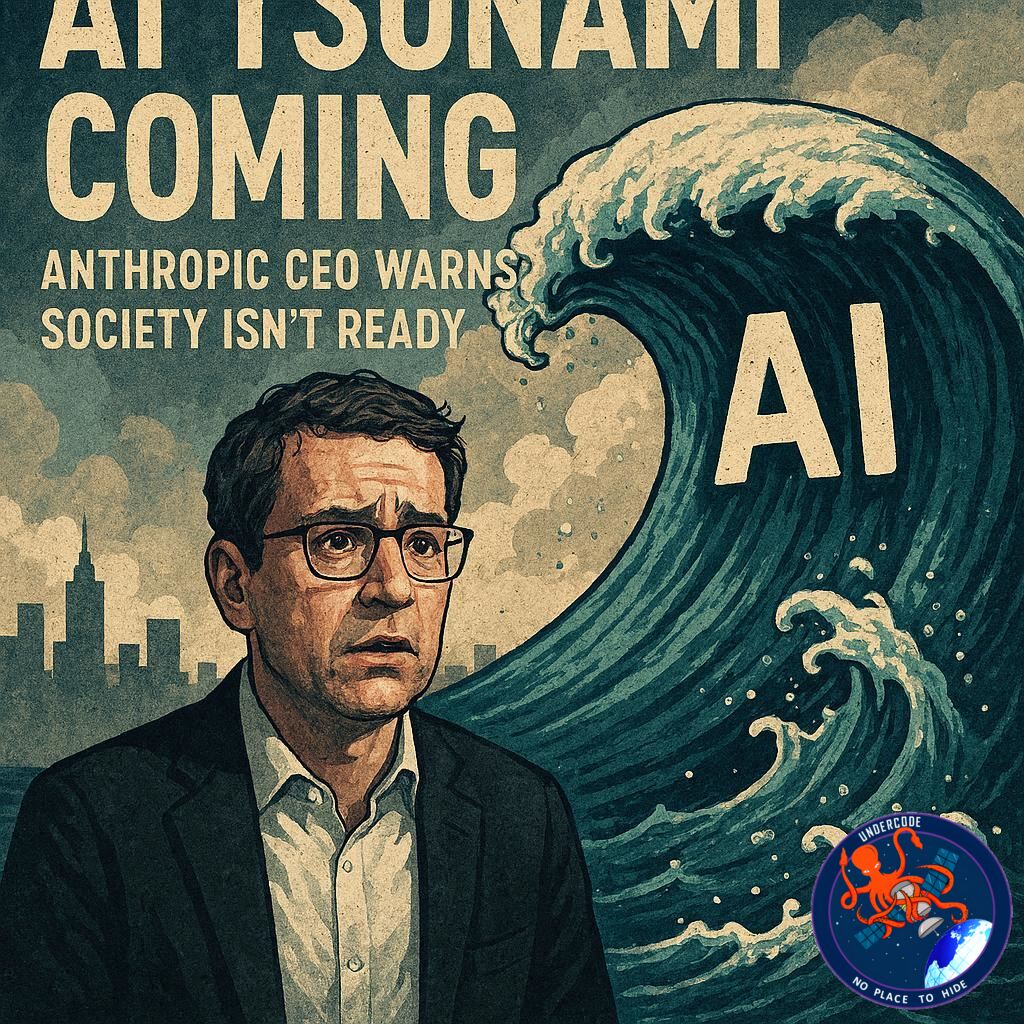
Artificial intelligence is no longer a distant concept—it’s approaching human-level capabilities faster than most realize. In a recent podcast with Zerodha co-founder Nikhil Kamath, Dario Amodei painted a vivid picture of the AI revolution as a looming tsunami. While AI promises enormous benefits, from automating coding to potentially curing diseases, Amodei cautioned that society is largely unprepared for the speed and scale of its impact. The discussion highlighted both the opportunities and the urgent need for responsible governance as AI reshapes industries and economies.
AI on the Horizon: A Tsunami in Motion
Amodei compared the rapid advancement of AI to a tsunami that is clearly visible yet often underestimated. “We can see it clearly, yet some people say it’s just a trick of the light,” he explained. This metaphor captures the dual reality: AI’s disruptive force is undeniable, but many are still in denial about how soon it will affect society. According to him, the wave will hit different sectors in varying ways—jobs that rely heavily on human interaction and emotional intelligence may be more resilient, while tasks like coding, mathematics, and scientific research are already being transformed.
Beyond Human-Like Performance: The Role of Synthetic Data
A key insight from Amodei’s conversation was about the evolving nature of AI data. He challenged the traditional notion that real-world datasets are the main driver of progress. In fields such as mathematics and programming, the “data” is often synthetic, generated through the very models being trained. “When you train on math or coding environments, you’re not really getting data. It’s more synthetic. You’re creating the data,” he said. This self-generated data is accelerating AI development and pushing the boundaries of what these systems can achieve.
Potential and Risks: Balancing Promise with Responsibility
Amodei emphasized that AI carries both tremendous potential and significant risks. On the positive side, he highlighted medical breakthroughs, faster problem-solving, and advanced research capabilities. Yet, he also warned of economic and geopolitical disruptions if society fails to prepare. While AI is rapidly taking over specific technical tasks, full end-to-end automation in software engineering could arrive sooner than expected, amplifying both opportunity and uncertainty. Responsible development, oversight, and proactive governance will be essential to ensure AI benefits humanity without causing unintended harm.
What Undercode Say:
The AI tsunami Amodei describes is not a distant future—it’s already lapping at the edges of multiple industries. Coding, data analysis, and even experimental research are being increasingly handled by AI systems, signaling a shift in workforce demands. Companies and governments need to anticipate not just automation but a redefinition of roles, with human workers focusing on supervision, interpretation, and ethical oversight.
Synthetic data is a particularly critical development. Traditional AI relied heavily on large real-world datasets, but self-generated data allows models to explore previously impossible problem spaces. This accelerates both innovation and risk, as systems learn from their own outputs in ways that can be opaque and difficult to regulate. The challenge will be creating frameworks that ensure this rapid growth does not outpace societal safeguards.
Amodei’s tsunami metaphor also underscores a psychological dimension: denial and delayed preparation. Businesses, policymakers, and educators must internalize that AI’s rise is imminent and prepare for both economic displacement and opportunity. Industries like healthcare and finance could see unprecedented efficiencies, while sectors reliant on nuanced human judgment may lag in AI adoption.
The broader ethical debate cannot be ignored. As AI systems generate synthetic knowledge and make decisions traditionally reserved for humans, questions of accountability, bias, and unintended consequences become more pressing. Ensuring that AI development is transparent, audited, and aligned with human values is crucial.
Furthermore, AI’s geopolitical impact could be profound. Nations that invest early and govern wisely may gain substantial advantages, while those slow to adapt could face economic or strategic vulnerabilities. The “tsunami” is not just technological—it is a socio-political challenge that requires international cooperation and forward-thinking regulation.
Finally, Amodei’s cautious optimism is noteworthy. While he predicts breakthroughs in medicine and other critical fields, he emphasizes that these advances must be managed responsibly. The balance between harnessing AI’s potential and mitigating its risks will define the next decade of innovation.
Fact Checker Results:
✅ AI is indeed advancing rapidly, with models handling coding and research tasks.
✅ The concept of synthetic, self-generated data is well-documented in AI training methods.
❌ While AI can impact industries quickly, full end-to-end automation of software engineering is still largely speculative.
Prediction:
🌊 Over the next 5–10 years, AI will become deeply embedded in technical roles, reshaping job requirements and skillsets.
💡 Industries that embrace synthetic data and automation early will see competitive advantages, while slow adopters risk economic disruption.
⚖️ Governance frameworks will emerge to balance innovation with ethical oversight, shaping how society navigates this AI tsunami.
🕵️📝✔️Let’s dive deep and fact‑check.
References:
Reported By: zeenews.india.com
Extra Source Hub (Possible Sources for article):
https://www.discord.com
Wikipedia
OpenAi & Undercode AI
Image Source:
Unsplash
Undercode AI DI v2
Bing
🔐JOIN OUR CYBER WORLD [ CVE News • HackMonitor • UndercodeNews ]
📢 Follow UndercodeNews & Stay Tuned:
𝕏 formerly Twitter 🐦 | @ Threads | 🔗 Linkedin | 🦋BlueSky | 🐘Mastodon


