
Listen to this Post
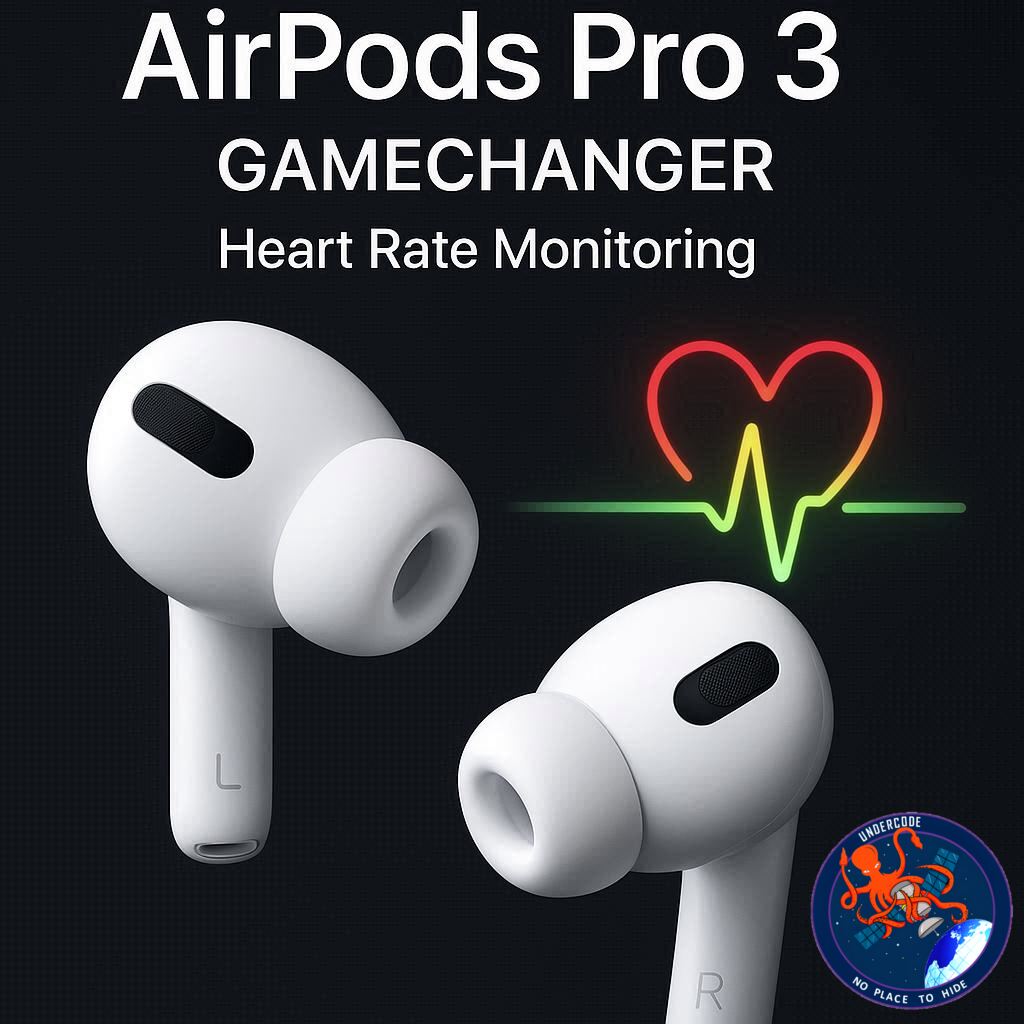
Introduction: Apple Raises the Bar
Apple has once again shaken up the tech world with the release of AirPods Pro 3, a product that merges high-quality audio with innovative health tracking. While earbuds with heart rate monitoring aren’t entirely new, Apple’s latest offering takes the experience to an entirely new level. By integrating a custom photoplethysmography (PPG) sensor, the AirPods Pro 3 promise unprecedented accuracy in tracking heart rates directly from your ears—something previous devices struggled to achieve.
Comprehensive Review Summary
Yesterday, our editor-in-chief Chance Miller published an in-depth review, describing the AirPods Pro 3 as a turning point for Apple’s wearable audio devices. Triathlete and tech reviewer DC Rainmaker conducted detailed comparative tests of the heart rate monitor, concluding that it was “mind-bogglingly good.”
While Apple’s Powerbeats Pro 2 previously included heart rate monitoring, the AirPods Pro 3 employ an entirely new sensor. Powerbeats Pro 2 rely on optical sensors that pulse green LED light through the skin over 100 times per second. In contrast, AirPods Pro 3 use a custom PPG sensor that emits invisible infrared light at 256 pulses per second, making it the smallest heart rate sensor Apple has ever built.
Data from DC Rainmaker’s tests compared AirPods Pro 3 with seven other devices:
AirPods Pro 3
Apple Watch Ultra
Whoop 5.0/MG wristband
Garmin Fenix 8 Pro smartwatch
Garmin Fenix 8 Pro paired with a chest strap monitor
Polar 360 band
Powerbeats Pro 2
The findings were striking: while other devices, including Powerbeats Pro 2, struggled to deliver accurate results across varied workouts, AirPods Pro 3 consistently aligned with Apple Watch readings, even during intense interval training. DC Rainmaker was genuinely amazed, stating that Apple had achieved something no other company could: a reliable, ear-based heart rate monitor.
For users seeking the perfect combination of sound quality and accurate fitness tracking, AirPods Pro 3 stand unmatched. Unlike previous attempts by Apple or competitors like Polar and Sennheiser, these earbuds deliver precision, usability, and premium audio in one package.
What Undercode Say: 📊
The AirPods Pro 3 are a significant leap forward in both wearable audio and health tech. Apple’s innovation in sensor technology demonstrates that optical heart rate monitoring can succeed in small, non-traditional form factors. The PPG sensor’s infrared pulse at 256 Hz is a critical upgrade over the previous generation, providing superior consistency during dynamic workouts.
From a performance perspective, this sets AirPods Pro 3 apart from almost every competitor. Devices like Powerbeats Pro 2, Polar bands, and Sennheiser headphones have historically struggled to produce reliable heart rate readings. AirPods Pro 3 not only surpass these devices but also prove that ear-based sensors can rival wrist and chest-based monitors under rigorous testing conditions.
The audio experience remains top-tier, confirming that Apple didn’t compromise sound quality for health tracking. Fitness enthusiasts can enjoy high-fidelity sound while benefiting from professional-grade heart rate analytics.
Apple’s approach demonstrates a careful balance between hardware miniaturization and sensor efficiency, ensuring that the earbuds remain compact without sacrificing accuracy. Their integration into Apple’s ecosystem—paired with Apple Watch, iPhone, and health apps—enhances usability for both casual listeners and serious athletes.
From a market standpoint, this positions Apple as a front-runner in multifunctional wearables, potentially driving other tech companies to invest heavily in ear-based biometric sensors. Consumer adoption is likely to spike, particularly among users who want both convenience and performance without carrying additional devices.
Finally, the AirPods Pro 3 could redefine how we perceive wearable fitness trackers. Instead of relying solely on wristbands or chest straps, users can achieve highly accurate health monitoring through everyday devices like earbuds—an exciting glimpse into the future of personal health tech.
Fact Checker Results ✅❌
✅ AirPods Pro 3 use a custom PPG sensor, not the same as Powerbeats Pro 2.
✅ DC Rainmaker’s tests show accuracy comparable to Apple Watch Ultra.
❌ Powerbeats Pro 2 and other ear-based monitors fail to maintain accuracy during varied workouts.
Prediction 🔮
AirPods Pro 3 are poised to become the gold standard for audio-driven fitness devices. With unmatched heart rate accuracy and premium sound, they could replace wristbands and chest straps for casual and professional users alike. Apple may also expand this technology into future earbuds, solidifying a new era where health monitoring and high-quality audio coexist seamlessly.
🕵️📝✔️Let’s dive deep and fact‑check.
References:
Reported By: 9to5mac.com
Extra Source Hub:
https://stackoverflow.com
Wikipedia
OpenAi & Undercode AI
Image Source:
Unsplash
Undercode AI DI v2
🔐JOIN OUR CYBER WORLD [ CVE News • HackMonitor • UndercodeNews ]
📢 Follow UndercodeNews & Stay Tuned:
𝕏 formerly Twitter 🐦 | @ Threads | 🔗 Linkedin | 🦋BlueSky | 🐘Mastodon


