
Listen to this Post
Introduction: The Tangled World of AI Finance 🤯
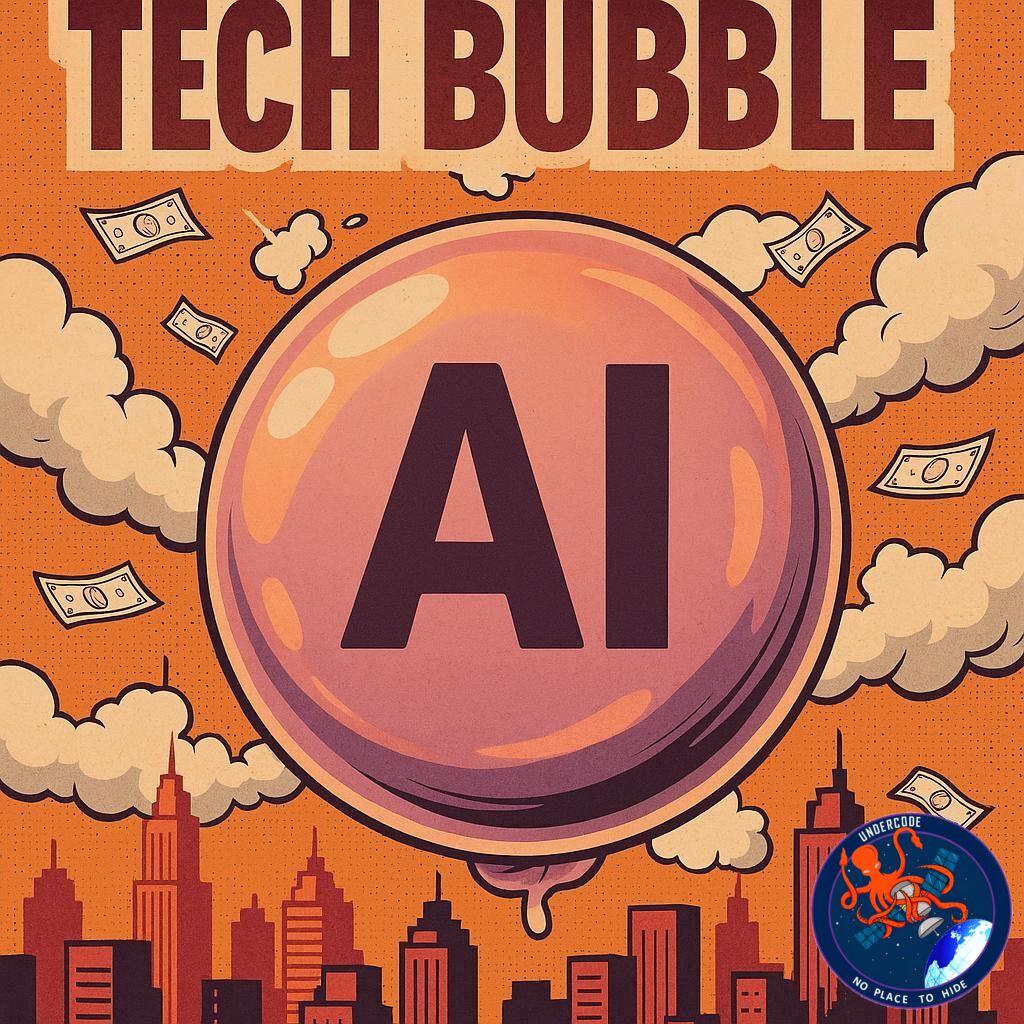
The AI industry is growing at a mind-blowing pace, with billions of dollars flowing between some of the largest tech companies on the planet. Yet, behind the buzzwords and media hype lies a complex web of financial deals, partnerships, and market maneuvers that can make even seasoned investors dizzy. The latest developments in AI investment highlight a dizzying cycle of corporate entanglements that are raising questions: is this growth real, or are we staring at another tech bubble?
A Closer Look at AI’s Financial Maze 🧩
OpenAI, one of the most influential private companies in the world with a half-trillion-dollar valuation, recently partnered with AMD—a direct competitor to Nvidia, which itself invested $100 billion in OpenAI just days earlier. To complicate matters further, OpenAI has deep ties with Microsoft and Google, creating an intricate network of investments and partnerships among a handful of tech giants.
The deal with AMD caused the chip designer’s shares to jump 23%, as the company issued warrants giving OpenAI potential ownership of 160 million shares. This means OpenAI is now both a customer and a major shareholder, blurring the line between finance and product demand. Analysts describe this as “vendor financing,” a strategy where companies essentially fund their customers to create artificial demand.
History Repeating? Dot-Com Echoes 🔄
Many investors and analysts are drawing parallels to the late-1990s dot-com bubble. Back then, telecom giants offered financing deals that inflated orders and created artificial demand for high-tech equipment. When the bubble burst, companies like Lucent faced bankruptcy while startups crumbled. Today, some argue AI is seeing similar patterns, with large valuations and circular financing creating a fragile ecosystem.
Morgan Stanley, however, cautions against a direct comparison. Unlike the over-leveraged dot-com companies, today’s Big Tech giants are financially robust. Still, concerns remain about whether the AI market’s explosive growth is sustainable or artificially inflated.
The Product Reality: Generative AI and LLMs 🧠
At the center of all this spending is generative AI, powered by large language models (LLMs). While LLMs are impressive, their real-world applications are often underwhelming. MIT research found 95% of companies see zero return on AI investment, and “workslop”—useless or flawed AI-generated outputs—has become a growing problem. Critics argue that the hype surrounding AI’s transformative potential far exceeds its actual utility, raising doubts about whether investor enthusiasm is justified.
Market Warnings: Is This a Bubble? ⚠️
Some analysts are using the “B-word” openly. Julien Garran of MacroStrategy Partnership warns this could be the largest bubble in history, estimating misallocated AI-driven capital is 17 times larger than the dot-com bubble and four times bigger than the 2008 real estate crisis. He notes most of the LLM ecosystem is losing money, and Nvidia’s circular trading keeps the market inflated, raising red flags for investors and regulators alike.
What Undercode Says: Breaking Down AI’s Financial Frenzy 📊
The current AI investment environment is a high-stakes game of leverage, partnerships, and market optics. The overlapping financial relationships between AMD, Nvidia, Microsoft, Google, and OpenAI suggest that much of the demand for AI is fueled by internal capital flows rather than organic market growth. This creates a risk that the sector could face sudden corrections if investor confidence falters.
Vendor financing, while not inherently dangerous, has historically contributed to overvalued markets. The parallel to the dot-com bubble is striking: inflated orders, unrealized demand, and reliance on financial engineering could leave companies vulnerable. Yet, unlike the 2000s, today’s giants are more liquid and diversified, which may provide some buffer against catastrophic collapse.
The technology itself, generative AI, remains a double-edged sword. While advancements in LLMs are notable, practical, profitable applications are lagging behind expectations. Many companies are investing heavily in AI without seeing returns, which could fuel investor skepticism over the coming years.
From an analytical perspective, the concentration of AI investments in a few companies amplifies systemic risk. Should one key player falter, the ripple effects could destabilize the broader AI ecosystem. Additionally, the hype cycle around AI creates inflated valuations, making it critical for investors to scrutinize financial structures rather than solely relying on technological potential.
Despite these risks, AI adoption continues to expand across industries. Businesses are experimenting with AI to automate tasks, enhance customer experiences, and streamline operations. However, distinguishing between meaningful adoption and hype-driven spending is increasingly challenging. Companies that overextend financially or fail to achieve ROI could face sharp corrections.
The interplay between tech giants is another layer to watch. OpenAI’s dual role as investor and customer in companies like AMD exemplifies the blurred lines between capital and demand. These dynamics could distort market signals, making it harder for outside investors to gauge genuine growth.
Investor sentiment is crucial. Even the perception of overvaluation or “circular demand” could trigger market sell-offs, as seen in prior tech cycles. Vigilance and critical analysis of financial reports, partnership structures, and AI performance metrics will be key for stakeholders navigating this landscape.
Regulatory scrutiny may also increase as governments and financial authorities monitor these complex deals. Transparency and disclosure requirements could reshape AI financing strategies in the near future.
Finally, while AI remains a transformative technology, history cautions us to temper excitement with careful analysis. The combination of high valuations, intertwined investments, and uneven product performance suggests that both opportunity and risk coexist in unprecedented ways.
Fact Checker Results ✅❌
✅ OpenAI has active partnerships with AMD, Nvidia, Microsoft, and Google.
❌ Current AI adoption does not universally yield profitable returns; most companies report minimal gains.
✅ Vendor financing and circular trading in AI mirror historical patterns from the dot-com era.
Prediction 🔮
AI will continue attracting massive investment, but financial entanglements and exaggerated valuations suggest a potential market correction in the next 1–3 years. Companies with tangible AI applications and strong balance sheets are likely to survive, while others heavily reliant on circular financing could face significant losses. Meanwhile, generative AI technology will evolve, but its true impact may take years to materialize fully. 🚀
🕵️📝✔️Let’s dive deep and fact‑check.
References:
Reported By: edition.cnn.com
Extra Source Hub:
https://www.quora.com
Wikipedia
OpenAi & Undercode AI
Image Source:
Unsplash
Undercode AI DI v2
🔐JOIN OUR CYBER WORLD [ CVE News • HackMonitor • UndercodeNews ]
📢 Follow UndercodeNews & Stay Tuned:
𝕏 formerly Twitter 🐦 | @ Threads | 🔗 Linkedin | 🦋BlueSky | 🐘Mastodon


