
Listen to this Post
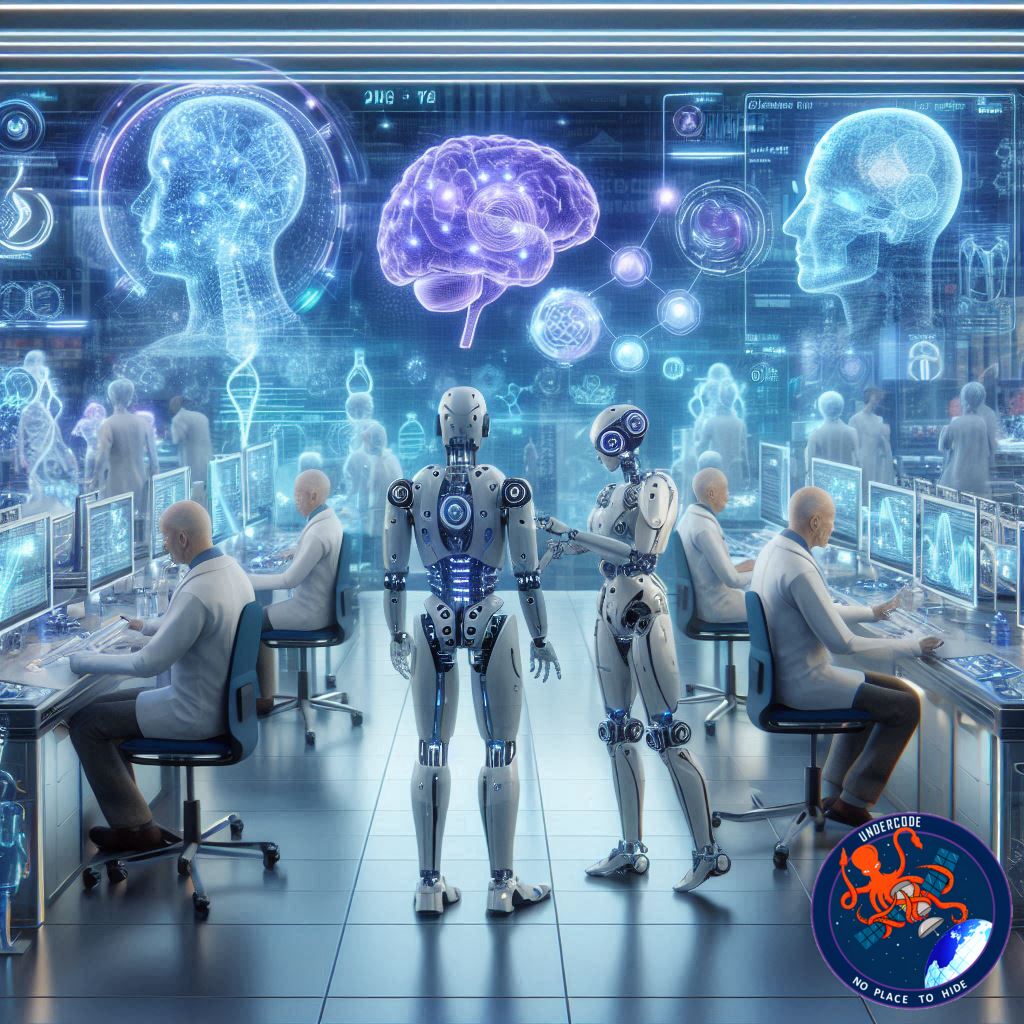 Introduction: A Year When Science Moved Faster Than Humans Ever Could
In 2025, artificial intelligence stopped being a background tool in scientific research and became a primary driver of discovery. Across medicine, climate science, robotics, and materials engineering, AI systems are no longer just assisting researchers — they are shaping hypotheses, designing experiments, and accelerating conclusions that once took years into months or even weeks. What makes this moment historically significant is not just the scale of breakthroughs, but who is leading them. Much of this momentum is coming from private-sector AI labs, venture-backed startups, and technology giants that now sit at the center of a new scientific order.
Summary of the Original AI as the Engine of Modern Discovery
AI Redefines the Pace of Scientific Progress
The year 2025 marked a sharp acceleration in AI-driven scientific innovation, influencing how experiments are planned, executed, and interpreted. New AI models and computing architectures are reshaping research workflows, allowing scientists to tackle problems previously considered too complex or time-consuming.
Faster and Cheaper Alzheimer’s Diagnosis Through AI
One of the most impactful breakthroughs came in the study of Alzheimer’s and related neurodegenerative diseases. Researchers across universities and healthcare institutions demonstrated that AI can significantly improve early detection and therapeutic research. In a landmark example, scientists identified a gene linked to Alzheimer’s by using AI to visualize the three-dimensional structure of a protein — a task that would have been nearly impossible using traditional methods alone.
AlphaGenome and the AI Interpretation of DNA
Google introduced AlphaGenome, a powerful AI model designed to interpret long DNA sequences with high accuracy. This advancement opens new pathways for understanding genetic diseases and accelerating drug discovery. The model’s ability to process extensive genomic data represents a technical leap that pushes biology closer to a fully computational science.
Humanoid Robots Move Closer to Real-World Use
AI-driven improvements in humanoid robots’ dexterity and social interaction gained serious attention in 2025. While general-purpose humanoids remain a long-term goal, investment is pouring into robotics companies seeking to merge generative AI with physical embodiment. Observers suggest these systems may eventually clean homes, assist in healthcare, work in warehouses, or provide companionship.
Weather Forecasting Enters a New Era
AI-enhanced climate modeling reached new levels of precision. Researchers combined machine learning with physics-based climate models to predict extreme “gray swan” weather events — rare disasters expected only once every thousand years. Google released its most advanced weather forecasting system yet, producing results eight times faster than previous models.
Reinventing Concrete to Cut Emissions
In materials science, AI was used to address the global demand for cleaner, cheaper cement alternatives. An MIT-led team employed machine learning to analyze scientific literature and over one million rock samples, identifying viable ingredients that could replace traditional cement while reducing emissions and cost.
Private Companies at the Center of Scientific Power
Many of these breakthroughs were enabled by AI tools developed outside traditional academic or government labs. Companies like Google, Microsoft, Nvidia, and OpenAI now occupy a central role in scientific advancement. Google’s long-term investment in AI-driven science includes DeepMind’s AlphaFold2, a Nobel Prize–winning breakthrough in protein structure prediction.
A Surge in AI-First Science Startups
The AI boom has also sparked a new generation of science startups. Lila Sciences, for example, claims its mission is to build “scientific superintelligence” capable of designing and directing real-world experiments. Another startup, Latent Labs, announced a frontier model designed to reduce wet lab work and accelerate pharmaceutical development.
Government vs. Private Sector Investment Gap
While the U.S. federal government invested $3.3 billion in non-defense AI research in fiscal year 2025, private-sector investment surpassed $109 billion in 2024. This disparity highlights how innovation leadership is increasingly concentrated in corporate ecosystems rather than public institutions.
Political Influence on AI Science Policy
President Trump moved to shape the future of AI-driven science by launching “the Genesis Mission,” an executive order designed to coordinate AI research across federal agencies. Two dozen major AI companies, including Microsoft, Nvidia, and Google, joined the initiative, signaling unprecedented public-private collaboration.
What Undercode Say: Why 2025 May Be the Point of No Return for Science
Science Is Becoming a Software Problem
The defining shift of 2025 is that scientific discovery increasingly resembles a software optimization challenge. AI models are not just tools for analysis; they are becoming engines that propose hypotheses, simulate outcomes, and prioritize experimental paths. This fundamentally alters what it means to “do science.”
The Decline of Trial-and-Error Research
Traditional science relied heavily on slow, incremental trial-and-error methods. AI replaces this with probabilistic reasoning at scale, narrowing millions of possibilities into a handful of high-confidence targets. This is evident in genomics, materials science, and drug discovery alike.
Biology Enters Its Computational Phase
With systems like AlphaGenome and AlphaFold, biology is transitioning into a computational discipline. Proteins, genes, and cellular mechanisms are increasingly modeled before they are tested in physical labs. This inversion — simulation first, experimentation second — dramatically reduces cost and time.
Healthcare Will Be Transformed at the Primary Care Level
AI-driven diagnostics for Alzheimer’s signal a broader shift in medicine. Early detection, once limited by expensive imaging and specialist analysis, is moving toward AI-powered tools usable in primary care. This could redefine preventive medicine and patient outcomes worldwide.
Robotics Is Waiting for Its “GPT Moment”
Humanoid robots are progressing slowly not because of hardware limitations, but because intelligence integration remains complex. The fusion of generative AI with physical control systems suggests robotics is approaching its breakthrough phase, similar to language models in 2022.
Climate Prediction Becomes a Strategic Asset
Accurate forecasting of rare, catastrophic weather events has implications beyond science. Governments, insurers, and defense agencies now treat AI-powered climate models as strategic infrastructure. Faster forecasts translate directly into saved lives and economic stability.
Materials Science Gains an AI Shortcut
The MIT cement breakthrough illustrates how AI can compress decades of materials research into months. By mining literature and geological data simultaneously, AI uncovers patterns humans would never see, enabling sustainable engineering at unprecedented speed.
Big Tech Is Replacing the National Lab Model
The concentration of AI expertise, computing power, and capital within tech giants has effectively created private-sector national laboratories. Unlike public institutions, these entities move faster, attract top talent globally, and operate with fewer bureaucratic constraints.
Nobel Prizes Are No Longer Academic Exclusives
Google-affiliated scientists being linked to multiple Nobel Prizes underscores a deeper reality: the highest levels of scientific recognition are now reachable through corporate research environments. This blurs the line between commercial and academic achievement.
Startups Are Building Autonomous Science Pipelines
Companies like Lila Sciences and Latent Labs are not just accelerating research — they are automating it. The idea of AI systems that design experiments, run simulations, and refine hypotheses autonomously represents a radical departure from human-centered science.
The Investment Gap Shapes the Future
The massive disparity between government and private AI funding raises long-term concerns. While private capital accelerates innovation, it also centralizes control over knowledge creation, potentially limiting transparency and public accountability.
Policy Is Playing Catch-Up
Initiatives like the Genesis Mission acknowledge the strategic importance of AI-driven science, but coordination alone may not be enough. Without competitive public investment, governments risk becoming dependent on private platforms for critical scientific capabilities.
Science Is Becoming Winner-Take-All
AI-driven discovery favors those with access to data, compute, and capital. This creates a feedback loop where leading institutions pull further ahead, making it harder for smaller labs and developing nations to compete.
The Ethical Layer Is Still Missing
Despite rapid progress, ethical frameworks lag behind. Questions around data ownership, algorithmic bias in medical diagnostics, and corporate control of foundational models remain largely unresolved.
Human Scientists Are Not Being Replaced — Yet
AI is amplifying scientific output, not eliminating researchers. However, the role of scientists is shifting from hands-on experimentation toward oversight, interpretation, and strategic decision-making.
The Long-Term Risk of Over-Reliance
As AI systems grow more complex, fewer humans fully understand how conclusions are reached. This opacity introduces systemic risk if models fail, behave unpredictably, or encode flawed assumptions at scale.
2025 as the Inflection Point
Viewed historically, 2025 may be remembered as the year science crossed a threshold. From this point forward, progress is increasingly bounded not by human creativity, but by computational power and algorithmic sophistication.
Fact Checker Results
Investment figures align with reported public and private funding levels. ✅
AI breakthroughs mentioned are consistent with publicly announced research milestones. ✅
Claims about humanoid robots remain predictive rather than fully realized. ❌
Prediction
AI-designed experiments will become standard in biomedical research by 2027 🧬
At least one major climate disaster will be mitigated using AI forecasting within three years 🌪️
Governments will dramatically increase AI science funding to counter private-sector dominance ⚖️
🕵️📝✔️Let’s dive deep and fact‑check.
References:
Reported By: axioscom_1767175923
Extra Source Hub (Possible Sources for article):
https://stackoverflow.com
Wikipedia
OpenAi & Undercode AI
Image Source:
Unsplash
Undercode AI DI v2
Bing
🔐JOIN OUR CYBER WORLD [ CVE News • HackMonitor • UndercodeNews ]
📢 Follow UndercodeNews & Stay Tuned:
𝕏 formerly Twitter 🐦 | @ Threads | 🔗 Linkedin | 🦋BlueSky | 🐘Mastodon


