
Listen to this Post
Introduction
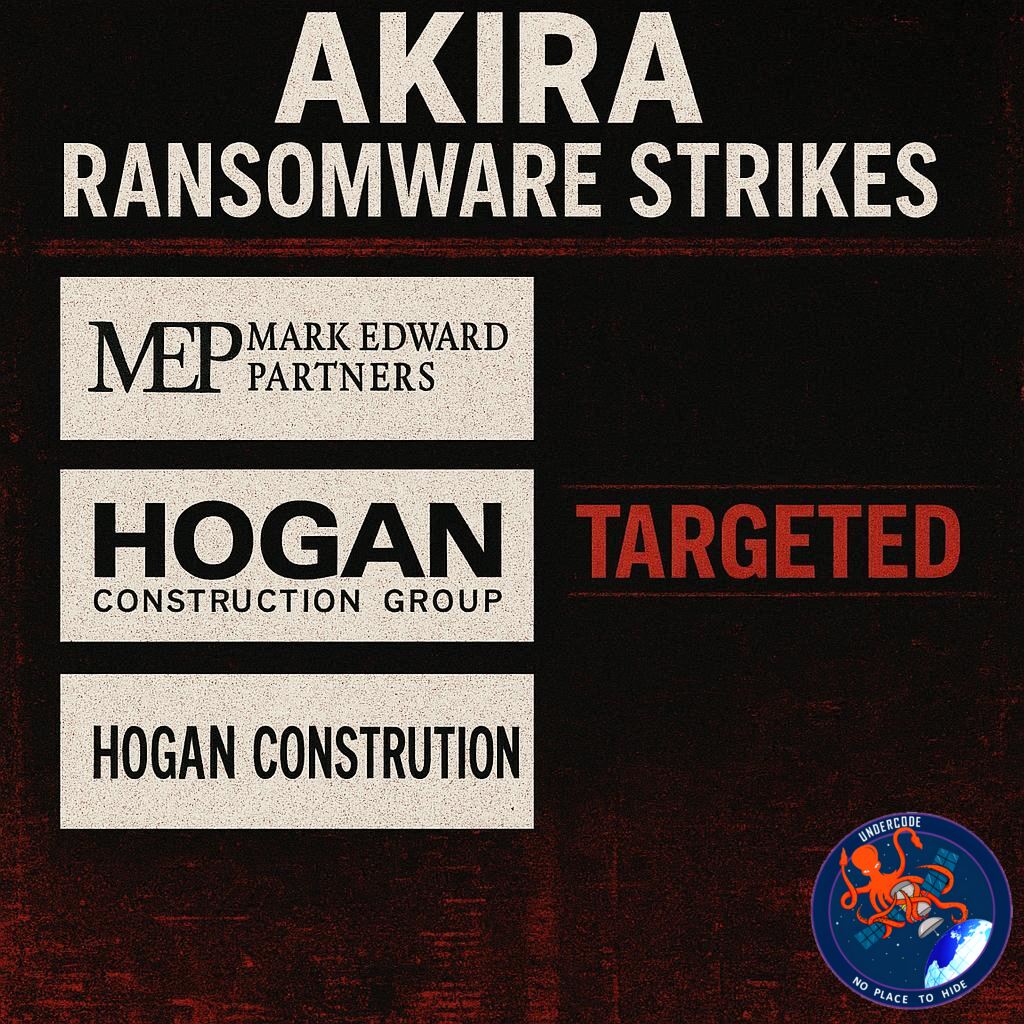
The world of cybersecurity never rests, and neither do ransomware gangs. On August 22, 2025, reports emerged from ThreatMon’s Ransomware Monitoring team highlighting two new victims of the notorious Akira ransomware group. This criminal syndicate, active across the dark web, has consistently made headlines for targeting corporations and demanding hefty ransoms in exchange for stolen or encrypted data. Their latest victims—Mark Edward Partners, a global insurance brokerage firm, and Hogan Construction Group, a well-established player in the construction industry—underscore the growing reach of ransomware actors across multiple sectors.
Full the Report
ThreatMon, a well-known threat intelligence platform, detected suspicious ransomware activity linked to Akira on August 22, 2025. The findings revealed that Mark Edward Partners was added to Akira’s list of victims at 15:11:13 UTC+3, followed just three seconds later by another entry naming Hogan Construction Group.
This rapid succession highlights Akira’s method of breaching multiple organizations within a short timeframe, likely through sophisticated exploit kits or previously compromised credentials. Both victim announcements appeared on underground dark web portals where ransomware groups typically expose their targets to pressure them into paying ransoms.
The detection indicates that Akira continues its relentless campaign, exploiting industries beyond the usual financial or healthcare targets. By choosing an insurance brokerage firm, the group could potentially leverage highly sensitive corporate and personal client data. Meanwhile, attacking a construction company signals their willingness to expand into infrastructure-related businesses where operational disruption can bring enormous pressure to comply with ransom demands.
ThreatMon’s intelligence feeds are particularly valuable in providing early warnings about these incidents. Cybersecurity experts suggest that early detection can allow potential victims and industry peers to harden defenses, prepare response strategies, and avoid falling prey to similar breaches.
The attacks against Mark Edward Partners and Hogan Construction Group are not isolated events. Akira has been steadily building its reputation within the ransomware ecosystem since its emergence, developing a reputation for both data theft and double extortion tactics—meaning they steal sensitive files before encrypting systems, threatening to publish them if ransoms are not paid.
While details about the ransom amounts or negotiation processes remain undisclosed, the timing of these incidents suggests Akira is actively expanding its campaign. These developments raise critical questions about the security posture of industries that often underestimate their attractiveness to cybercriminals.
What Undercode Say: 🔍
The Akira ransomware group represents a strategic threat in today’s digital landscape. By striking at seemingly diverse industries—insurance and construction—they showcase their versatility and ability to exploit vulnerabilities across different operational models.
One important analytic insight is the symbolic selection of victims. Insurance companies manage highly confidential risk-related data, which can be weaponized if leaked. Construction firms, on the other hand, are vulnerable to project delays, contractual penalties, and safety risks if operations are disrupted. By combining these targets, Akira maximizes both financial leverage and psychological pressure.
From a threat intelligence perspective, the timing of both victim disclosures—within seconds—may indicate automation or a coordinated disclosure strategy to amplify visibility on underground forums. Such tactics aim to intimidate other businesses into paying quickly, reinforcing Akira’s reputation as a “strike fast, pressure hard” group.
Furthermore, Akira’s operations reveal a troubling trend in ransomware economics. Unlike earlier ransomware campaigns that focused narrowly on large-scale enterprises, Akira demonstrates a “horizontal expansion strategy”—hitting multiple mid-sized companies across industries. This broad targeting lowers the risk of detection while spreading fear across a wide corporate base.
Another layer worth noting is the double-extortion method. By threatening to publish stolen files, Akira ensures companies face not only operational downtime but also reputational damage and possible regulatory fines. For an insurance brokerage like Mark Edward Partners, leaked files could expose sensitive client details, leading to lawsuits and massive financial repercussions.
The broader implication is that no sector is immune. Even industries not traditionally considered “high-value” for hackers are now prime targets due to their reliance on digital infrastructure. This trend underscores the need for proactive defense measures such as real-time monitoring, zero-trust frameworks, and regular penetration testing.
In essence, Akira thrives on exploiting weaknesses in both technology and human behavior. Phishing emails, unpatched systems, and weak credentials remain the most common entry points. Until organizations across all industries embrace stronger cybersecurity practices, ransomware gangs like Akira will continue to thrive.
Fact Checker Results ✅❌
✅ Akira ransomware has indeed been active in 2025, consistently adding victims on dark web leak sites.
✅ ThreatMon confirmed that Mark Edward Partners and Hogan Construction Group were listed as victims on August 22, 2025.
❌ No evidence yet confirms ransom amounts or whether negotiations have taken place.
Prediction 🔮
Akira’s campaign is unlikely to slow down in the coming months. Given its pattern, we can expect the group to target mid-sized enterprises across multiple industries, focusing on those with sensitive client data and weak defenses. It is highly probable that insurance, logistics, and manufacturing firms will appear on Akira’s victim list next. Organizations that delay adopting robust cybersecurity frameworks will remain the easiest prey in this evolving cyber battlefield.
🕵️📝✔️Let’s dive deep and fact‑check.
References:
Reported By: x.com
Extra Source Hub:
https://www.github.com
Wikipedia
OpenAi & Undercode AI
Image Source:
Unsplash
Undercode AI DI v2
🔐JOIN OUR CYBER WORLD [ CVE News • HackMonitor • UndercodeNews ]
📢 Follow UndercodeNews & Stay Tuned:
𝕏 formerly Twitter 🐦 | @ Threads | 🔗 Linkedin | 🦋BlueSky | 🐘Mastodon


