
Listen to this Post
Introduction: The Hidden Danger in Industrial Systems
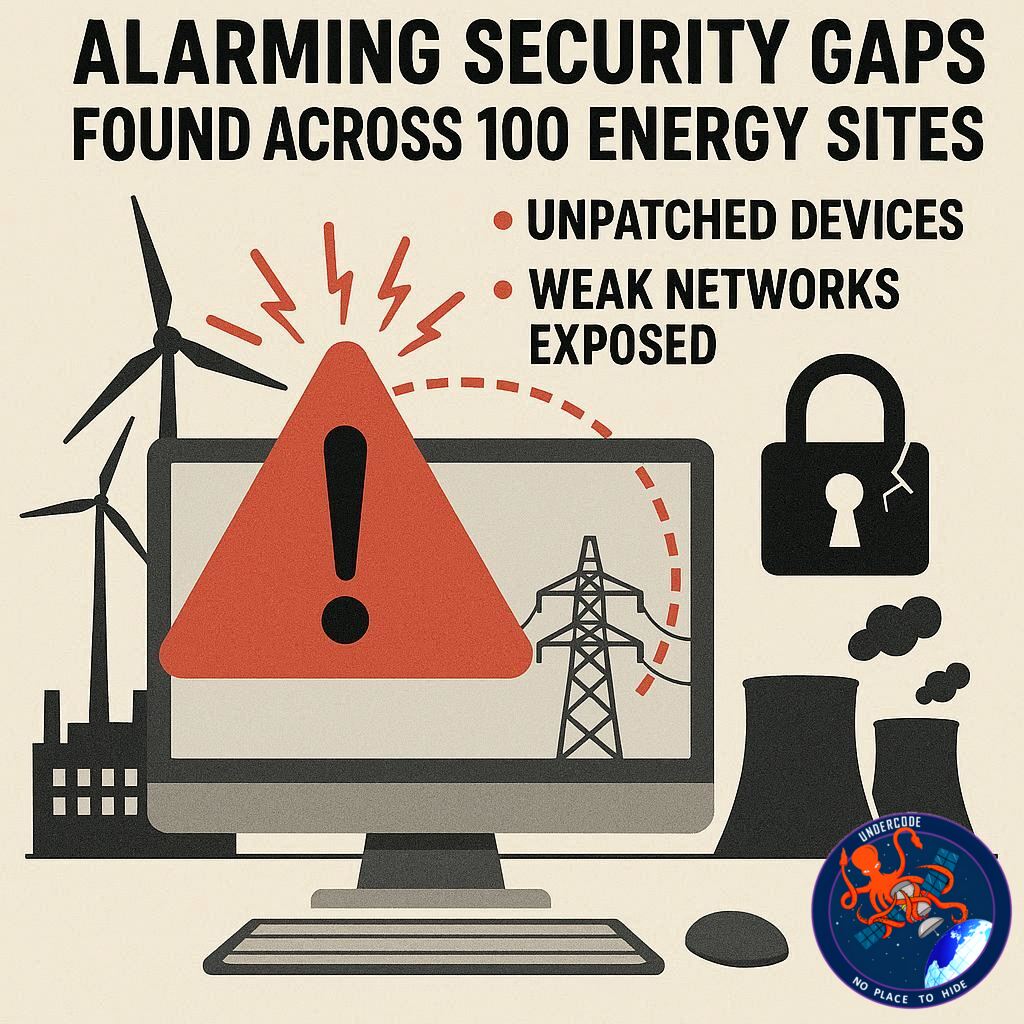
A recent cybersecurity survey has uncovered alarming vulnerabilities across over 100 energy sites worldwide, highlighting how unpatched systems and weak network designs leave critical infrastructure dangerously exposed. Industrial organizations are increasingly reliant on Operational Technology (OT) to control physical processes, from power grids to manufacturing plants. But these findings show that even as digital threats rise, basic security practices—like patching devices and proper network segmentation—are often neglected, creating high-risk environments that could be exploited by cybercriminals or state-sponsored actors.
Findings
The investigation, sourced from hendryadrian.com and highlighted by cybersecurity monitor @TweetThreatNews, revealed multiple critical weaknesses across the surveyed energy facilities. A key issue is the prevalence of unpatched Programmable Automation Controllers (PACs), specifically referencing CVE-2015-5374, which remains exploitable despite being publicly disclosed years ago. This exposes essential systems controlling energy infrastructure to potential hijacking or sabotage.
Additionally, risky external links were found throughout the networks, providing potential avenues for attackers to bypass security measures. Poor network segmentation was another concern, with OT networks inadequately isolated from IT networks, allowing a single compromise in one segment to cascade across entire operational systems. The asset inventories maintained at these sites were also found to be incomplete, meaning security teams often lack a full understanding of the devices and systems that require protection.
The study underscores a larger industry trend: critical infrastructure is often operating with outdated systems and fragmented security practices, leaving energy providers vulnerable to cyberattacks that could have both economic and public safety consequences. Organizations are urged to prioritize patch management, strengthen network architecture, and maintain accurate asset records to mitigate these risks.
What Undercode Says: Analyzing the Implications
Critical OT Device Risks
Unpatched PAC devices like CVE-2015-5374 present a clear and immediate threat. While many organizations rely on legacy industrial control systems, the risk of neglecting basic patching practices can no longer be overlooked. These vulnerabilities are essentially open doors for attackers who are increasingly targeting operational systems rather than conventional IT networks.
The Danger of Weak Segmentation
Weak network segmentation is a silent but potent risk. When IT and OT networks are not properly isolated, attackers gaining access to even a low-level system can pivot into critical operational systems. For energy sites, this could mean remote manipulation of power distribution, creating cascading failures with potentially catastrophic consequences.
Incomplete Asset Inventories and Operational Blind Spots
Incomplete inventories amplify risk exponentially. Without a precise understanding of all connected devices, security teams cannot prioritize patches or monitor anomalous activity effectively. This oversight turns even minor vulnerabilities into systemic threats.
The Role of Human Error and Policy Gaps
These gaps are not only technical but also organizational. Poor cybersecurity hygiene, lack of consistent auditing, and inadequate employee training all contribute to a fragile security posture. Companies must integrate OT cybersecurity into overall corporate governance rather than treating it as an afterthought.
Urgency of Proactive Threat Management
Energy infrastructure is increasingly seen as a target for cyber espionage and sabotage. Organizations that fail to proactively address OT security risks face not only operational downtime but also reputational damage, regulatory penalties, and in extreme cases, public safety hazards. Investment in monitoring, intrusion detection systems, and rapid patch deployment is no longer optional—it is essential.
Future-proofing Through Advanced Technology
Adopting automated vulnerability management, AI-based threat detection, and zero-trust network principles can help bridge current security gaps. However, these technologies require strong governance, employee training, and continuous assessment to remain effective in complex industrial environments.
Fact Checker Results
✅ IDS deployments across 100+ energy sites confirmed multiple OT security gaps.
✅ CVE-2015-5374 remains an unpatched, publicly documented vulnerability.
❌ No evidence suggests immediate exploitation, but the risk is significant due to weak network segmentation and incomplete inventories.
📊 Prediction: Rising Pressure on Energy Sector Cybersecurity
Energy companies will face mounting regulatory pressure to implement stricter OT cybersecurity measures within the next 12–18 months. Firms that fail to address legacy device vulnerabilities and weak network architecture may experience increased audits, insurance premiums, and even targeted attacks. Conversely, early adopters of proactive monitoring, segmentation, and automated patch management are likely to emerge as industry leaders, setting new benchmarks for industrial cybersecurity resilience.
This survey highlights a critical inflection point: industrial networks can no longer afford to lag behind IT security standards. Immediate action is required to safeguard both operational continuity and public trust in essential energy infrastructure.
🕵️📝✔️Let’s dive deep and fact‑check.
References:
Reported By: x.com
Extra Source Hub (Possible Sources for article):
https://www.reddit.com
Wikipedia
OpenAi & Undercode AI
Image Source:
Unsplash
Undercode AI DI v2
Bing
🔐JOIN OUR CYBER WORLD [ CVE News • HackMonitor • UndercodeNews ]
📢 Follow UndercodeNews & Stay Tuned:
𝕏 formerly Twitter 🐦 | @ Threads | 🔗 Linkedin | 🦋BlueSky | 🐘Mastodon


