
Listen to this Post
Introduction
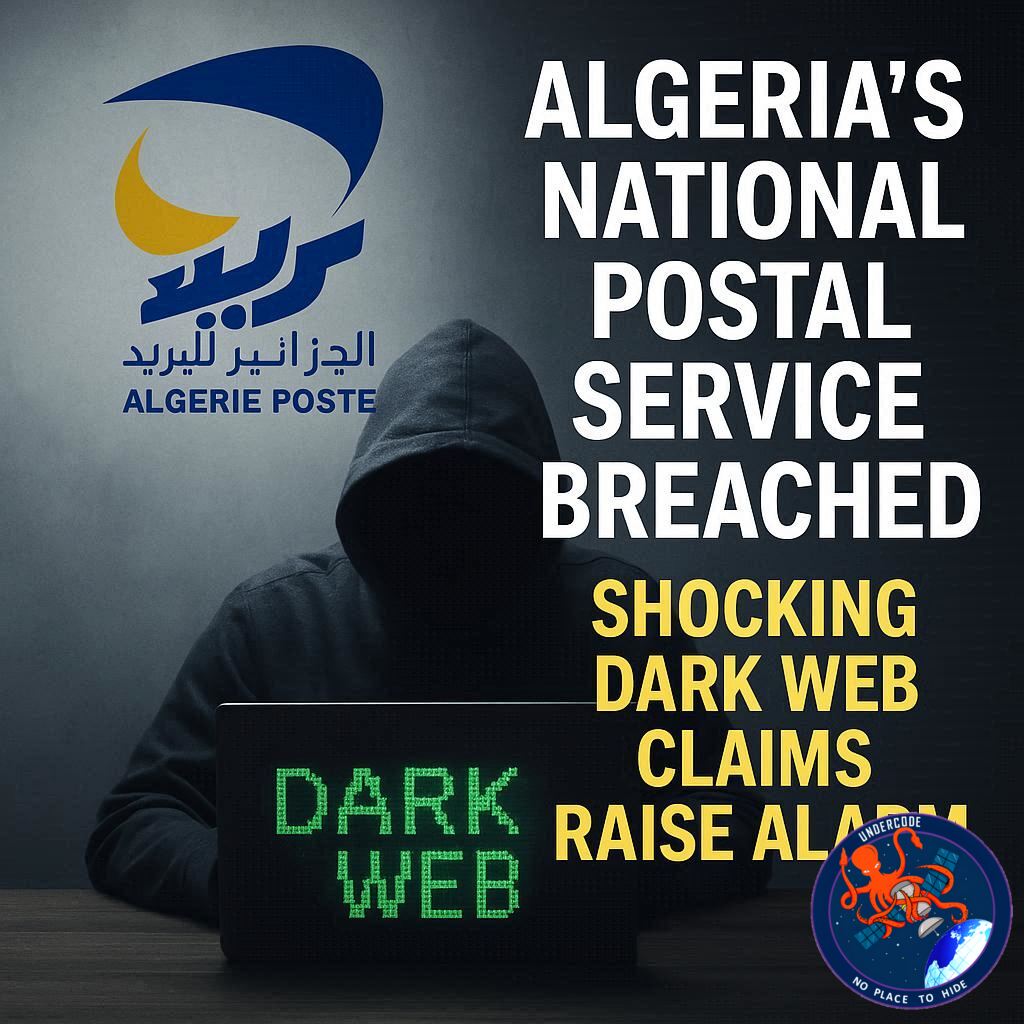
In today’s digital world, data breaches have become one of the most feared cybersecurity nightmares. When national institutions are hit, the damage extends far beyond stolen information—it shakes public trust, disrupts services, and potentially threatens national security. Recently, alarming reports surfaced about Algeria’s national postal service, Algérie Poste, allegedly falling victim to a major data breach. According to dark web monitoring sources, user account credentials may have been leaked and are now circulating online.
the Incident
Reports shared by Dark Web Intelligence claim that Algeria’s Algérie Poste has been allegedly breached, leading to sensitive user data being exposed. This includes account credentials that could provide cybercriminals with access to financial and personal details. The breach reportedly surfaced on the dark web, where leaked databases are often sold to the highest bidder or distributed freely for malicious purposes.
Notably, this is not the only recent case. Around the same period, Spain’s Som Mobilitat, a cooperative mobility service, was also allegedly breached, with the personal information of over 4,000 clients reportedly listed for sale online. Such incidents highlight a disturbing trend of targeting critical public and cooperative services in multiple countries.
Cybersecurity experts warn that these breaches, whether confirmed or still under investigation, expose the vulnerabilities of public infrastructure systems. For Algeria, Algérie Poste plays a central role in daily financial transactions, social benefits distribution, and government payments. A breach of this scale could have severe implications, including financial fraud, identity theft, and erosion of trust in public digital services.
The dark web has long been a marketplace for stolen data, and attackers often seek out institutions that store massive amounts of sensitive information but may lack robust defense mechanisms. In the case of Algeria, this incident may reflect gaps in cybersecurity protocols and a pressing need for stronger protective measures.
With rising cases of cybercrime across North Africa and Europe, experts suggest that coordinated international efforts are necessary to combat the escalating threat. Citizens are also advised to practice better digital hygiene, including regularly updating passwords, enabling two-factor authentication, and monitoring accounts for unusual activity.
The story of Algérie Poste’s alleged data breach is not just about stolen information—it’s about resilience, digital security awareness, and the need for immediate reforms in how public institutions handle and protect citizen data.
What Undercode Say:
The breach involving Algérie Poste is a wake-up call for Algeria and neighboring countries. Cybersecurity cannot remain an afterthought, especially in state-owned institutions that handle millions of user accounts and financial operations.
Analyzing the context, Algérie Poste is not merely a postal service—it is also a critical hub for e-payment systems, online transactions, and social welfare distribution. This makes it a prime target for cybercriminals. A successful breach here could disrupt not only individual accounts but also the financial fabric of society.
From a technical standpoint, most breaches of this nature exploit weak database security, outdated encryption, or insufficient monitoring systems. If account credentials were leaked, it suggests that hackers had either direct access to backend systems or found vulnerabilities in online portals. The absence of multi-layered defenses often accelerates such attacks.
The case also underlines a broader trend: hackers increasingly target institutions in regions with developing cybersecurity infrastructures. North Africa and parts of Southern Europe are becoming hotspots due to weaker digital defenses compared to Western Europe or North America.
For Spain’s Som Mobilitat, the incident reinforces the idea that even smaller cooperatives are not immune. Hackers exploit any opening—be it small-scale mobility apps or nationwide postal systems. This proves that size does not guarantee safety; instead, constant monitoring, penetration testing, and rapid response teams are the true safeguards.
Public trust is another casualty of breaches. Citizens expect their governments and institutions to secure their personal data. When this fails, skepticism rises, often leading people to avoid digital services altogether. In Algeria, this could slow down the digital transformation efforts that the government has been pushing in recent years.
Another concern is the potential resale of data. On the dark web, leaked credentials can be combined with phishing campaigns, identity fraud, or even state-sponsored espionage. This elevates the risk beyond financial fraud—it becomes a matter of national security.
Looking forward, Algeria must consider establishing a stronger national cybersecurity authority, capable of detecting and responding to breaches in real time. Partnerships with international cyber defense agencies could also provide the expertise and resources needed to secure vital infrastructure.
Education and awareness campaigns remain equally important. Citizens must understand how to protect themselves if their data is exposed. In cases like this, many people remain unaware that their credentials are being traded, making them vulnerable for months or even years after the breach.
Ultimately, the Algérie Poste case is not just a regional issue—it reflects a global challenge. Cybercriminals operate without borders, and defenses must therefore adopt a global, united approach.
Fact Checker Results ✅❌
✅ Dark web monitoring sources confirm listings of alleged Algérie Poste data.
❌ No official Algerian government statement has yet confirmed the breach.
✅ Similar regional cases, such as Spain’s Som Mobilitat, strengthen the credibility of the threat.
Prediction 🔮
Cyberattacks targeting national services in developing regions are expected to increase sharply in the coming years. If Algeria fails to implement robust security measures, further breaches could compromise even more sensitive systems, including national ID databases and government payment portals. On a larger scale, we may see North Africa emerge as a new cybercrime hotspot, making immediate reforms and international collaboration not just necessary, but urgent.
🕵️📝✔️Let’s dive deep and fact‑check.
References:
Reported By: x.com
Extra Source Hub:
https://www.quora.com/topic/Technology
Wikipedia
OpenAi & Undercode AI
Image Source:
Unsplash
Undercode AI DI v2
🔐JOIN OUR CYBER WORLD [ CVE News • HackMonitor • UndercodeNews ]
📢 Follow UndercodeNews & Stay Tuned:
𝕏 formerly Twitter 🐦 | @ Threads | 🔗 Linkedin | 🦋BlueSky | 🐘Mastodon


