
Listen to this Post
Introduction
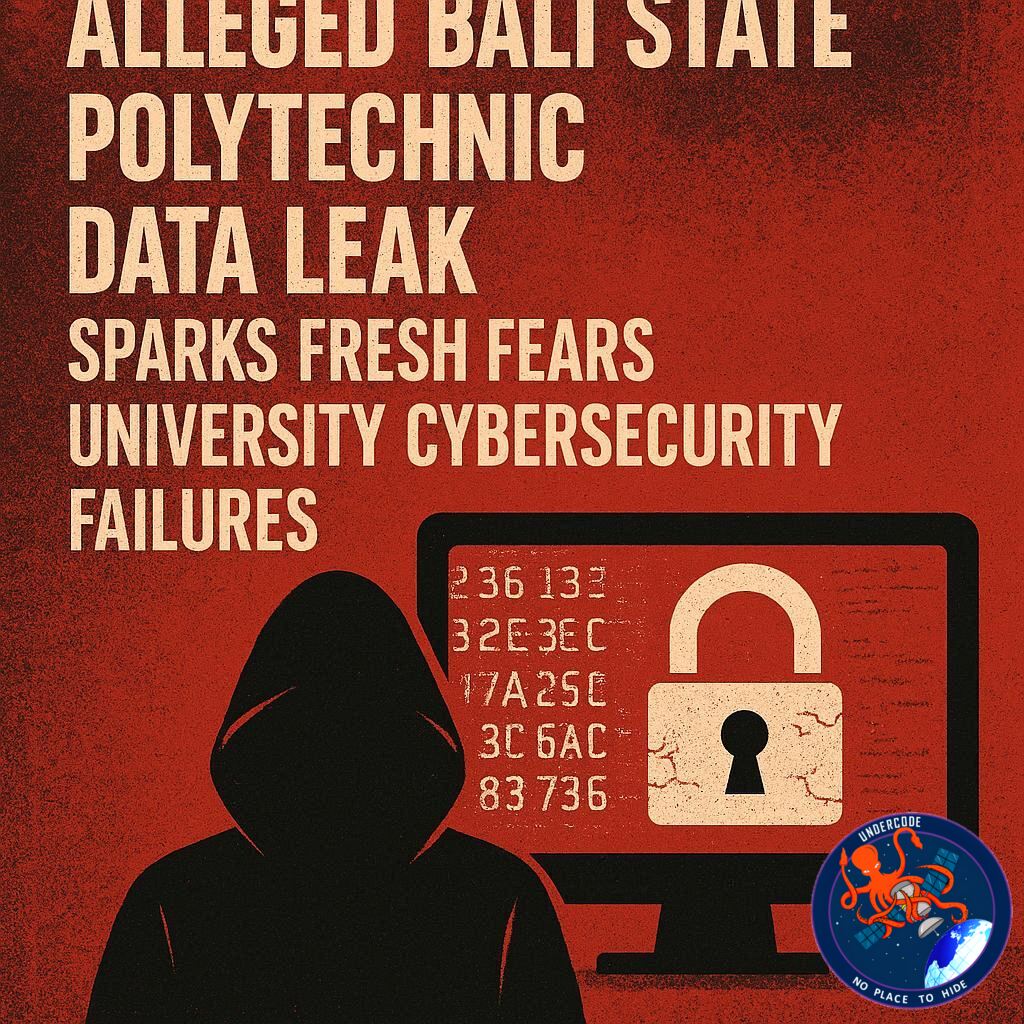
A new dark web claim involving Indonesia’s Politeknik Negeri Bali has reignited concerns over how vulnerable educational institutions have become to cybercriminals. According to a post shared by Dark Web Intelligence, a threat actor is allegedly distributing a database connected to the institution, claiming it contains highly sensitive employee information ranging from identification numbers to banking-related details.
While the authenticity of the leak has not yet been independently verified, the report highlights a growing pattern in which universities and public education systems are increasingly appearing on underground cybercrime forums. Experts warn that even unverified leaks can create panic, attract secondary attacks, and expose institutions to reputational damage.
Alleged Leak Raises Alarm Across Indonesia’s Academic Sector
The underground post claims the exposed dataset may contain employee-related records associated with Bali State Polytechnic. Among the allegedly leaked information are employee identification numbers, national identity details, names, birth records, phone numbers, email addresses, residential information, marital status data, and financial-related metadata.
The inclusion of payroll and banking-related fields significantly increases the seriousness of the situation. Cybersecurity analysts often consider financial metadata among the most dangerous forms of compromised information because it can be weaponized in phishing schemes, payroll fraud attempts, or identity theft operations.
Although investigators have not confirmed whether the data is authentic or complete, the mere circulation of such claims on dark web forums can attract malicious actors seeking exploitable targets.
Why Universities Have Become Prime Targets for Cybercriminals
Educational institutions have evolved into some of the most attractive targets in the cybercrime ecosystem. Unlike banks or major technology firms, many universities operate with limited cybersecurity budgets while simultaneously storing enormous quantities of personal and financial data.
Universities typically manage centralized identity systems that contain employee records, student databases, research archives, payroll systems, and institutional credentials. This concentration of sensitive information makes academic institutions highly valuable to threat actors.
Another major weakness lies in legacy infrastructure. Many universities continue operating outdated internal systems that were never designed to withstand modern ransomware campaigns or advanced intrusion techniques. Combined with broad user populations that include students, faculty members, contractors, and researchers, the attack surface becomes extremely difficult to secure.
Cybercriminals understand that even a single compromised staff account can open pathways into much larger institutional networks.
The Growing Danger of Employee Data Exposure
If the alleged dataset proves genuine, affected employees could face multiple forms of cyber-enabled fraud. Threat actors frequently use leaked institutional records to build convincing phishing campaigns that impersonate HR departments, university administrators, or payroll offices.
Identity theft also becomes a serious concern when national identification details and birth records are exposed together. Criminal groups often combine leaked information from multiple breaches to create detailed digital profiles of victims.
Phone numbers and email addresses can further enable social engineering attacks. Fraudsters may contact victims pretending to represent banks, tax agencies, or university management in attempts to harvest additional credentials or financial information.
The possible presence of banking-related metadata increases the potential for account fraud attempts and targeted financial scams. Even partial financial data can help attackers create believable phishing messages designed to trick victims into revealing login credentials or approving fraudulent transactions.
Dark Web Forums Continue Fueling Cybercrime Economies
Underground marketplaces and cybercrime forums have become central hubs for the sale and exchange of stolen data. Threat actors often advertise institutional databases to attract buyers interested in identity fraud, credential stuffing, financial scams, or ransomware operations.
However, cybersecurity experts caution that many dark web claims are exaggerated. Threat actors sometimes recycle old datasets, inflate the size of leaks, or falsely associate stolen information with well-known institutions to gain credibility.
This makes independent verification essential before concluding that a breach has truly occurred.
Still, even unverified listings can cause significant disruption. Organizations may face public scrutiny, media pressure, and increased phishing activity simply because their name appeared in a dark web advertisement.
Indonesian Institutions Face Rising Cybersecurity Pressure
Indonesia has experienced a growing number of cybersecurity incidents in recent years, affecting both public and private sectors. Educational institutions, government agencies, and healthcare providers have all become increasingly attractive targets due to rapid digitalization and uneven cybersecurity readiness.
As institutions expand online learning systems, cloud platforms, and digital administration services, the number of potential attack vectors also increases. Attackers are continuously scanning for weak authentication systems, exposed databases, and unpatched infrastructure.
Cybersecurity experts repeatedly stress that prevention is no longer enough. Modern institutions must also focus heavily on rapid detection, incident response planning, and employee awareness training.
Social Engineering Remains One of the Biggest Threats
One overlooked aspect of educational data breaches is the power of institutional trust. Employees and students are more likely to trust emails or messages that appear to come from university departments.
Attackers exploit this trust aggressively.
A phishing email disguised as an internal payroll update or academic notification can easily deceive users, especially if the attacker already possesses authentic personal details from a leaked database. This combination of real information and institutional branding dramatically increases the success rate of social engineering attacks.
Cybercriminals no longer rely solely on technical exploits. Human manipulation has become one of the most effective weapons in modern cybercrime.
What Undercode Says:
Universities Are Quietly Becoming Cybersecurity Time Bombs
The alleged Bali State Polytechnic leak reflects a broader global problem that many institutions still underestimate. Universities are no longer low-priority targets. They now sit at the intersection of financial systems, identity management, research infrastructure, and mass digital communication networks.
That combination creates enormous value for cybercriminals.
Many academic institutions continue focusing heavily on operational expansion while cybersecurity remains reactive rather than proactive. New online systems are deployed rapidly, but security audits, penetration testing, and infrastructure modernization often lag behind.
This creates a dangerous imbalance.
Attackers understand that universities are uniquely vulnerable because they operate like miniature cities. Thousands of users access systems daily from personal devices, campus networks, remote connections, and third-party applications. Every additional access point introduces another possible weakness.
Another major issue is institutional complacency. Many organizations still believe cyberattacks primarily target banks or multinational corporations. In reality, attackers increasingly pursue softer targets with weaker defenses but equally valuable data.
Employee records are especially lucrative because they often contain verified identity details, government-issued identifiers, salary information, and institutional access credentials. In cybercrime markets, this type of data can be resold repeatedly for multiple fraud operations.
The psychological impact of these incidents also deserves attention.
When employees learn that their personal records may be circulating online, trust inside the organization deteriorates quickly. Staff members may become suspicious of internal communications, fear financial compromise, or lose confidence in institutional leadership.
The reputational consequences can outlast the technical incident itself.
Educational institutions also face unique political and administrative challenges during cyber incidents. Unlike private corporations, public academic institutions often operate within bureaucratic structures that slow down incident response and infrastructure upgrades.
This delay benefits attackers.
Another overlooked factor is interconnected services. Universities frequently integrate external vendors, payment platforms, research databases, student portals, and cloud-based learning systems into a single ecosystem. A vulnerability in one connected service can potentially expose multiple systems simultaneously.
The dark web economy further amplifies these risks.
Threat actors today operate like organized businesses. Some specialize in breaching networks, others package stolen data, while separate groups handle fraud or ransomware deployment. This industrialized cybercrime model allows even moderately skilled attackers to profit from leaked institutional information.
Even if the alleged Bali dataset ultimately proves exaggerated or false, the incident still highlights a critical reality: educational institutions worldwide are being continuously monitored by cybercriminals searching for weaknesses.
The exposure of banking-related metadata, if confirmed, would be particularly serious. Financially themed phishing campaigns remain among the most effective forms of digital fraud because they exploit urgency and fear. Employees receiving fake payroll alerts or banking warnings may react emotionally before verifying authenticity.
This is precisely what attackers want.
Modern cybersecurity is no longer only about firewalls and antivirus software. It increasingly depends on organizational culture, employee awareness, rapid threat intelligence sharing, and continuous infrastructure modernization.
Institutions that fail to evolve may find themselves repeatedly targeted.
The Bali case also demonstrates how dark web posts themselves have become weapons. Simply naming an institution publicly can trigger waves of phishing attempts, media attention, and opportunistic attacks even before any breach is confirmed.
In many ways, perception alone now carries operational risk.
🔍 Fact Checker Results
✅ Verification Status of the Alleged Leak
The claims regarding the Bali State Polytechnic dataset currently remain unverified. No official confirmation from Politeknik Negeri Bali or Indonesian authorities has publicly confirmed the authenticity of the alleged database leak.
✅ Common Targets in Cybercrime Operations
Educational institutions are widely recognized as frequent cyberattack targets due to their large databases, broad user populations, and often outdated infrastructure. This aligns with established global cybersecurity trends.
❌ No Evidence Yet of Full Financial Exposure
Although the threat actor claims banking-related fields are included in the dataset, there is currently no publicly verified evidence confirming that full banking credentials or financial accounts were exposed.
📊 Prediction
Rising Cyberattacks Against Academic Institutions Are Likely
Cyberattacks targeting universities and public education systems are expected to increase significantly over the coming years. As institutions continue expanding digital services and remote access systems, attackers will likely intensify efforts to exploit weak authentication processes and outdated infrastructure.
Employee Data Will Become a Larger Underground Commodity
Threat actors are increasingly focusing on employee datasets because they offer long-term fraud potential. Personal identity records tied to payroll systems and institutional credentials will continue commanding high value on underground forums.
Governments May Push Stricter Cybersecurity Regulations
Incidents involving public institutions could accelerate regulatory pressure across Southeast Asia. Governments may introduce stricter cybersecurity compliance frameworks, mandatory breach reporting requirements, and stronger data protection enforcement for educational organizations.
🕵️📝Let’s dive deep and fact‑check.
References:
Reported By: x.com
Extra Source Hub (Possible Sources for article):
https://www.quora.com
Wikipedia
OpenAi & Undercode AI
Image Source:
Unsplash
Undercode AI DI v2
Bing
🔐JOIN OUR CYBER WORLD [ CVE News • HackMonitor • UndercodeNews ]
📢 Follow UndercodeNews & Stay Tuned:
𝕏 formerly Twitter 🐦 | @ Threads | 🔗 Linkedin | 🦋BlueSky | 🐘Mastodon


