
Listen to this Post
Introduction
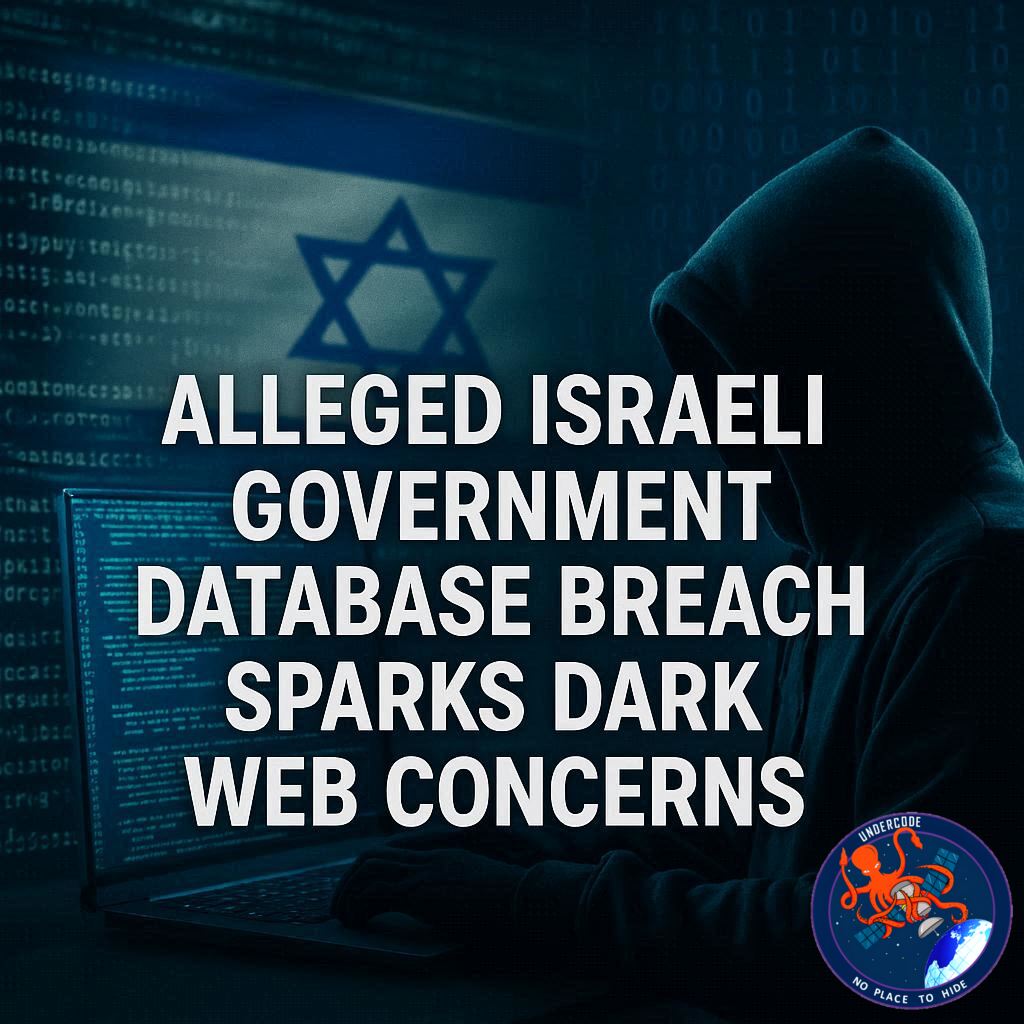
A short but alarming post shared by the account “Dark Web Intelligence” on X has triggered fresh concerns about cybersecurity threats targeting government infrastructure in Israel. The post claimed that an Israeli government database had suffered a breach, though no official technical details, evidence, or confirmation were publicly released at the time of publication. Despite the lack of transparency surrounding the incident, the message quickly gained attention across cybercrime monitoring communities and dark web observers.
In recent years, government databases have become one of the most attractive targets for threat actors, hacktivist groups, ransomware operators, and state-aligned cyber units. Any successful compromise involving sensitive state systems can potentially expose citizen information, classified records, internal communications, or national infrastructure data. Because of the geopolitical tensions surrounding Israel and the Middle East, cyberattacks against Israeli digital infrastructure often carry both political and strategic significance.
The post itself was minimal, offering little more than a brief statement indicating that the Israeli government’s database had allegedly been affected. However, even vague claims circulating on dark web intelligence channels can create panic, fuel misinformation, and pressure organizations into issuing rapid security assessments. In many cases, these claims later turn out to be exaggerated, recycled leaks, or psychological operations intended to generate media attention.
Cybersecurity researchers often treat such announcements cautiously. Threat actors sometimes publish fake breach claims to inflate their reputation inside underground forums. Other times, real stolen data is teased online before being auctioned privately to buyers on hidden marketplaces. This creates a dangerous environment where truth and disinformation blend together, especially during periods of geopolitical instability.
The timing of the alleged incident is also notable. Israel has experienced an escalating number of cyberattacks over the past several years, targeting everything from transportation systems and hospitals to municipal infrastructure and defense-related entities. Both financially motivated ransomware gangs and politically driven hacktivists continue to focus heavily on Israeli organizations due to the country’s strategic importance and advanced technological ecosystem.
If the breach claim is legitimate, the consequences could range from limited exposure of low-level administrative records to far more serious national security implications. Government databases often contain interconnected systems, meaning even a small intrusion can become a pivot point for broader attacks. Attackers may exploit weak authentication systems, outdated software, insider threats, or unpatched vulnerabilities to gain access.
At this stage, there is no public evidence proving the scale, authenticity, or impact of the alleged compromise. Nevertheless, the situation reflects a growing reality: modern cyber warfare increasingly unfolds in public view through social media leaks, underground forums, and intelligence-monitoring accounts before official investigations are even completed.
The Growing Threat of Government Database Attacks
Government institutions remain among the most targeted entities in the world because they hold enormous volumes of sensitive information. Unlike ordinary corporate breaches, attacks against state systems can affect national security, intelligence operations, diplomatic relations, and millions of citizens simultaneously.
Threat actors understand the value of government-held data. Even partial access to databases can reveal identity records, passport details, internal communications, military logistics, or financial systems. Such information can later be weaponized for espionage, disinformation campaigns, or secondary cyberattacks.
In recent years, cyberattacks have evolved far beyond simple website defacements. Modern attackers use advanced phishing campaigns, supply-chain compromises, credential theft, cloud exploitation, and zero-day vulnerabilities to infiltrate networks. Some operations remain hidden for months before discovery, allowing attackers to quietly extract information over time.
The alleged Israeli database incident also highlights the increasingly blurred line between cybercrime and geopolitical conflict. Many cyber operations today are not solely financially motivated. Some are ideological, retaliatory, or strategically coordinated to create political pressure and public distrust.
Dark web monitoring accounts like “Dark Web Intelligence” have become influential sources for early breach claims. However, these accounts do not always provide independently verified evidence. In the cyber underground ecosystem, reputation is often built on speed rather than accuracy. This creates an environment where unverified breach announcements can spread globally within minutes.
Another critical issue is psychological impact. Even if no sensitive data was actually stolen, public claims of a government breach can damage trust in digital institutions. Citizens may fear identity theft, surveillance failures, or exposure of personal information. Markets and political narratives can also react strongly to such reports.
Cybersecurity agencies worldwide now emphasize proactive defense rather than reactive response. Governments are increasingly investing in zero-trust architectures, AI-driven threat detection, network segmentation, and cyber resilience programs. Yet attackers continue adapting just as quickly, often exploiting human error rather than technical weaknesses alone.
The Israeli cybersecurity sector is among the most advanced globally, but no nation is completely immune. Sophisticated adversaries continuously probe government systems searching for overlooked vulnerabilities or weak operational procedures. Even highly secured environments can become compromised through third-party vendors or social engineering attacks.
What Undercode Says:
The Incident Reflects a New Era of Information Warfare
The alleged Israeli government database breach demonstrates how cyber incidents are now deeply intertwined with online influence operations. In the past, hackers focused primarily on stealing data or causing disruption. Today, the public announcement itself has become part of the attack strategy.
Threat actors understand that social media amplification can create chaos before investigators even determine whether a breach is genuine. A single post on X or a dark web forum can trigger international headlines, public fear, and political speculation within hours. The psychological dimension of cyberwarfare has become almost as powerful as the technical intrusion itself.
Another important factor is attribution complexity. In highly politicized cyber incidents, determining who is truly responsible can take weeks or months. Attackers often hide behind proxies, compromised infrastructure, or false flags designed to implicate rival groups or nations. This uncertainty creates a dangerous environment where misinformation spreads faster than forensic evidence.
If the claim eventually proves accurate, it would further confirm that governments remain vulnerable despite massive investments in cybersecurity. Many public institutions still rely on legacy systems, fragmented infrastructure, and outdated authentication frameworks. Attackers increasingly exploit these weak points rather than confronting hardened security layers directly.
The situation also highlights how cyber intelligence communities monitor geopolitical conflicts in real time. Dark web analysts, independent researchers, hacktivists, and threat intelligence accounts constantly scan underground forums for breach announcements. In many cases, these observers discover leaks before governments publicly acknowledge incidents.
Another concerning trend is the commercialization of stolen data. Modern cybercriminal ecosystems operate like businesses. Breached databases may be sold multiple times across underground marketplaces, increasing the long-term impact of a single compromise. Even limited datasets can fuel identity fraud, espionage operations, or targeted phishing campaigns.
From a strategic perspective, attacks against Israeli infrastructure carry symbolic weight. Israel is recognized globally for its advanced cyber defense capabilities and strong technology sector. Any successful intrusion against government systems immediately attracts international attention because it challenges perceptions of digital resilience.
The incident also reinforces the importance of cyber transparency. Governments often hesitate to disclose breaches quickly due to security concerns, political pressure, or ongoing investigations. However, delayed communication can damage public trust and create space for rumors to dominate the narrative.
Organizations worldwide should view this situation as a warning rather than an isolated event. Every government, corporation, and institution connected to the internet faces constant exposure to cyber threats. The question is no longer whether attacks will happen, but how quickly they can be detected, contained, and communicated.
Artificial intelligence is likely to intensify this threat landscape further. AI-assisted phishing campaigns, automated vulnerability discovery, and synthetic identity generation are already transforming cybercrime operations. Future attacks may become faster, more scalable, and significantly harder to trace.
Cybersecurity is no longer purely a technical issue handled quietly by IT departments. It has become a geopolitical, economic, and societal challenge affecting global stability. Events like this alleged breach illustrate how digital conflicts increasingly shape international narratives in real time.
🔍 Fact Checker Results
✅ A post claiming an Israeli government database breach was shared by the account “Dark Web Intelligence” on X.
❌ No publicly verified evidence or official Israeli government confirmation was available at the time referenced in the article.
✅ Cyberattacks against government infrastructure globally have increased significantly over recent years, especially during geopolitical tensions.
📊 Prediction
The coming years will likely see a dramatic increase in public cyber breach claims tied to geopolitical conflicts. Governments may begin adopting faster public disclosure strategies to counter misinformation and prevent panic. Meanwhile, dark web intelligence monitoring will become a central component of national cybersecurity operations as online leak ecosystems continue evolving into real-time battlegrounds for digital influence and information warfare.
🕵️📝Let’s dive deep and fact‑check.
References:
Reported By: x.com
Extra Source Hub (Possible Sources for article):
https://www.instagram.com
Wikipedia
OpenAi & Undercode AI
Image Source:
Unsplash
Undercode AI DI v2
Bing
🔐JOIN OUR CYBER WORLD [ CVE News • HackMonitor • UndercodeNews ]
📢 Follow UndercodeNews & Stay Tuned:
𝕏 formerly Twitter 🐦 | @ Threads | 🔗 Linkedin | 🦋BlueSky | 🐘Mastodon | 📺Youtube


