
Listen to this Post
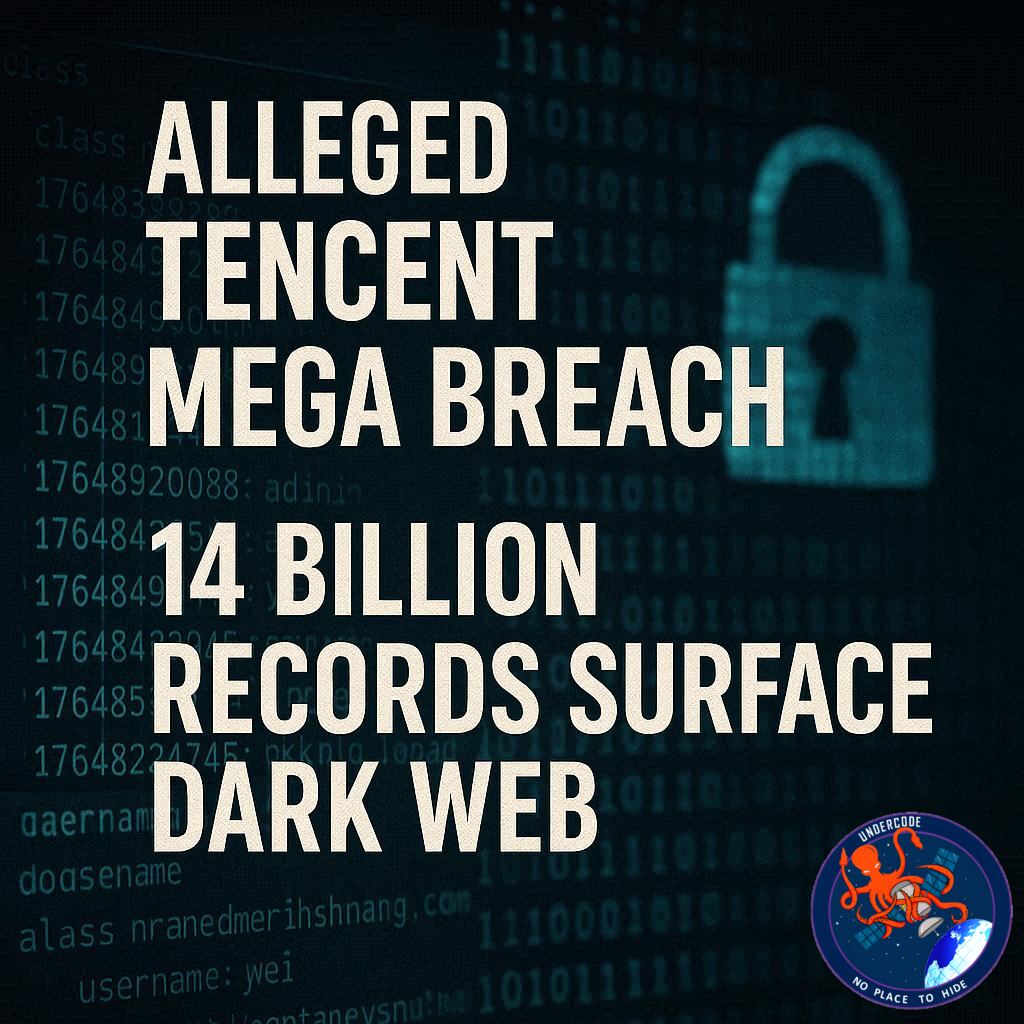
A Massive Claim Emerging from the Shadows
A new claim circulating within cybercrime forums has sparked concern across the cybersecurity community. According to a post shared by a known dark web intelligence account, a threat actor alleges possession of a massive dataset tied to Tencent, one of China’s largest technology companies. The dataset is said to contain approximately 1.4 billion records, compressed into a 44GB archive.
What the Alleged Dataset Contains
The individual behind the claim outlined several types of sensitive information included in the dataset. These reportedly consist of QQ email addresses, phone numbers, and QQ account identifiers. Additionally, the dataset allegedly includes internal log references, output data, and timestamped storage records, suggesting a potentially structured and system-level extraction rather than a simple user database leak.
Sample Data Raises Eyebrows
To support their claim, the actor shared sample entries supposedly extracted from Tencent-related logstash CSV outputs. While such samples often serve as proof in underground markets, they are not definitive evidence of authenticity. Still, the presence of structured logs and timestamps has raised suspicion that the data may originate from internal systems or logging pipelines.
Potential Risks if Proven Real
If the dataset is genuine, the implications could be severe. A leak of this magnitude would open the door to large-scale phishing campaigns, where attackers exploit personal contact information to deceive users. Credential stuffing attacks could also rise, leveraging reused passwords across platforms. SIM swapping, identity profiling, and targeted fraud within Tencent’s ecosystem are additional risks that could impact millions of users.
Skepticism Remains High
Despite the alarming scale, experts remain cautious. Claims involving billions of records are not uncommon on underground forums, and many turn out to be exaggerated or recycled from older breaches. Without independent verification, the authenticity, origin, and recency of this dataset remain uncertain. Cybersecurity analysts emphasize the importance of treating such claims carefully until concrete evidence emerges.
What Undercode Says:
The Psychology Behind Mega-Leak Claims
Large-scale breach claims like this often follow a predictable pattern. Cybercriminals inflate numbers to attract attention, increase perceived value, and create urgency among potential buyers. The figure of 1.4 billion records is not random—it is deliberately shocking, designed to dominate headlines and stir fear within both the public and corporate sectors.
Tencent as a High-Value Target
Tencent represents a goldmine of digital identity data. With its massive user base spanning messaging, gaming, payments, and cloud services, any breach tied to its ecosystem would carry disproportionate impact. Attackers are fully aware that even partial datasets linked to Tencent accounts could be monetized effectively through phishing or account takeovers.
Logstash Clues Suggest a Different Narrative
The mention of logstash outputs is particularly interesting. Logstash is typically used for collecting and processing logs, not for storing primary user databases. This raises the possibility that the alleged dataset may not be a direct breach of user accounts, but rather aggregated logging data that could include fragments of user activity. If true, the dataset might be less complete than claimed—but still dangerously useful when combined with other leaks.
The Recycling Economy of the Dark Web
One of the most overlooked aspects of cybercrime markets is data recycling. Old leaks are frequently repackaged, merged, and resold as “new” datasets. This tactic makes it difficult to determine whether a breach is truly recent or simply a compilation of previously exposed information. In many cases, attackers add minor updates or restructure datasets to create the illusion of freshness.
Why Verification Takes Time
Unlike public breaches confirmed by companies or regulators, dark web claims operate in a gray zone. Verification requires cross-referencing sample data, analyzing metadata, and sometimes even purchasing access to validate authenticity. This process can take days or weeks, during which speculation spreads faster than facts.
The Real Danger Lies in Aggregation
Even if parts of the dataset are old or incomplete, aggregation itself creates value. When multiple datasets are combined, attackers can build highly detailed profiles of individuals. This enables more convincing scams, targeted attacks, and identity reconstruction. In cybersecurity, the sum of the data is often more dangerous than its individual parts.
User Behavior Amplifies the Risk
The effectiveness of any leaked dataset ultimately depends on user habits. Password reuse, lack of multi-factor authentication, and poor security awareness significantly increase vulnerability. Even a partially accurate dataset can lead to successful attacks if users have weak defenses.
Corporate Silence and Strategic Response
Companies like Tencent often avoid immediate public responses to unverified claims. This is not necessarily denial—it is strategy. Premature confirmation can cause panic, while denial without investigation can damage credibility. Organizations must balance transparency with accuracy, especially in cases where evidence is still emerging.
The Broader Trend of Mega-Leaks
This incident fits into a growing trend of “mega-leak” claims, where attackers emphasize scale over specificity. The goal is not just to sell data, but to build reputation within cybercrime communities. A seller associated with a massive leak gains credibility, which can translate into future profits.
The Role of Public Awareness
While the authenticity remains uncertain, such incidents serve as reminders of the importance of digital hygiene. Users should treat every major leak claim as a potential warning, even if it turns out to be false. Preparedness is more effective than reaction in the cybersecurity landscape.
🔍 Fact Checker Results
✅ Claim Scale vs Reality
Massive record claims are common on cybercrime forums, but many are later proven exaggerated or partially recycled.
❌ Confirmed Tencent Breach
There is currently no verified confirmation from Tencent or independent researchers supporting this specific breach claim.
✅ Risk Assessment Accuracy
The listed risks—phishing, credential stuffing, and SIM swapping—are valid and consistent with known attack patterns.
📊 Prediction
The coming days will likely bring deeper analysis from cybersecurity researchers attempting to validate samples from the alleged dataset. If even a fraction of the data proves authentic, it could trigger heightened scrutiny of Tencent’s infrastructure and user security practices. However, if the dataset is exposed as recycled or exaggerated, it will reinforce a growing pattern of misinformation-driven hype within dark web markets. Either way, incidents like this will continue to shape how both companies and users approach data security in an increasingly volatile digital environment.
🕵️📝Let’s dive deep and fact‑check.
References:
Reported By: x.com
Extra Source Hub (Possible Sources for article):
https://www.twitter.com
Wikipedia
OpenAi & Undercode AI
Image Source:
Unsplash
Undercode AI DI v2
Bing
🔐JOIN OUR CYBER WORLD [ CVE News • HackMonitor • UndercodeNews ]
📢 Follow UndercodeNews & Stay Tuned:
𝕏 formerly Twitter 🐦 | @ Threads | 🔗 Linkedin | 🦋BlueSky | 🐘Mastodon


