
Listen to this Post
Introduction: A Giant Expands Its Reach
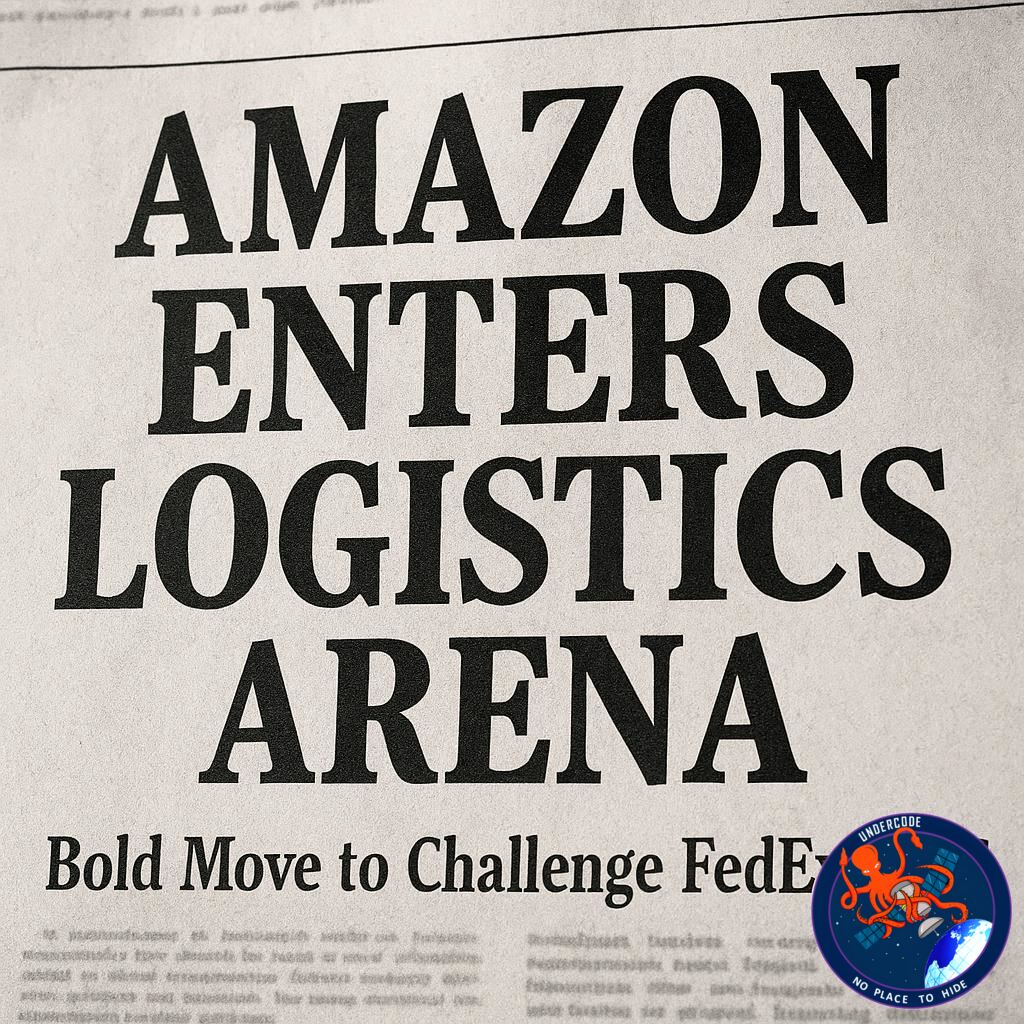
Amazon is no longer satisfied with dominating e-commerce and cloud computing. The company is now taking a decisive step into the global logistics and supply chain industry, signaling a major shift in how goods may move across the world in the coming years. By opening its vast distribution and fulfillment network to external businesses, Amazon is positioning itself as a direct competitor to long-established shipping giants. This move is not just an expansion, it is a strategic transformation that could reshape the entire logistics landscape.
Summary: Amazon’s Logistics Ambition Takes Center Stage
Amazon has announced that it will begin offering its distribution, parcel shipping, and fulfillment services to businesses outside of its own marketplace. Previously, these capabilities were primarily reserved for sellers operating within Amazon’s ecosystem. Now, the company is extending those services to a much broader audience, effectively turning its logistics infrastructure into a standalone offering.
This shift is significant because it places Amazon in direct competition with traditional delivery and logistics companies such as FedEx, UPS, and other freight operators. With a market valuation of $2.9 trillion, Amazon has the financial power and technological infrastructure to make a serious impact in this space.
The market reacted quickly to the announcement. Shares of major logistics companies dropped, reflecting investor concern about the long-term implications of Amazon’s entry. Meanwhile, Amazon’s own stock saw a modest increase of 1.4%, suggesting confidence in the company’s strategy.
Amazon’s logistics network is already highly developed. According to Pitney Bowes, the company ranked just behind UPS in total parcel volume in the United States in 2024. Projections indicate that Amazon could surpass UPS and become the number one parcel handler in the U.S. by 2028.
The company’s approach mirrors its earlier strategy with Amazon Web Services. Initially built to support internal operations, AWS was later opened to external clients and eventually became a dominant force in cloud computing. Amazon appears to be following a similar path with logistics.
Industry experts view this move as a warning signal rather than an immediate disruption. Parth Talsania, CEO of Equisights Research, noted that while the impact may not be immediate, it represents a structural challenge, especially in e-commerce-heavy delivery routes where Amazon already has advantages in speed, data, and network density.
Joe Gilbert, a portfolio manager at Integrity Asset Management, described the move as a “shot across the bow” for the entire transportation industry, highlighting its potential to alter competitive dynamics across the sector.
What Undercode Say: Amazon Is Rewriting the Rules of Logistics
A Strategic Playbook Reused
Amazon is not improvising here. It is executing a familiar strategy that has already proven successful. First, it builds internal infrastructure to solve its own operational challenges. Then, it scales that infrastructure and offers it externally as a service. This model turned AWS into a powerhouse, and now Amazon is applying the same logic to logistics.
Control Over the Entire Value Chain
By expanding into third-party logistics, Amazon is moving closer to controlling the entire supply chain, from manufacturing to final delivery. This level of vertical integration gives the company a massive advantage. It reduces dependency on external partners and allows Amazon to optimize costs, speed, and reliability at every stage.
Data as the Real Weapon
Traditional logistics companies move packages. Amazon moves data alongside packages. Every delivery generates insights about routes, timing, demand patterns, and customer behavior. This data-driven approach allows Amazon to continuously refine its operations in ways competitors may struggle to match.
The E-commerce Advantage
Amazon’s dominance in e-commerce gives it a unique edge. It already has dense delivery networks in high-demand areas, which lowers costs and improves efficiency. Competitors like FedEx and UPS operate across a broader range of industries, but they may lack the concentrated demand that Amazon can leverage.
Not Immediate Disruption, But Inevitable Pressure
Experts are right to say this is not an overnight disruption. Logistics is a complex industry with long-term contracts and established relationships. However, the pressure will build over time. As more businesses adopt Amazon’s services, competitors may face shrinking margins and increased competition in key markets.
Pricing Power and Scale
Amazon’s scale allows it to operate with thinner margins than traditional logistics firms. It can afford to undercut competitors on price while still maintaining profitability through volume and efficiency. This pricing pressure could force industry-wide changes.
A Platform, Not Just a Service
Amazon is not just offering shipping. It is building a logistics platform. Businesses that adopt Amazon’s services may become increasingly dependent on its ecosystem, much like companies relying on AWS today. This creates long-term customer lock-in.
Regulatory and Competitive Risks
This expansion will likely attract regulatory scrutiny. Governments may question whether Amazon’s dominance in one sector gives it an unfair advantage in another. Competitors may also push for stricter regulations to level the playing field.
The Future of Logistics Is Digital
Amazon’s move highlights a broader trend. Logistics is becoming more technology-driven. Automation, AI, and real-time data are reshaping how goods are transported. Companies that fail to adapt may fall behind quickly.
The Endgame: Industry Transformation
This is not just about competing with FedEx or UPS. It is about redefining what a logistics company looks like. Amazon is blending technology, data, and infrastructure into a unified system that could become the new standard for the industry.
Fact Checker Results
✅ Amazon is expanding logistics services beyond its marketplace
✅ Market reaction included declines in FedEx and UPS shares
❌ Immediate disruption is unlikely, impact will be gradual and structural
Prediction
Amazon will become the leading parcel handler in the U.S. before 2030 📦
Traditional logistics firms will accelerate digital transformation to compete ⚙️
Regulatory scrutiny on Amazon’s cross-industry dominance will intensify ⚖️
🕵️📝Let’s dive deep and fact‑check.
References:
Reported By: axioscom_1778006965
Extra Source Hub (Possible Sources for article):
https://www.reddit.com
Wikipedia
OpenAi & Undercode AI
Image Source:
Unsplash
Undercode AI DI v2
Bing
🔐JOIN OUR CYBER WORLD [ CVE News • HackMonitor • UndercodeNews ]
📢 Follow UndercodeNews & Stay Tuned:
𝕏 formerly Twitter 🐦 | @ Threads | 🔗 Linkedin | 🦋BlueSky | 🐘Mastodon


