
Listen to this Post
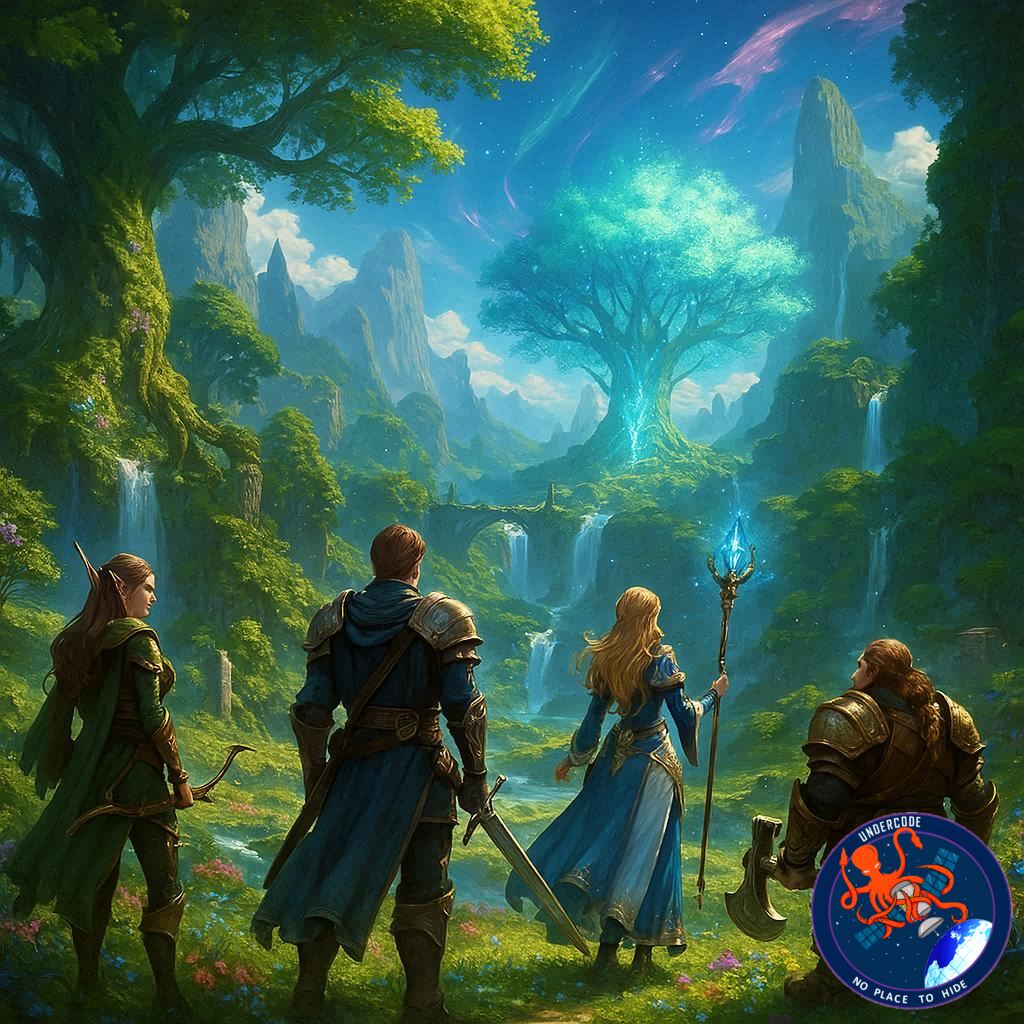
🎯 Introduction: The Ring That Never Shone
Once promised as a grand digital odyssey through Middle-earth, Amazon’s The Lord of the Rings MMO has quietly vanished into the shadows. What was once an ambitious project to bring Tolkien’s universe to life in an online world has now become another casualty of corporate restructuring. Behind the fantasy’s fall lies a story of layoffs, shifting priorities, and the rising influence of artificial intelligence on gaming strategies.
💔 The Dream That Fell Apart
Amazon’s gaming division has officially shelved its highly anticipated The Lord of the Rings Massively Multiplayer Online (MMO) game, signaling the end of a project once hailed as a cornerstone of its entertainment empire. The decision comes in the wake of sweeping layoffs, with over 14,000 jobs eliminated across Amazon. Beth Galetti, the Senior Vice President of People Experience and Technology, confirmed that the company was halting “substantial” portions of its MMO development efforts—directly affecting the Tolkien-inspired title co-developed with Embracer Group.
The news broke not through a press release but through heartbreak. A laid-off Amazon developer shared the story in a since-deleted LinkedIn post, writing, “This morning I was part of the layoffs at Amazon Games, alongside my incredibly talented peers on New World and our fledgling Lord of the Rings game (y’all would have loved it).” The emotional post praised the disbanded team, calling them “some of the most skilled, creative, and kind developers I’ve ever met.”
In the aftermath, Amazon confirmed that its in-house MMO New World: Aeternum would stop receiving new content, though servers would remain active until 2026. The company, represented by spokesperson Brittney Hefner, emphasized its continued support for existing MMOs such as Throne and Liberty and Lost Ark.
The Lord of the Rings MMO had a long and troubled history. Originally announced in 2019, the first version was canceled two years later due to development challenges and partnership conflicts. The 2023 reboot, announced with much fanfare, was seen as Amazon’s chance at redemption in the fantasy gaming arena. Yet history repeated itself.
According to Bloomberg, Amazon’s broader gaming strategy is undergoing major downsizing. The tech giant is scaling back on MMOs but maintaining select projects like March of Giants from Amazon Games Montreal, a Tomb Raider reboot with Crystal Dynamics, “casual and AI-focused” titles for its Luna cloud gaming service, and a new racing game from the UK-based Maverick Games studio. External publishing deals, including Lost Ark and Throne & Liberty, will continue for Western audiences.
The cancellation leaves fans wondering if Amazon can ever carve out a true identity in gaming. Despite billion-dollar budgets and global reach, the company’s gaming ambitions remain haunted by inconsistency, layoffs, and a lack of creative continuity.
🧩 What Undercode Say:
A Case of Scale Over Soul
The fall of The Lord of the Rings MMO reflects a pattern Amazon cannot seem to escape. For years, the company has tried to blend corporate efficiency with creative production, but the results rarely resonate with players. Great MMOs aren’t built on data dashboards; they’re built on passion, community, and trust—three things money alone can’t buy.
The Illusion of Infinite Resources
Amazon’s immense wealth gave it an illusion of creative security. Yet even with vast resources, the company underestimated the cultural and emotional demands of crafting a living world like Middle-earth. An MMO is not just code; it’s a social ecosystem. When layoffs disrupt creative teams, the heart of the game dies before the servers even go live.
The AI Distraction
One cannot ignore the timing. Amazon’s layoffs were justified in part by a “strategic shift toward AI.” This echoes a wider industry narrative where artificial intelligence becomes the convenient excuse for slashing human-driven projects. Ironically, MMOs thrive on human emotion and collaboration—the very qualities automation can’t replicate.
The Embracer Effect
The involvement of Embracer Group, itself undergoing restructuring, further complicated the game’s future. Embracer’s aggressive acquisitions and subsequent downsizing left little room for long-term stability. The Tolkien license, once a crown jewel, turned into a business liability.
A Missed Cultural Opportunity
A Lord of the Rings MMO could have united generations of fans across a shared mythology. Instead, it became another line in Amazon’s growing list of unrealized experiments, from Luna’s slow adoption to the struggles of New World. The decision to cancel suggests that Amazon still views gaming more as a product pipeline than a cultural platform.
Economic Logic vs. Emotional Legacy
From a financial standpoint, the layoffs make sense. From a cultural one, they’re tragic. Every studio closure, every canceled project chips away at the creative spirit that sustains gaming. Amazon’s decision was not merely a business call; it was a statement that even the richest corporations fear the cost of creative risk.
The Larger Industry Reflection
The failure of this MMO is not just Amazon’s problem—it’s a reflection of the modern gaming industry. Studios are trapped between corporate expectations and the unpredictable magic of creation. Games like Final Fantasy XIV and World of Warcraft succeed because they evolve with their communities, not despite them. Amazon’s top-down model doesn’t fit that organic rhythm.
The Future of Middle-earth in Gaming
The Tolkien universe will live on, but perhaps in the hands of smaller, more passionate studios. Amazon’s exit might open the door for developers who understand the mythos as more than a commercial property. Middle-earth deserves that level of respect.
A Lesson in Creative Humility
Amazon’s biggest takeaway should be simple: size does not guarantee success. Creativity demands continuity, trust, and a willingness to fail fast and learn faster. The next time Amazon ventures into a beloved world, it must bring more heart than hype.
🔍 Fact Checker Results
✅ Confirmed: Amazon officially canceled The Lord of the Rings MMO amid mass layoffs.
✅ Verified: Over 14,000 Amazon employees were affected, as reported by The Verge and Bloomberg.
❌ False Claim: The project’s shutdown was due to licensing expiration—it was mainly caused by corporate downsizing and strategic shifts.
📊 Prediction
🎮 Amazon’s gaming division will likely pivot toward smaller, AI-integrated projects in the next two years.
💡 Expect a resurgence of Lord of the Rings adaptations from independent developers seeking to fill the creative void.
🔥 If Amazon ever returns to Middle-earth, it will be through film or streaming, not an MMO.
🕵️📝✔️Let’s dive deep and fact‑check.
References:
Reported By: timesofindia.indiatimes.com
Extra Source Hub (Possible Sources for article):
https://www.github.com
Wikipedia
OpenAi & Undercode AI
Image Source:
Unsplash
Undercode AI DI v2
Bing
🔐JOIN OUR CYBER WORLD [ CVE News • HackMonitor • UndercodeNews ]
📢 Follow UndercodeNews & Stay Tuned:
𝕏 formerly Twitter 🐦 | @ Threads | 🔗 Linkedin | 🦋BlueSky | 🐘Mastodon


