
Listen to this Post
Introduction
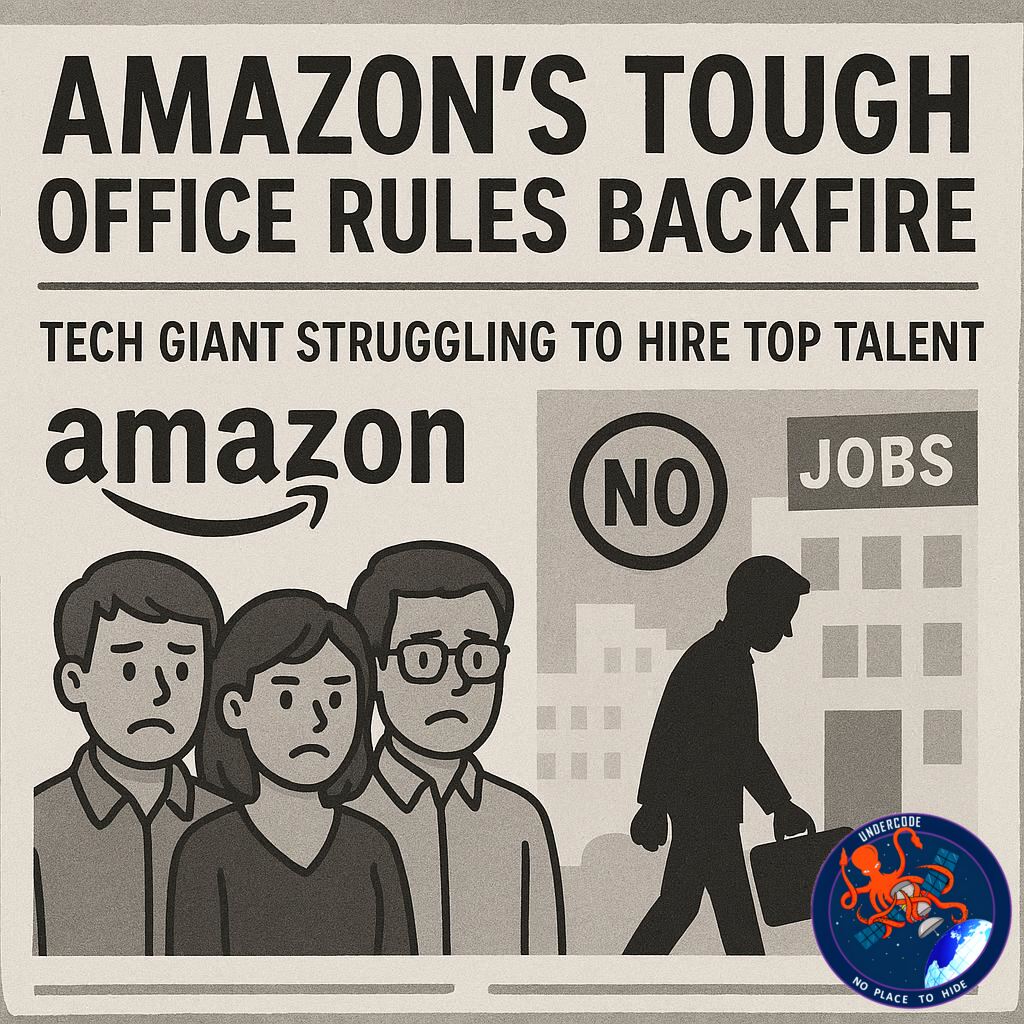
Amazon, one of the most powerful companies in the world, is finding itself in an unexpected crisis—not in sales or logistics, but in hiring. Once seen as an unbeatable magnet for engineers, developers, and innovators, Amazon is now struggling to attract and retain the kind of talent it desperately needs to stay ahead in the generative AI race. The culprit, according to insiders and leaked documents, is not paychecks or lack of ambition, but a strict return-to-office (RTO) mandate that forces employees back into a rigid five-day office schedule and demands proximity to “hub” offices.
In today’s competitive tech job market, where flexibility is often as valuable as salary, Amazon’s uncompromising stance is beginning to hurt its recruitment strategy. Rival companies with more relaxed policies are not only scooping up rejected candidates but also luring away Amazon employees—an alarming trend for a company aiming to dominate AI innovation.
Amazon’s Strict Office Policies: A Barrier to Hiring
Reports show that Amazon’s five-day office rule and hub-location requirement have become a major obstacle in hiring high-demand talent, especially in generative AI. Recruiters within the company say the policy is a hot topic of debate, and it is pushing skilled candidates to choose other employers—even at lower pay—just to preserve remote work flexibility.
According to Business Insider, Amazon’s internal data suggests the rigid RTO policy is shrinking the talent pool. Candidates are openly rejecting offers, citing in-office mandates as the dealbreaker. Recruiters have confirmed that many of these professionals would rather sacrifice Amazon-level compensation than lose autonomy over their work location.
The Competitive Landscape
Amazon’s troubles are intensified by its pay structure and slower progress in AI compared to rivals like Meta, OpenAI, and Anthropic. Oracle has already taken advantage, reportedly hiring over 600 Amazon employees in just two years. SignalFire, an investment firm that tracks engineer retention, ranks Amazon behind its AI-heavy competitors—further proof that tech workers don’t view the company as their top choice anymore.
This raises an uncomfortable reality: Amazon’s rigid policies, meant to enforce discipline and collaboration, may actually be eroding the very foundation of its workforce strategy.
Amazon’s Response to the Criticism
In an emailed statement, Amazon denied the claims, insisting it still attracts “some of the best people in the world.” The company defended its office-first approach, arguing that teams achieve better results when collaborating in person. Amazon emphasized its commitment to exploring new recruiting strategies and alternative talent hubs while holding firm on the belief that in-office culture drives invention and productivity.
Yet, the gap between corporate optimism and recruiter frustration suggests deeper cracks in Amazon’s hiring playbook.
What Undercode Say:
Amazon’s dilemma highlights a classic case of corporate rigidity clashing with workforce evolution. Tech talent has shifted priorities—flexibility, autonomy, and work-life balance now carry as much weight as compensation packages. For many engineers, especially those in AI, a company’s stance on remote work signals whether it is forward-thinking or stuck in the past.
The RTO policy may have unintended consequences beyond recruitment. By alienating talent pools, Amazon risks slowing down innovation at a time when AI breakthroughs are happening at lightning speed. Meta and OpenAI have positioned themselves as frontrunners in generative AI, while Anthropic—though smaller—is securing elite talent pools with hybrid-friendly environments. Amazon, on the other hand, risks falling behind.
Another concern lies in corporate reputation. When over 600 employees leave for Oracle within two years, it creates a snowball effect. Departures signal instability, which discourages new hires and emboldens competitors. Even Wall Street is paying attention, and investors may start questioning whether Amazon can sustain growth in AI without top-tier engineers.
On the flip side, Amazon’s insistence on in-office collaboration is not without logic. Large organizations often face inefficiencies when operating fully remotely. Creativity, mentoring, and problem-solving can benefit from in-person exchanges. But the key issue is balance. Enforcing strict policies instead of offering choice sends a message that the company values control over adaptability—a dangerous stance in a talent-driven industry.
If Amazon continues down this path, it risks creating a brain drain. Top engineers will flock to more flexible companies, leaving Amazon with mid-tier talent unable to match rivals in innovation. In the generative AI race, this could be catastrophic. The irony is that Amazon’s policies, meant to boost productivity, may instead cripple its long-term competitiveness.
The company still has a chance to adapt. Introducing hybrid models, offering relocation incentives without mandates, and recognizing flexibility as a non-negotiable for today’s workforce could help Amazon regain ground. But time is running out. AI is advancing rapidly, and talent wars don’t wait for policy shifts.
🔍 Fact Checker Results
✅ Amazon has enforced a strict 5-day office return and hub-office policy.
✅ Over 600 employees have left Amazon for Oracle in the past two years.
❌ Amazon denies its policies are harming recruitment, but multiple recruiter testimonies and internal documents contradict this.
📊 Prediction
If Amazon maintains its rigid RTO stance, it will continue losing AI talent to competitors, widening the innovation gap. However, should it pivot toward a hybrid or flexible model within the next 18 months, it could reverse the brain drain and position itself back in the AI race. Investors and industry watchers will be quick to reward any such shift.
🕵️📝✔️Let’s dive deep and fact‑check.
References:
Reported By: timesofindia.indiatimes.com
Extra Source Hub:
https://www.github.com
Wikipedia
OpenAi & Undercode AI
Image Source:
Unsplash
Undercode AI DI v2
🔐JOIN OUR CYBER WORLD [ CVE News • HackMonitor • UndercodeNews ]
📢 Follow UndercodeNews & Stay Tuned:
𝕏 formerly Twitter 🐦 | @ Threads | 🔗 Linkedin | 🦋BlueSky | 🐘Mastodon


