
Listen to this Post
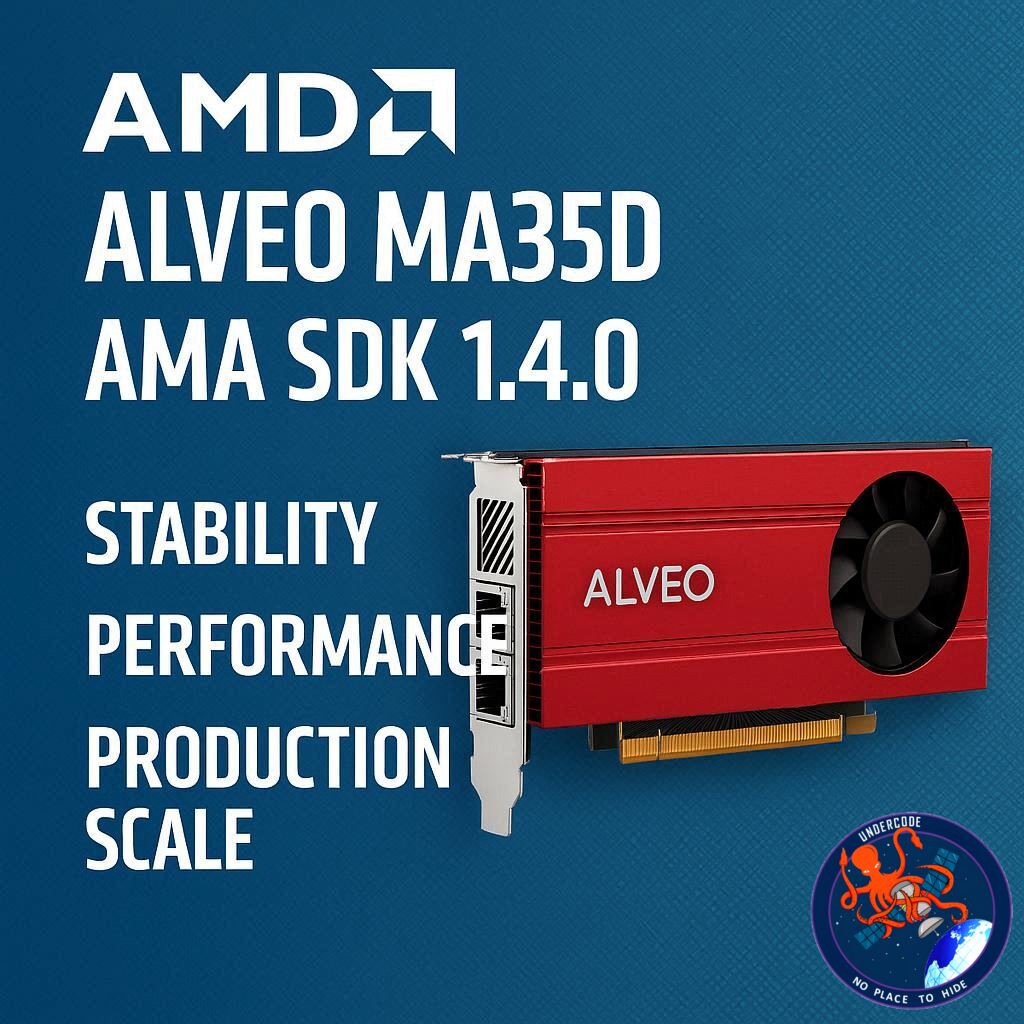
Introduction: A Production-Focused Release for Media Acceleration
AMD has released AMA SDK 1.4.0 for the Alveo™ MA35D Media Accelerator with a clear message: this update is about reliability, scalability, and real-world performance. Rather than chasing experimental features, AMD has focused on refining what already matters most to production media pipelines—low latency, high-density streaming, and predictable behavior under heavy workloads. The result is a leaner, more stable SDK designed for enterprises running video at scale.
Overview of AMA SDK 1.4.0
The AMA SDK 1.4.0 release centers on platform maturity. AMD positions this update as a readiness milestone for customers deploying the MA35D in large-scale, always-on environments such as live streaming, broadcast contribution, and cloud video services. Stability improvements, OS expansion, and framework consolidation define the character of this release.
FFmpeg 7.1 Integration
A major highlight is the integration of FFmpeg 7.1, which becomes the sole supported FFmpeg version in this SDK. This upgrade improves performance, enhances stability, and aligns the MA35D with modern media pipelines. Low-latency encoding and decoding benefit directly, particularly in streaming workflows where every millisecond matters.
Modern Operating System Support
SDK 1.4.0 expands operating system compatibility to include Ubuntu 24.04, Debian 12, Alma Linux 9.6, and Rocky Linux 9.6. This broader support makes the MA35D easier to deploy across bare-metal servers, virtual machines, and containerized environments, reflecting how media infrastructure is built today.
XMA API Improvements
The Xilinx Media Accelerator (XMA) API has been refined for improved performance and stability. These updates are not just incremental fixes; they set the foundation for a more consistent and developer-friendly acceleration layer, reducing friction when building or maintaining hardware-accelerated media applications.
Removal of Low-Adoption Components
AMD has removed several features that saw limited real-world usage. The 2D GPU Compositor Engine and the ML NPU Engine were deprecated due to low customer adoption. Additionally, official support for the GStreamer framework has been dropped, with FFmpeg remaining the primary and supported media framework.
A Leaner and More Reliable SDK
By removing underused components, AMD reduces complexity across the software stack. Fewer moving parts mean fewer failure points, faster validation cycles, and greater confidence when deploying at scale. This reflects a clear production-first mindset.
Ultra-Low Latency as a Core Strength
Ultra-low latency encoding remains a defining feature of the MA35D. With this release, AMD continues to optimize performance, achieving encoding latencies as low as 8ms for 4K workloads. This capability is critical for live streaming, interactive video, and broadcast-grade use cases.
High-Density Streaming Support
AMA SDK 1.4.0 maintains strong support for high-density streaming using AV1, H.264, and HEVC codecs. These codecs cover both next-generation efficiency and legacy compatibility, allowing operators to balance bandwidth savings with device reach.
Full Video Pipeline Acceleration
The MA35D continues to offer full pipeline acceleration, from decode through encode. This holistic approach improves cost efficiency and scalability, making the platform attractive for cloud providers and enterprises managing large video fleets.
Summary of the Original Announcement
The AMA SDK 1.4.0 release focuses on stability, performance, and production readiness for the AMD Alveo™ MA35D Media Accelerator. It introduces FFmpeg 7.1 support, expands operating system compatibility, improves the XMA API, and removes low-adoption features to streamline the platform. Ultra-low latency encoding, high-density streaming, and full pipeline acceleration remain central strengths. AMD positions this release as a confidence-building update for customers scaling demanding media workloads in real-world environments.
What Undercode Say: Strategic Implications of AMA SDK 1.4.0
This release signals a shift from feature expansion to operational discipline. AMD is clearly prioritizing production stability over experimental breadth, which is a critical move in the competitive media accelerator market. By standardizing on a single FFmpeg version, AMD reduces fragmentation and support complexity, even if it limits flexibility for developers who prefer older stacks.
The removal of GStreamer support is especially telling. While GStreamer remains popular in certain communities, FFmpeg dominates large-scale production pipelines. AMD’s decision aligns the MA35D with how hyperscalers and broadcasters actually build systems today. This focus strengthens AMD’s credibility with enterprise customers who value predictability over optionality.
Expanded OS support reflects another practical choice. Ubuntu 24.04 and RHEL-compatible distributions like Alma and Rocky Linux are becoming standard in modern infrastructure. Supporting them early lowers adoption friction and shortens deployment cycles, which directly impacts time-to-revenue for customers.
Performance-wise, maintaining 8ms latency at 4K resolution keeps the MA35D competitive in live and interactive scenarios. Combined with AV1 support, this positions AMD well against both GPU-based encoders and ASIC competitors, especially where power efficiency and density matter.
Overall, AMA SDK 1.4.0 reads less like a flashy update and more like a platform consolidation release. That is usually a sign of maturity. For customers already invested in the MA35D, this update reduces risk. For new adopters, it signals that the platform is ready for long-term production use rather than short-term experimentation.
Fact Checker Results
FFmpeg 7.1 is now the only supported version ✅
Support added for Ubuntu 24.04 and RHEL-compatible 9.6 distributions ✅
GStreamer framework support has been officially dropped ✅
Prediction
AMD will continue consolidating its media SDKs around FFmpeg to simplify enterprise adoption 📈
Future MA35D updates will focus more on codec efficiency and density than new feature categories 🎯
Competing accelerators will be pressured to match AMD’s low-latency 4K performance ⚡
🕵️📝✔️Let’s dive deep and fact‑check.
References:
Reported By: www.amd.com
Extra Source Hub (Possible Sources for article):
https://www.facebook.com
Wikipedia
OpenAi & Undercode AI
Image Source:
Unsplash
Undercode AI DI v2
Bing
🔐JOIN OUR CYBER WORLD [ CVE News • HackMonitor • UndercodeNews ]
📢 Follow UndercodeNews & Stay Tuned:
𝕏 formerly Twitter 🐦 | @ Threads | 🔗 Linkedin | 🦋BlueSky | 🐘Mastodon


