
Listen to this Post
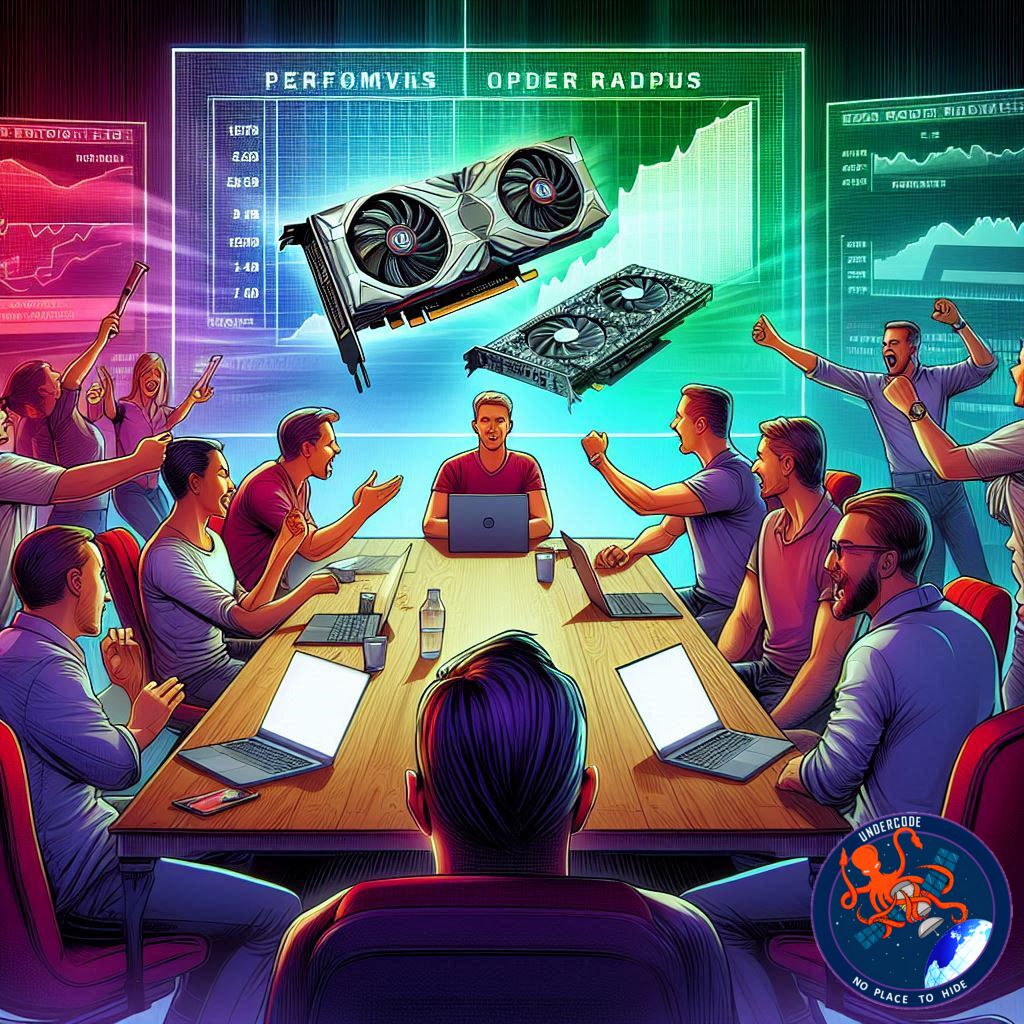
A New Era of AI Upscaling Arrives
AMD is preparing to launch a major leap in gaming technology on December 10 with the release of FSR Redstone, a suite of AI-powered enhancements designed to boost frame rates, elevate lighting accuracy, and sharpen visual fidelity. Yet the excitement surrounding this release has been overshadowed by a single, deeply polarizing decision. Redstone will run exclusively on the new RX 9000 series, leaving millions of RX 7000 and earlier Radeon owners locked out of the upgrade. The result is a wave of frustration that raises bigger questions about hardware support, AI workloads, and the evolving competitive landscape between AMD and Nvidia.
The Full Story Behind AMD’s Redstone Rollout
Redstone’s Arrival
AMD confirmed that FSR Redstone, its next-generation upscaling ecosystem, will officially debut on December 10. The announcement arrived through a dramatic teaser posted by Jack Huynh, AMD’s VP of Computing and Graphics, who closed the clip with the detail gamers feared: Redstone is for RX 9000 GPUs only.
The Rising Frustration
The confirmation landed hard across the community. Many suspected that older cards might be excluded, yet seeing RDNA 3 hardware officially unsupported triggered widespread backlash. The RX 7000 series is barely a generation old, and models like the RX 7900 XTX still compete neck-and-neck with AMD’s newest flagship in pure rasterization performance. Owners who invested heavily now feel abandoned just one year later.
What Redstone Really Is
Redstone is a bundled suite of AMD’s newest AI-assisted rendering technologies, built on the foundation laid by FSR 4. It includes three major components.
Ray Regeneration, AMD’s answer to Nvidia’s Ray Reconstruction, refines ray-traced effects for sharper, cleaner lighting.
FSR Radiance Caching improves global illumination, functioning similarly to Nvidia’s RTX Neural Radiance Cache.
And the centerpiece, FSR Frame Generation, creates extra frames using multi-frame AI prediction. AMD designed it to compete directly with Nvidia’s Multi Frame Generation, promising major boosts to performance.
Early Implementation Concerns
Curiously, one Redstone feature has already sneaked into the wild. Call of Duty: Black Ops 7 shipped with Ray Regeneration last week, but feedback so far is lukewarm. Early comparisons suggest Nvidia’s equivalent implementation still looks more refined. AMD has yet to address this unofficial debut, leaving the community wondering why a single Redstone component appeared before the full release.
Why Gamers Are Upset
The real issue isn’t that Redstone exists. It’s that only RX 9000 owners will get it on day one. RDNA 3 hardware is still powerful, modern, and expensive. The RX 7900 XTX, for instance, retailed for premium flagship pricing yet now finds itself excluded from AMD’s biggest software upgrade of the year. Gamers argue that AMD’s move feels more like a forced push toward new hardware rather than a technical necessity.
Could Support Expand?
There is still room for hope. AMD has not ruled out bringing Redstone to older GPUs. The most likely explanation behind the restriction is performance. AI-driven features demand specialized hardware, and AMD may fear poor early results on RDNA 3. If the company is cautious, it could be waiting for optimizations before committing to broader compatibility. Still, without guarantees, frustration continues to grow.
A Bigger Battle
Redstone is also AMD’s attempt to reclaim ground from Nvidia’s DLSS, a technology that has dominated AI-assisted rendering for years. Nvidia offers broader compatibility, and its neural systems have matured faster. AMD knows this, and Redstone represents a critical step. The question now is whether locking it to RX 9000 helps or hurts their long-term strategy.
What Undercode Say:
The Impact of Hardware Segmentation
AMD’s decision to make Redstone exclusive to RX 9000 GPUs is a bold but risky segmentation strategy. On one hand, it allows AMD to push the narrative of RDNA 4 as a true next-generation architecture built specifically for AI workloads. On the other hand, it risks alienating loyal customers who elevated RDNA 3 to a strong competitive position during Nvidia’s pricing missteps.
The Economics Behind the Decision
Looking at it analytically, AMD may be leveraging Redstone not just as a technological jump but as a commercial catalyst. AI-enhanced rendering is the headline feature that sells new GPUs. If AMD allowed RX 7000 to access the same tools, the incentive to upgrade might dramatically weaken, especially considering how close the RX 7900 XTX already performs to the RX 9070 XT in traditional rasterization.
Technical Constraints and Hidden Costs
There is also a deeper technical angle to consider. AI frame generation and ray reconstruction rely heavily on matrix compute performance and architectural optimizations that RDNA 4 handles far more efficiently than RDNA 3. Running Redstone on older cards might work, but poorly. AMD knows that weak performance would cause backlash just as severe as withholding the feature entirely.
Long-Term Customer Trust
The bigger concern is perception. Gamers remember how Nvidia’s DLSS eventually expanded support, even for non-cutting-edge GPUs. AMD risks creating an image of short support windows, which is dangerous in a market where users often keep hardware for four to six years. Trust is a currency as real as dollars in the GPU industry. Losing it can weaken a brand for an entire generation.
Competitor Pressure
Nvidia will undoubtedly capitalize on this moment. With DLSS already widely deployed and consistently praised, the company now has an opportunity to present itself as the more consumer-friendly option. AMD cannot afford to lose momentum, especially at a time when Intel’s Arc line is becoming a legitimate budget competitor.
What Happens Next
The most rational path for AMD is a staggered rollout. Launch Redstone as an RX 9000 exclusive for performance and marketing impact, then extend partial or full support to RX 7000 once optimization stabilizes. This would satisfy enthusiasts while still preserving the narrative of RDNA 4 superiority.
Why the Community Reaction Matters
Gamers today are vocal, data-driven, and highly influential. Negative sentiment around feature locks can snowball into widespread criticism. AMD must communicate more transparently if it wants to regain control of the narrative. Silence only fuels speculation, and speculation quickly becomes frustration.
The Future of AI in Gaming
Redstone is more than just an AMD project. It signals a turning point for the entire industry. AI is now integral to rendering, lighting, and frame production. Both Nvidia and AMD see this clearly. For players, the shift means that future GPUs will increasingly be judged not just by raw power but by the intelligence embedded within them.
Fact Checker Results
✅ AMD officially confirmed FSR Redstone will release on December 10.
❌ There is no confirmed support timeline for RX 7000 GPUs, only speculation.
✅ Early Ray Regeneration deployment in Black Ops 7 has received mixed reviews.
Prediction
FSR Redstone will almost certainly expand beyond the RX 9000 lineup. AMD cannot afford a fractured user base while Nvidia strengthens its AI ecosystem. Expect partial support for RX 7000 sometime in 2026, improved performance as the technology matures, and a far more competitive upscaling landscape driven by AI acceleration across all major GPU brands.
🕵️📝✔️Let’s dive deep and fact‑check.
References:
Reported By: www.techradar.com
Extra Source Hub (Possible Sources for article):
https://www.linkedin.com
Wikipedia
OpenAi & Undercode AI
Image Source:
Unsplash
Undercode AI DI v2
Bing
🔐JOIN OUR CYBER WORLD [ CVE News • HackMonitor • UndercodeNews ]
📢 Follow UndercodeNews & Stay Tuned:
𝕏 formerly Twitter 🐦 | @ Threads | 🔗 Linkedin | 🦋BlueSky | 🐘Mastodon


