
Listen to this Post
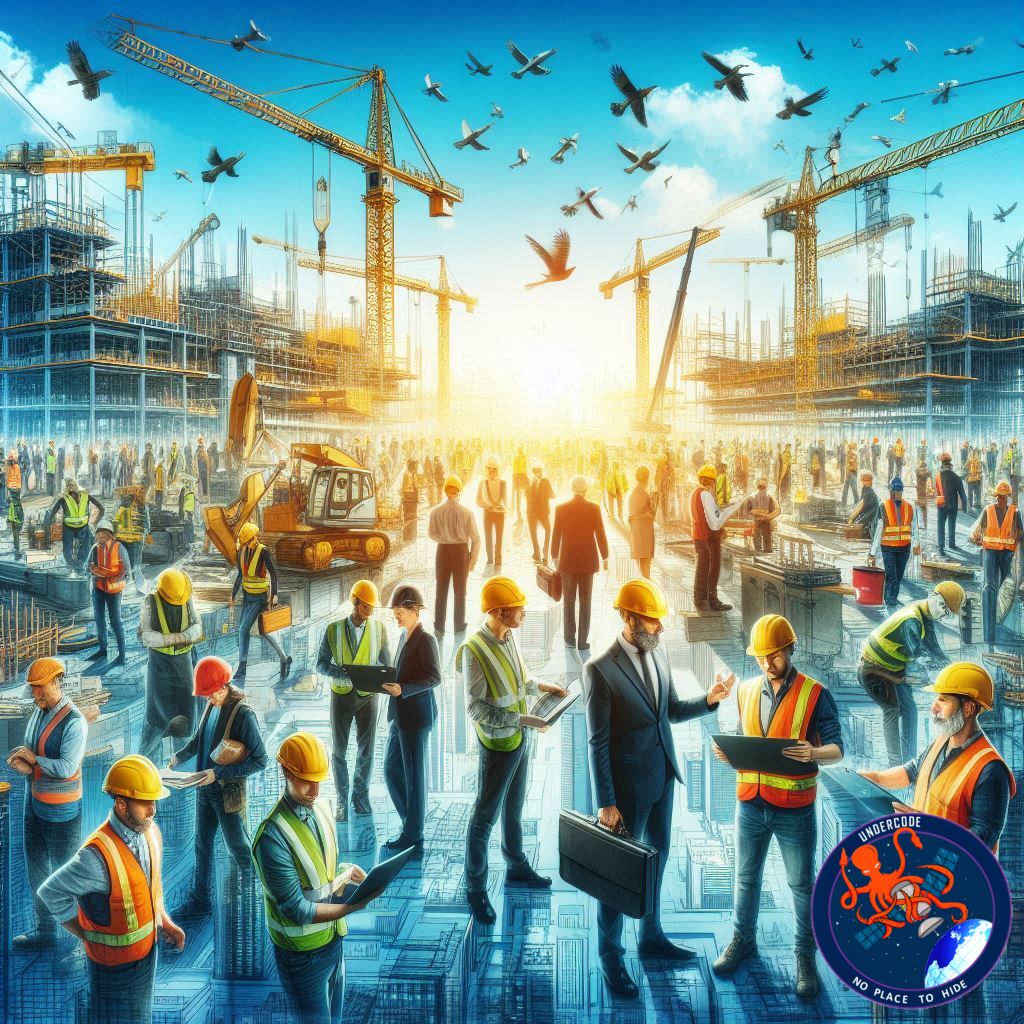
Introduction: A Boom Without Builders
The global economy is quietly approaching a turning point defined not by software updates or financial instruments, but by concrete, steel, power lines, and data centers. A massive construction surge is forming, driven by artificial intelligence infrastructure, manufacturing reshoring, and long-overdue upgrades to aging systems. Yet beneath this momentum lies a dangerous imbalance. According to a new BlackRock paper, the United States may not have enough skilled workers to build what the future demands. This looming labor gap could reshape wages, deepen inequality, and redefine which jobs truly matter in the next economic era.
A Generation-Defining Construction Wave
The world is entering what BlackRock describes as the largest construction period in human history. Over the next 15 years, global infrastructure needs could reach an astonishing $85 trillion. This includes power grids, factories, transport networks, water systems, and the physical backbone required to support AI-driven economies.
Why This Moment Matters
This construction surge is not just about buildings. It marks a new fault line in the global economy. Demand for certain workers is exploding, while other roles—especially traditional white-collar positions—are beginning to shrink. The result could be widening income gaps and a reordering of labor priorities across industries.
AI and Manufacturing Fuel the Fire
Two forces are accelerating the infrastructure rush. First is the AI buildout, which requires data centers, advanced energy systems, cooling technologies, and high-capacity networks. Second is the push to bring manufacturing back onshore, driven by geopolitical risk, supply chain fragility, and national security concerns.
BlackRock’s Warning Signal
Sandra Lawson, BlackRock’s managing director of corporate affairs, frames the issue bluntly. While capital and demand are abundant, labor may become the primary constraint. Without rapid training and workforce expansion, projects could stall regardless of funding availability.
White-Collar Workfaces a Shock
AI is already beginning to reshape white-collar employment. While the full scale of disruption remains uncertain, early signals show employers reassessing hiring plans as automation and AI tools absorb tasks once handled by humans. This shift is subtle but structural.
Blue-Collar Jobs Move Center Stage
In contrast, blue-collar and skilled trade roles are becoming more valuable. Electricians, HVAC technicians, plumbers, and construction supervisors are essential to building and maintaining the physical systems that AI depends on. These roles cannot be automated away.
Skilled Trades Become Strategic Assets
Infrastructure jobs require deep technical knowledge and hands-on expertise. These workers design, construct, operate, and maintain complex physical assets. In the AI era, their work becomes foundational rather than peripheral.
Growth Numbers Tell Only Half the Story
BlackRock estimates that infrastructure-related jobs will grow about 5% over the next decade, outpacing the national average of 3%. However, these figures are based on labor data compiled two years ago, before the AI infrastructure boom fully accelerated.
Why the Data Likely Undershoots Reality
Since 2024, demand for AI-related infrastructure has surged far beyond expectations. New data centers, energy projects, and semiconductor facilities are being announced at record speed. As a result, actual job growth is likely to exceed current projections.
The Aging Workforce Problem
Even as demand rises, supply is weakening. A significant portion of the construction workforce is nearing retirement. Nearly one-fifth of construction workers are over 55, and the median age sits at 42, signaling a demographic cliff approaching fast.
A Leadership Vacuum in the Trades
The problem is even more acute at the supervisory level. Roughly 70% of supervisors in the electrical industry are baby boomers. As they retire, the industry risks losing not just workers, but mentors capable of training the next generation.
Training Gaps Multiply the Risk
AI-related infrastructure is more complex than traditional projects. It requires precision, advanced safety standards, and hybrid knowledge spanning digital and physical systems. Losing experienced instructors at this moment amplifies the timing challenge.
Labor Shortages Are Already Here
In several regions, shortages are no longer theoretical. Construction trade groups report project delays caused by insufficient labor. Immigration crackdowns have intensified these shortages, reducing access to a workforce that has historically supported large-scale construction.
Immigration Policy Enters the Spotlight
Recent enforcement actions highlight the tension. Reports indicate U.S. Immigration and Customs Enforcement targeted construction workers traveling to a Meta data center site in Louisiana. Such actions may worsen labor gaps at precisely the wrong time.
Wages Could Become the Pressure Valve
One potential counterbalance is wage growth. BlackRock notes that rising demand combined with mass retirements is likely to push wages higher. This could attract younger workers who previously overlooked skilled trades.
The Youth Recruitment Challenge
Despite higher pay prospects, younger generations often lack exposure to trade careers. Cultural emphasis on college pathways and white-collar roles has left vocational pipelines underdeveloped, even as demand shifts dramatically.
Governments Lag Behind the Curve
BlackRock emphasizes the need for coordinated training efforts, but lawmakers have been largely silent. Workforce development policies have not kept pace with the scale or urgency of the infrastructure transition.
Big Tech’s Limited Response
Technology companies are beginning to act, but cautiously. Many training initiatives focus on mitigating local disruption caused by energy-hungry data centers rather than building a national labor pipeline.
Microsoft’s Early Move
Microsoft recently announced a partnership with North America’s Building Trades Unions to train electricians in AI-related skills. While promising, such efforts remain isolated relative to the size of the challenge.
What Undercode Say:
A Structural Shift, Not a Temporary Shortage
This is not a cyclical labor mismatch. It is a structural realignment of economic value. For decades, policy and culture prioritized digital fluency over physical expertise. AI has reversed that logic by making physical infrastructure indispensable.
AI’s Hidden Dependency
Every AI breakthrough depends on power, cooling, land, materials, and maintenance. Without electricians, welders, and technicians, AI ambition collapses into theory. The industry has underestimated this dependency for years.
The False White-Collar Safety Net
The belief that white-collar work is inherently safer than blue-collar labor is eroding. AI threatens administrative and analytical roles faster than it threatens hands-on trades. This inversion will shock labor markets.
Capital Is Not the Constraint
Funding is abundant. Governments, private equity, and institutional investors are ready to deploy trillions. The real bottleneck is human capability, not financial capital.
Training Timelines Don’t Match Investment Speed
Infrastructure can be funded in months. Skilled workers take years to train. This mismatch creates a dangerous lag that could delay projects and inflate costs.
Retirement Is the Silent Multiplier
The aging workforce problem compounds every other issue. Losing senior workers removes both labor capacity and institutional knowledge, slowing training just as demand peaks.
Immigration Policy as Economic Policy
Restrictive immigration enforcement now functions as infrastructure policy by default. Limiting labor inflows directly constrains national build capacity, regardless of economic intent.
Wages Will Rise—but With Consequences
Higher wages may attract workers, but they also raise project costs, strain public budgets, and increase consumer prices. The transition will not be painless.
A Missed Opportunity for Workforce Branding
Skilled trades remain poorly marketed. They offer stability, rising pay, and long-term relevance, yet lack the prestige narrative attached to tech roles.
AI Will Redefine “Essential Work”
The next decade will clarify which jobs are indispensable. Those who build and maintain physical systems will sit at the core of economic resilience.
Education Systems Are Out of Sync
High schools and colleges continue producing graduates for shrinking job categories while neglecting trades that guarantee employment. This misalignment is becoming costly.
Corporate Responsibility Goes Beyond PR
Training partnerships cannot remain symbolic. Corporations benefiting from AI infrastructure must invest deeply in workforce pipelines or face long-term operational risks.
Delays Are the Hidden Inflation Engine
Labor shortages translate into delayed projects, cost overruns, and energy bottlenecks. These delays quietly feed inflation across sectors.
National Security Implications Are Real
Infrastructure underpins defense, energy independence, and technological sovereignty. Labor shortages weaken all three simultaneously.
The Window Is Closing
The next five years will determine whether the U.S. can scale its workforce fast enough. Miss that window, and infrastructure leadership may shift elsewhere.
Fact Checker Results
Data Accuracy Review
BlackRock’s projections align with existing labor statistics and industry reports.
Risk Assessment
Estimates may understate growth due to rapid AI acceleration.
Credibility Score
High confidence in structural trends, moderate uncertainty in timelines. ✅
Prediction
Workforce Rebalancing Ahead
Skilled trades will see sustained wage growth and increased social relevance. 🔧
Policy Pressure Will Mount
Labor shortages will force immigration and training reforms. 📊
AI’s Physical Reality Check
The AI boom will slow unless workforce gaps are addressed. ⚠️
🕵️📝✔️Let’s dive deep and fact‑check.
References:
Reported By: axioscom_1768563767
Extra Source Hub (Possible Sources for article):
https://www.linkedin.com
Wikipedia
OpenAi & Undercode AI
Image Source:
Unsplash
Undercode AI DI v2
Bing
🔐JOIN OUR CYBER WORLD [ CVE News • HackMonitor • UndercodeNews ]
📢 Follow UndercodeNews & Stay Tuned:
𝕏 formerly Twitter 🐦 | @ Threads | 🔗 Linkedin | 🦋BlueSky | 🐘Mastodon


