
Listen to this Post
Introduction: A Nation at a Crossroads
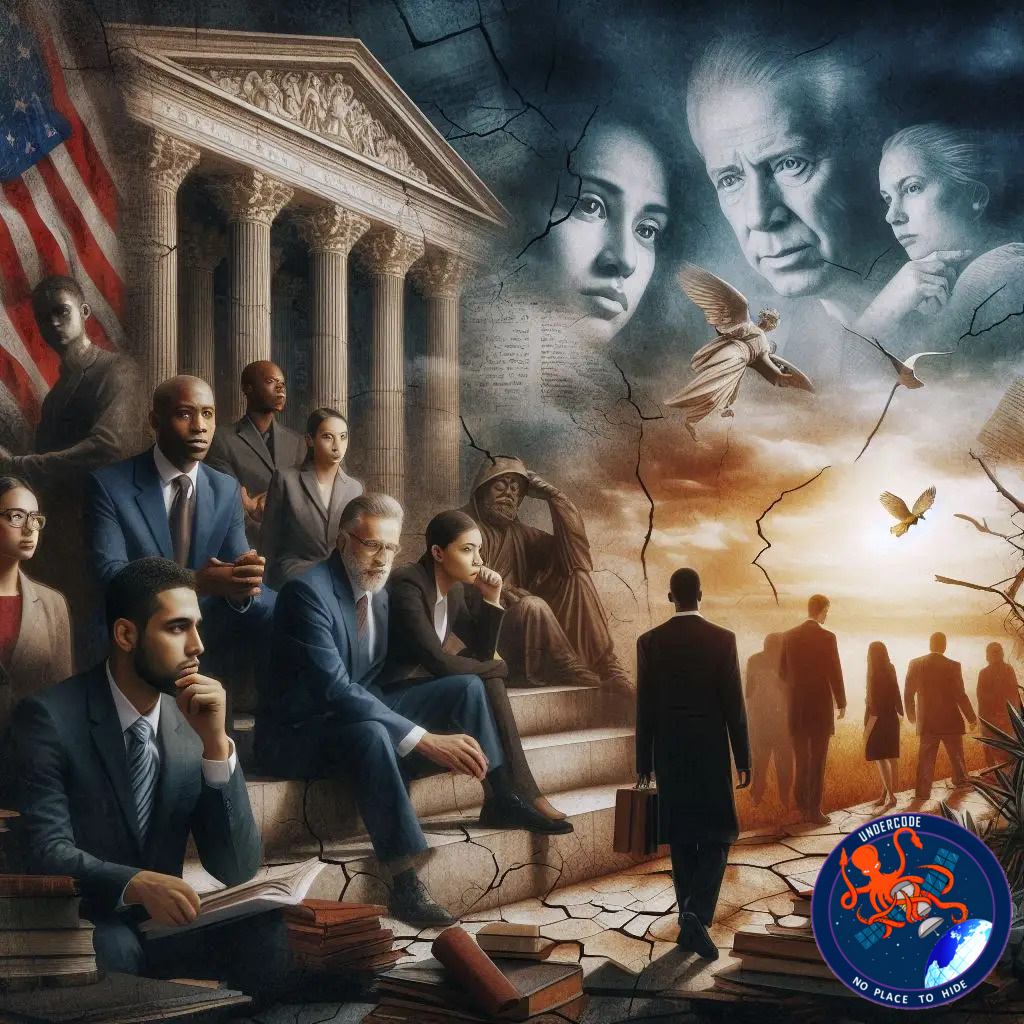
The past year has carried an unsettling echo of earlier eras in American history, a slow and quiet dismantling of the systems created to measure, protect and advance racial equity. While public attention has often been fixed on political spectacle, a sweeping rollback of civil rights infrastructure has taken place behind the scenes. Key datasets have disappeared, cultural institutions have been targeted, and billions in grants once directed toward health, education and historically marginalized communities have been slashed or frozen. Historians warn that the scale of this reversal mirrors the most dramatic retreats from equality in the nation’s past. Beneath the political rhetoric and bureaucratic language, a new landscape is taking shape, one where crucial information is harder to find and vulnerable communities face increased hardship. This article explores how the erasure unfolded, what it means and why the consequences may last far longer than a single administration.
Summary of the Original
A Widespread Pattern of Rollbacks
Over the last year, a coordinated set of federal, state and institutional decisions has sharply weakened key components of America’s civil rights and racial equity systems. Experts have described this as the most significant rollback since Reconstruction, a moment when newly gained freedoms for Black Americans were quickly reversed through policy and political pressure.
A Loss of Funding and Data
According to the Blackout Report by Onyx Impact, around 3.4 billion dollars in grants supporting HBCUs, health research and Black entrepreneurship have been cut or frozen. This loss touches multiple sectors and represents a direct hit to programs designed to close long-standing gaps in education, health care and economic opportunity.
Disappearing Federal Information
A total of 6,769 federal datasets have been deleted, including essential health data on maternal mortality and sickle cell disease, both of which disproportionately affect Black Americans. Also removed were datasets related to workforce diversity and environmental exposure in historically redlined neighborhoods. These numbers matter because public data often drives public policy, and erasing information disrupts the ability to measure disparities or allocate resources effectively.
Banned Books and Cultural Censorship
The Pentagon’s school system banned 591 books written by Black authors, eliminating works from Toni Morrison, Maya Angelou and Ibram X. Kendi. These decisions form part of a broader national surge in book bans that overwhelmingly target Black history, diverse narratives and civil rights scholarship.
Federal Review of Museums
The Trump administration is reviewing national museums, including the National Museum of African American History & Culture. President Trump criticized such institutions as being overly negative toward the nation’s past. Historians argue that this review risks politicizing the storytelling role of museums and could lead to softened narratives or diminished representation of Black history.
Erasure of Online Resources
Government websites have removed major sections about Black historical figures and movements. While limited content has been restored following public backlash, researchers say that most removed materials remain offline. These deletions reduce public access to accurate historical resources.
Rising Unemployment for Black Women
Black women have experienced a sharp increase in unemployment, reaching 7.5 percent in recent government reports. This spike has been tied to cuts in the federal workforce, where Black women have historically held a significant presence. A broader political pushback against diversity, equity and inclusion has also contributed to job loss in key sectors.
Campus Cultural Centers Shut Down
Universities across the country have closed cultural centers and spaces meant to support Black students. These closures eliminate safe environments where students could gather, connect and access institutional support.
Historians Warn of Familiar Patterns
Civil rights expert Maya Wiley described the current moment as part of a historical pattern where periods of progress are followed by organized resistance. She emphasized that while the language used to justify these rollbacks may change, the underlying strategy of erasure and restriction remains consistent.
White House Response
A White House official told Axios that the administration aims to restore what it calls “the Gold Standard of Science,” framing DEI programs as ideological activism. They cited earlier initiatives from Trump’s first term, such as permanent HBCU funding and Opportunity Zones, as evidence of a positive record.
Growing Public Attention
Despite the cuts, civil rights leaders report increased interest in Black history. The president of the National Urban League stated that the attempt to erase historical narratives has made educators, activists and communities more determined to protect and share them.
What Undercode Say: An Analytical Deep Dive
Erasure as a Political Strategy
The elimination of data, funding and cultural resources reveals a deliberate strategy that extends beyond budgeting or administrative restructuring. When information disappears, accountability disappears with it. By limiting what can be studied or measured, policymakers can reshape narratives and avoid difficult questions about inequality.
The Power of Data in Civil Rights
Historically, statistical visibility has been a cornerstone of civil rights progress. From redlining maps to health disparity research, data often serves as the factual backbone for reform. When datasets vanish, advocates lose tools essential for identifying discrimination or designing targeted interventions.
Economic Fallout for Black Communities
The freezing of billions in grants is not merely a paperwork change. It affects universities that struggle to maintain programs, entrepreneurs who rely on startup support and public health researchers investigating life-and-death disparities. Each dollar removed from these systems produces ripple effects that extend through families and communities.
Censorship in Education and Culture
The removal of books and museum reviews represents a cultural shift that seeks to sanitize history rather than confront it. By narrowing what young people learn, institutions shape future understanding of race, justice and American identity. These changes alter the intellectual environment in which new generations form their beliefs.
The Impact on Black Women
The unemployment spike among Black women is deeply tied to policy choices. Cuts to the federal workforce, which has historically served as a stable employer for Black women, created a disproportionate economic burden. Combined with the backlash against DEI, this group faces a multifront challenge with few safety nets.
Higher Education Under Pressure
Closing cultural centers weakens campus support structures at a time when racial tensions and polarization are already rising. These spaces are critical for students navigating predominantly white institutions. Removing them undermines retention, academic success and mental health.
A Return to Post-Reconstruction Dynamics
Historians warn that this moment echoes the post-Reconstruction era, when gains made during one generation were systematically dismantled by the next. Then, as now, the rollback was justified through claims of restoring order or preventing division. The language may shift, but the effect remains the same.
The Administration’s Framing
The White House insists that the rollback is a move toward merit-based systems and scientific neutrality. Yet the selective removal of data contradicts the premise of objective measurement. Science relies on information, and deleting datasets undermines credibility rather than restoring it.
Public Backlash and Renewed Awareness
Ironically, attempts to erase history often invigorate the very movements they target. As more people notice missing data, closed centers or banned books, conversations grow louder. Community organizations, educators and journalists have intensified efforts to preserve and disseminate accurate information.
Long-Term Implications
If these reversals remain unchallenged, the effects may last decades. Lost data cannot easily be reconstructed. Canceled grants may disrupt research permanently. Young students who are shielded from comprehensive history may enter leadership roles with a distorted understanding of the past. The cumulative consequences are profound and far-reaching.
🔍 Fact Checker Results
Most recent cuts to funding and datasets are documented by the Blackout Report. ✅
Book bans in Pentagon-run schools specifically target Black authors. ✅
Some removed historical content on federal websites has been restored, but most remains unavailable. ❌
📊 Prediction
In the coming year, public pressure is likely to intensify as advocacy groups demand restoration of funding and transparency. 📈
States and institutions may face lawsuits or oversight challenges as deleted data undermines policy decisions. ⚖️
Efforts to erase Black history will continue to generate cultural pushback, ultimately strengthening preservation movements. 📚
🕵️📝✔️Let’s dive deep and fact‑check.
References:
Reported By: axioscom_1764429379
Extra Source Hub (Possible Sources for article):
https://www.reddit.com/r/AskReddit
Wikipedia
OpenAi & Undercode AI
Image Source:
Unsplash
Undercode AI DI v2
Bing
🔐JOIN OUR CYBER WORLD [ CVE News • HackMonitor • UndercodeNews ]
📢 Follow UndercodeNews & Stay Tuned:
𝕏 formerly Twitter 🐦 | @ Threads | 🔗 Linkedin | 🦋BlueSky | 🐘Mastodon


