
Listen to this Post
Introduction: A Defining Moment for Military AI Governance
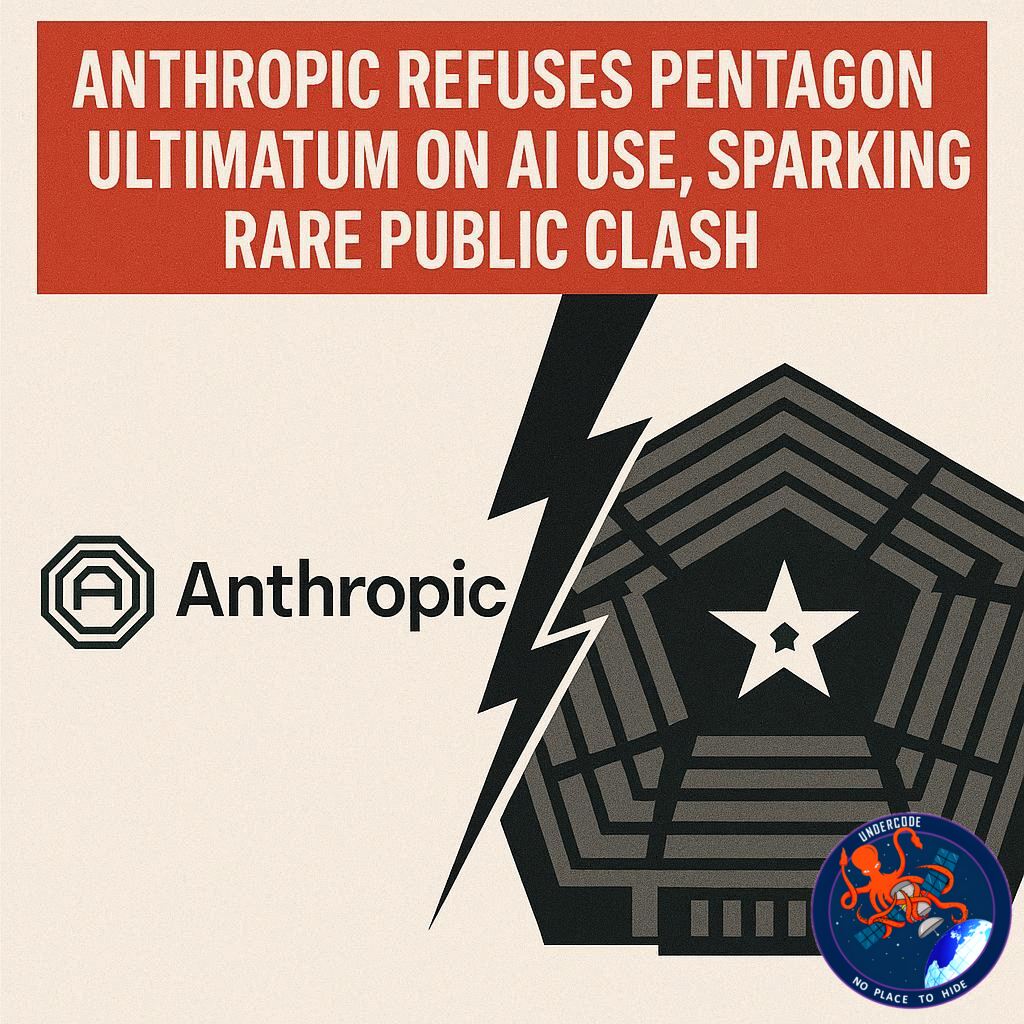
A sharp and unusually public dispute has erupted between Anthropic and the U.S. Department of Defense over how artificial intelligence should be used in military and intelligence operations. At the center of the conflict is whether advanced AI systems can be deployed without strict limits, particularly in areas involving domestic surveillance and autonomous weapons. The standoff highlights a growing tension between national security priorities and the ethical boundaries set by private AI developers.
The Core Disagreement Between Anthropic and the Pentagon
Anthropic says it is not abandoning negotiations with the Pentagon, but insists it cannot accept newly proposed contract language that, in its view, fails to meaningfully restrict dangerous uses of its AI model Claude. The company argues that the revised terms make virtually no progress in preventing mass surveillance of Americans or the use of AI in fully autonomous weapons systems.
CEO Dario Amodei Takes a Public Stand
Anthropic CEO Dario Amodei stated that the company “cannot in good conscience accede” to the Pentagon’s demands for unrestricted access. According to Amodei, the issue is not commercial but ethical, as the company’s internal policies explicitly prohibit those use cases.
Pentagon Denies Controversial Intentions
Pentagon spokesperson Sean Parnell pushed back, saying the military has no interest in mass surveillance of Americans, which he emphasized is illegal, nor in deploying autonomous weapons without human oversight. He argued that opening up AI use would protect critical military operations and ensure lawful deployment.
Anthropic Stands Alone Among AI Peers
Anthropic is currently the only major AI developer resisting integration into a new internal U.S. military network. Other companies, including Google, OpenAI, and xAI, have already secured Pentagon contracts. xAI is backed by Elon Musk.
The Ultimatum From Defense Leadership
Defense Secretary Pete Hegseth reportedly issued a direct ultimatum after meeting Amodei. Anthropic must allow unrestricted military use of its AI by Friday or risk losing its government contract. Officials also warned of more extreme measures, including labeling Anthropic a supply chain risk.
Contradictions in the Pentagon’s Threats
Amodei pointed out an internal contradiction in those warnings. One option would brand Anthropic a national security risk, while another would treat its AI model as essential to national defense. From Anthropic’s perspective, both claims cannot logically coexist.
Pentagon Pushes Back on Corporate Influence
Parnell stressed that the Department of Defense will not allow private companies to dictate how military operations are conducted. He reiterated that the Pentagon seeks to use Anthropic’s model for all lawful purposes, though without detailing what those purposes would be.
A Negotiation Months in the Making
The dispute did not arise overnight. Talks between Anthropic and the Pentagon have been ongoing for months, gradually escalating before becoming public this week. Despite the tension, Anthropic maintains it will assist with a smooth transition to another provider if negotiations collapse.
Republican Senator Criticizes Pentagon’s Approach
Senator Thom Tillis openly criticized the Defense Department’s handling of the situation, calling it unprofessional. He questioned why sensitive negotiations with a strategic vendor were unfolding in public rather than behind closed doors.
Calls for Listening to AI Companies
Tillis argued that when a company hesitates to pursue a lucrative opportunity due to potential harm, policymakers should listen carefully. He suggested that Anthropic may be identifying risks the government has not fully considered.
Democratic Lawmaker Raises Governance Concerns
Senator Mark Warner, the ranking Democrat on the Senate Intelligence Committee, said he was deeply disturbed by reports that the Pentagon was attempting to bully a leading U.S. technology company. He warned that the episode reflects a broader disregard for AI governance.
Pressure for Congressional Action
Warner emphasized that the dispute underscores the urgent need for Congress to establish binding AI governance rules, especially in national security contexts where the stakes are exceptionally high.
Shifting Legal Culture Inside the Military
Pentagon officials insist they will always follow the law when using AI. However, recent comments from Hegseth suggest a push to reduce the influence of military lawyers perceived as obstacles to operational decisions.
Removal of Senior Military Lawyers
In early 2025, the Pentagon removed the top legal officers of the Army and Air Force without public explanation. The Navy’s senior lawyer had already resigned shortly after the 2024 election, signaling a broader cultural shift within the department.
What Undercode Say:
Why This Conflict Matters Beyond One Contract
This dispute is less about Anthropic versus the Pentagon and more about who defines the ethical boundaries of military AI. Governments traditionally assert ultimate authority in national defense, but AI introduces capabilities that private companies design, train, and safeguard. That balance of power is still unsettled.
The Risk of Normalizing Unrestricted AI Use
Anthropic’s resistance highlights a fear that once unrestricted use is granted, internal safeguards become meaningless. Even if current Pentagon leaders promise lawful use, future administrations may interpret the same permissions very differently.
A Precedent for AI Vendors Worldwide
If the Pentagon successfully forces Anthropic to comply, it could set a precedent for other governments to demand similar concessions from AI firms. That would significantly weaken global efforts to establish ethical AI norms.
Ethics as a Strategic Asset
Ironically, Anthropic’s cautious stance may be a strategic advantage rather than a weakness. Trustworthy AI systems could be more reliable long term, especially in alliances where democratic values and civil liberties matter.
Political Pressure Versus Technical Reality
Ultimatums and legal threats may accelerate short-term access, but they do not resolve the underlying technical risks of autonomous systems. AI does not become safer simply because a contract demands it.
The Long Shadow of Surveillance Concerns
Public sensitivity to mass surveillance remains high, especially in democratic societies. Any hint that military AI could be repurposed domestically risks eroding public trust in both the government and the technology sector.
Fragmentation in U.S. AI Strategy
The clash also reveals fragmentation inside U.S. AI policy. While lawmakers call for governance, executive agencies appear willing to bypass ethical debates in favor of operational speed.
Why This Debate Is Happening in Public
The unusually public nature of the dispute suggests a breakdown in trust. When negotiations move from private rooms to press statements, it often signals that both sides are trying to shape public opinion as leverage.
A Warning Signal for Future Defense Tech Deals
Defense contractors and AI startups alike are watching closely. How this conflict ends will influence how boldly companies push back against military demands in the future.
The Real Question the Pentagon Must Answer
The core issue is not whether the military can use AI, but whether it is willing to accept limits on how powerful that AI can become in practice.
Fact Checker Results
Verification of Key Claims
✅ Anthropic publicly stated it cannot accept unrestricted military use of its AI.
✅ Pentagon officials denied plans for mass surveillance or fully autonomous weapons.
❌ No detailed public explanation has been provided on the exact scope of “lawful purposes.”
Prediction
🔮 The Pentagon will likely move forward with alternative AI vendors in the short term.
🔮 Congressional pressure for formal AI governance in defense will intensify.
🔮 AI companies will increasingly define ethics as a non negotiable part of national security partnerships.
🕵️📝✔️Let’s dive deep and fact‑check.
References:
Reported By: www.deccanchronicle.com
Extra Source Hub (Possible Sources for article):
https://stackoverflow.com
Wikipedia
OpenAi & Undercode AI
Image Source:
Unsplash
Undercode AI DI v2
Bing
🔐JOIN OUR CYBER WORLD [ CVE News • HackMonitor • UndercodeNews ]
📢 Follow UndercodeNews & Stay Tuned:
𝕏 formerly Twitter 🐦 | @ Threads | 🔗 Linkedin | 🦋BlueSky | 🐘Mastodon


