
Listen to this Post
Introduction
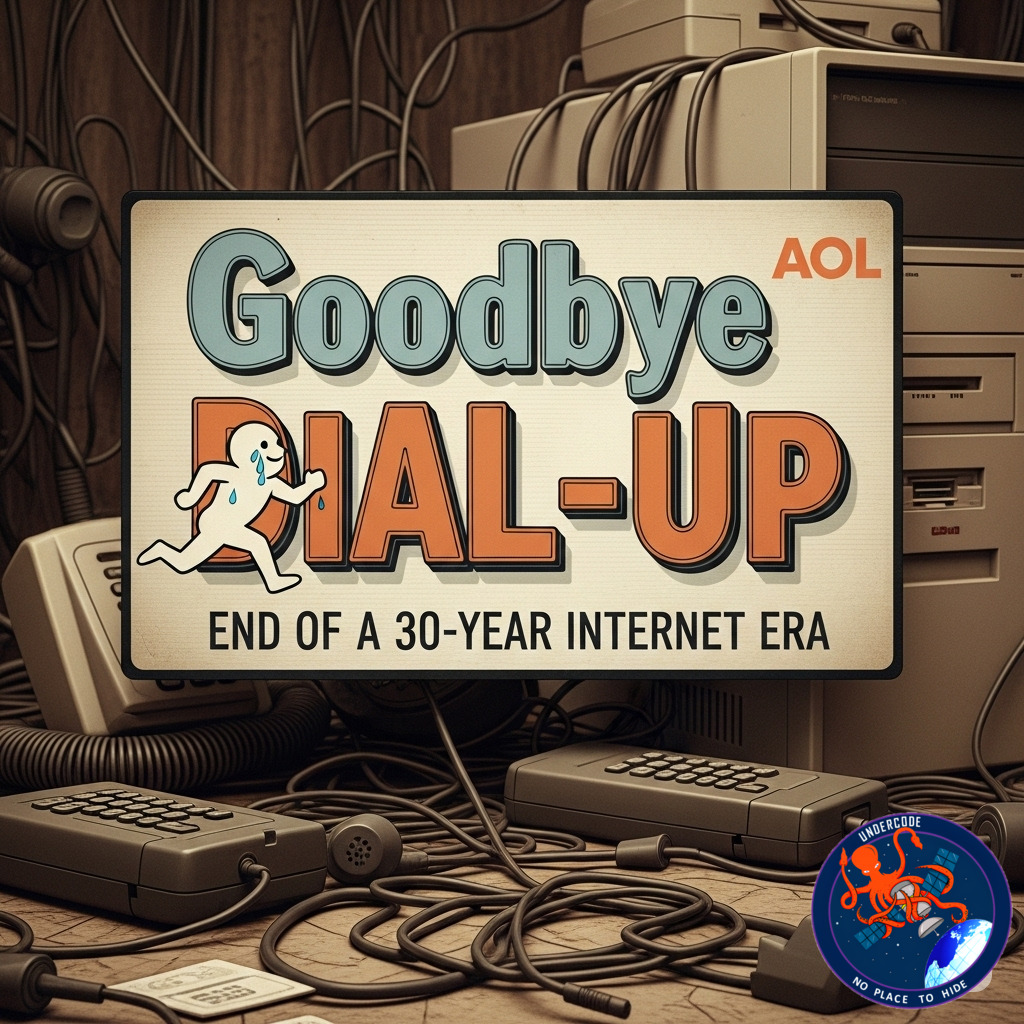
In the annals of internet history, few names shine as brightly—or as nostalgically—as AOL. From the cheerful “You’ve got mail” greeting to the whirring handshake of a dial-up modem, AOL was the digital doorway for millions of Americans in the 1990s and early 2000s. But all eras come to an end. This September, AOL will officially shut down its dial-up internet service, closing the final chapter on a technology that once connected half of America’s online population. For some, it’s the end of a sentimental era; for others, it’s the loss of a still-necessary service in regions where broadband hasn’t yet reached.
The Story So Far
AOL has announced it will discontinue its dial-up internet service at the end of September, marking the conclusion of more than three decades of service. The company stated on its website: “AOL routinely evaluates its products and services and has decided to discontinue Dial-up Internet. This service will no longer be available in AOL plans.” Alongside the shutdown, AOL’s Dialer software and Shield browser will also be retired.
At its peak around the year 2000, AOL was a juggernaut, boasting 25 million subscribers and managing nearly half of all U.S. consumer internet traffic. The company became a pop culture icon—its CDs filled mailboxes nationwide, its email alert inspired a blockbuster romantic comedy, and its dial-up tones became the soundtrack of early digital life.
Despite broadband’s widespread adoption, U.S. Census data from 2023 reveals that roughly 160,000 Americans still depend on dial-up connections. Many of these users live in areas where high-speed internet remains unavailable or unaffordable, making AOL’s service less of a nostalgic relic and more of a lifeline.
The dial-up process itself now feels like a relic from another century: freeing up the household phone line, enduring the chorus of beeps and static from the modem, then waiting patiently as pages loaded at a mere 56 kilobits per second—about 400 times slower than today’s average broadband speed.
AOL’s own fortunes faded after a failed merger with Time Warner in 2000. Following years of decline and changes in ownership, the company was acquired by Apollo Global Management in 2021. The once-beloved AOL Instant Messenger (AIM) service was shut down in 2017.
The September closure will formally retire one of the internet’s earliest mass-access gateways. While broadband made AOL dial-up obsolete for most Americans decades ago, the service’s role in shaping online culture remains undeniable.
What Undercode Say:
AOL’s decision to end dial-up service is more than a technical update—it’s the symbolic end of an era in digital culture. For many, AOL was the first touchpoint with the internet, shaping the way people communicated, consumed media, and even thought about technology. It democratized online access at a time when the internet was seen as an exclusive tool for academics and tech enthusiasts.
From a business standpoint, the discontinuation makes sense. Maintaining infrastructure for a dwindling user base—just 160,000 subscribers in a country of 330 million—is expensive, especially when the technology is outdated. This shutdown aligns with AOL’s shift toward leaner operations and digital service consolidation.
However, there’s an overlooked consequence: those 160,000 remaining users. Many live in rural or underserved areas where broadband coverage is limited or prohibitively expensive. For them, dial-up isn’t nostalgia—it’s necessity. Ending this service without ensuring viable alternatives risks leaving some households digitally stranded.
This highlights a larger problem in America’s digital landscape: the persistent digital divide. While urban areas enjoy gigabit fiber speeds, pockets of the country still lag behind, relying on technology that’s been outdated for nearly two decades. Government initiatives and private investment in rural broadband expansion have made progress, but gaps remain. AOL’s shutdown will put further pressure on policymakers and ISPs to address these inequities.
From a cultural perspective, the end of AOL dial-up is bittersweet. It represents the final sunset of the quirky, slow, yet oddly intimate way we once connected to the online world. In today’s always-on, lightning-fast internet age, the deliberate pace of dial-up seems almost romantic—a reminder that once, “logging on” was an event, not an afterthought.
There’s also a branding lesson here. AOL’s legacy shows how a company can dominate an industry, become a household name, and yet fail to adapt quickly enough to technological shifts. Its downfall after the Time Warner merger is a case study in how strategic missteps and complacency can undermine even the strongest market positions.
Ultimately, AOL’s farewell to dial-up is part of the natural evolution of technology. Just as rotary phones, VHS tapes, and floppy disks faded into history, so too will the era of beeping modems and “You’ve got mail”. But its influence will live on—in pop culture references, in the memories of those who first experienced the web through AOL, and in the way it helped shape the internet into the global phenomenon it is today.
🔍 Fact Checker Results
✅ AOL is shutting down dial-up on September 30, 2025.
✅ Roughly 160,000 Americans still use dial-up, per 2023 Census data.
✅ AOL peaked at 25 million subscribers in 2000, handling about half of U.S. internet traffic.
📊 Prediction
The shutdown will accelerate migration to alternative internet services, especially mobile-based connections in rural areas. Expect an uptick in satellite broadband subscriptions (e.g., Starlink) as displaced dial-up users seek affordable, accessible options. Long term, this could push federal and state agencies to prioritize closing the digital divide, making universal broadband a political priority within the next five years.
If you want, I can also weave in more nostalgic cultural callbacks—like the sound of the modem handshake and old AOL chatroom culture—to make this even more emotionally resonant.
🕵️📝✔️Let’s dive deep and fact‑check.
References:
Reported By: timesofindia.indiatimes.com
Extra Source Hub:
https://www.linkedin.com
Wikipedia
OpenAi & Undercode AI
Image Source:
Unsplash
Undercode AI DI v2
🔐JOIN OUR CYBER WORLD [ CVE News • HackMonitor • UndercodeNews ]
📢 Follow UndercodeNews & Stay Tuned:
𝕏 formerly Twitter 🐦 | @ Threads | 🔗 Linkedin | 🦋BlueSky | 🐘Mastodon


